
Description
Meret Oppenheim (1913–1985) is one of the most important figures of European Surrealism and one of the few female artists fully recognized within the movement. Born in Berlin and raised in Switzerland, she trained in Basel and later in Paris, where in the 1930s she came into contact with key figures such as Alberto Giacometti, Max Ernst, Marcel Duchamp, and Man Ray, becoming an active part of the Surrealist circle. Her most famous work, Déjeuner en fourrure (1936), a fur-covered teacup, perfectly embodies her artistic vision: the poetic and unsettling transformation of everyday objects.
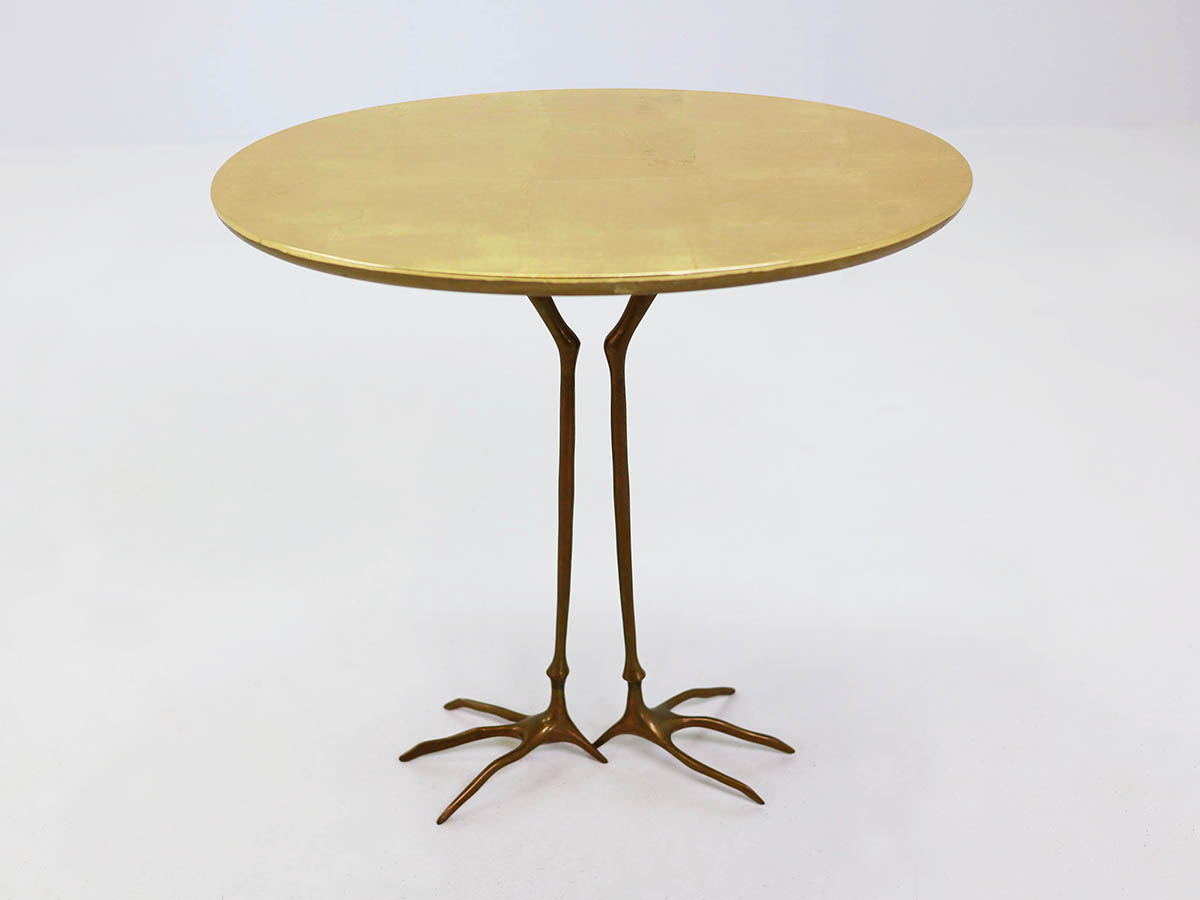
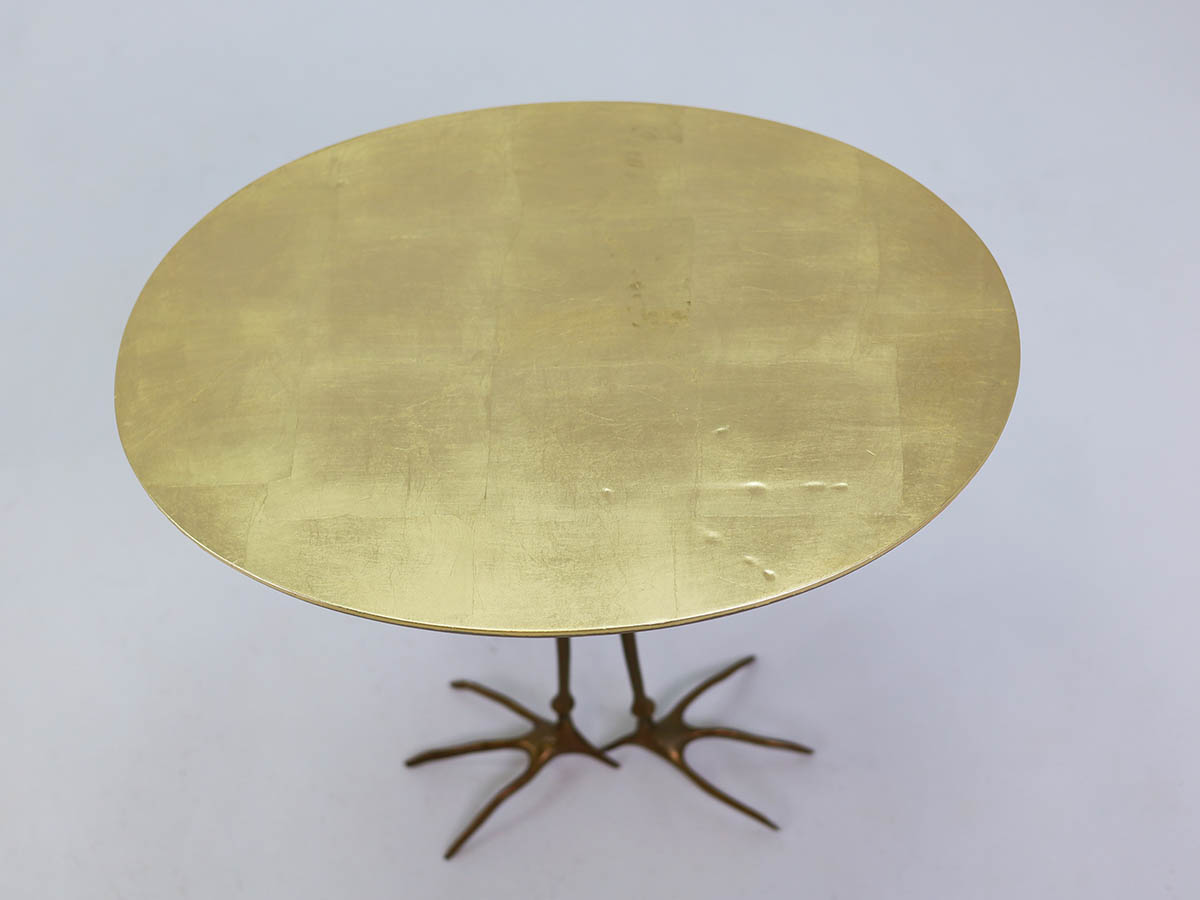
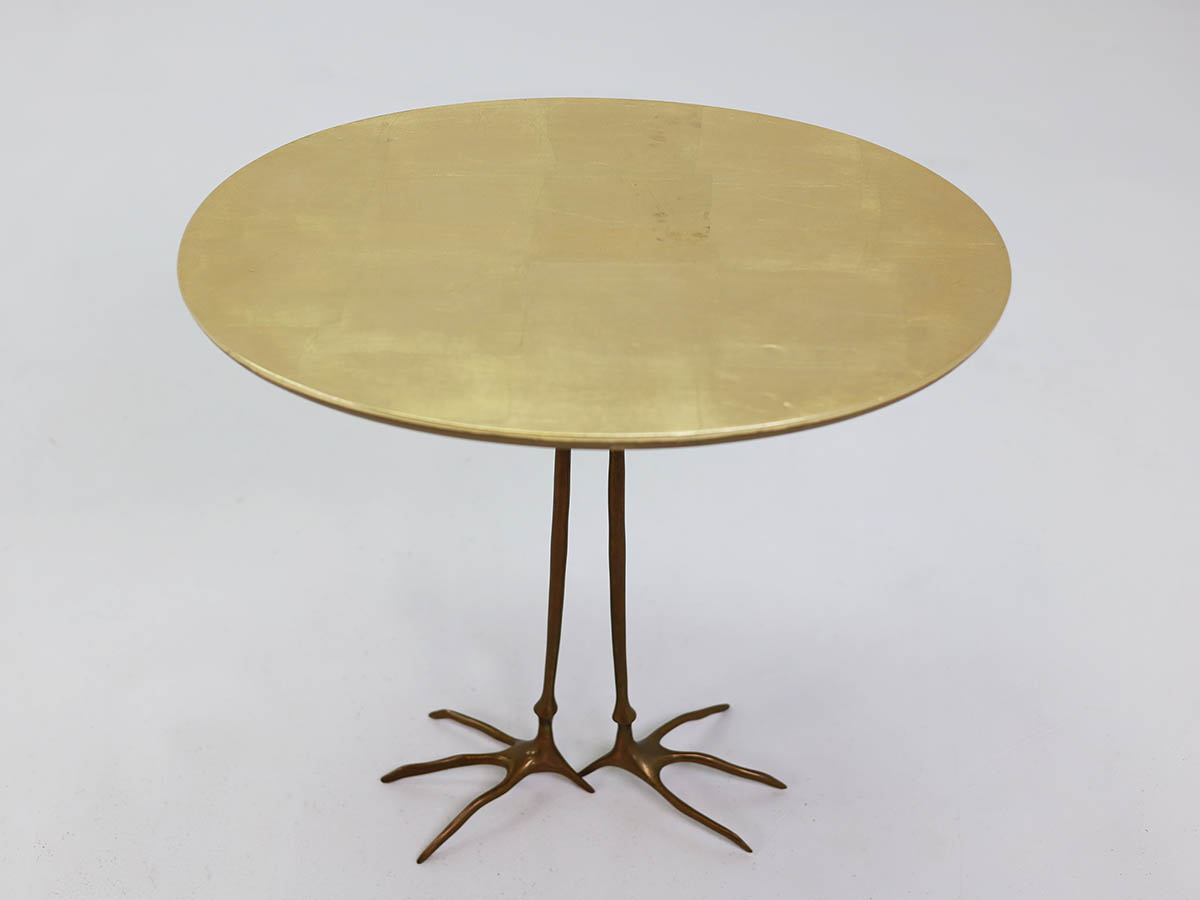
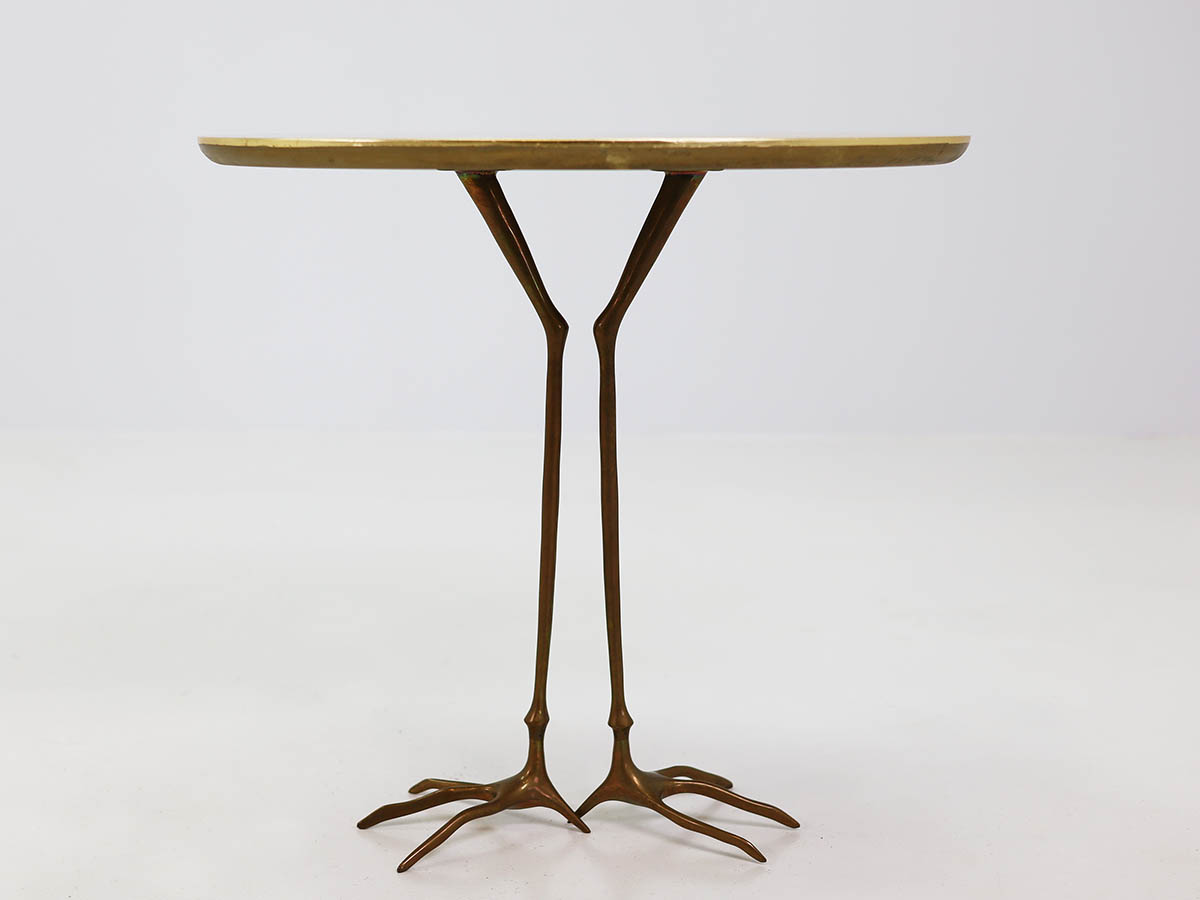
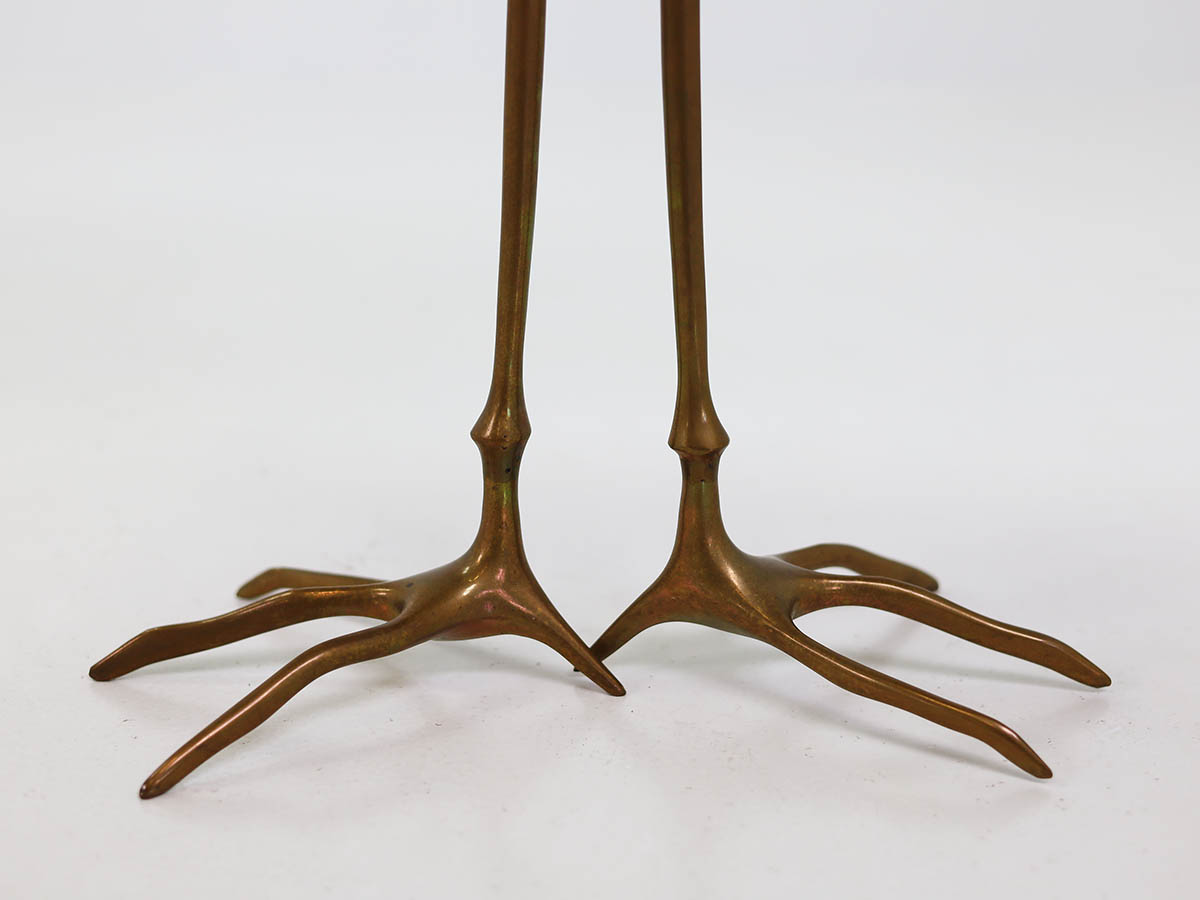
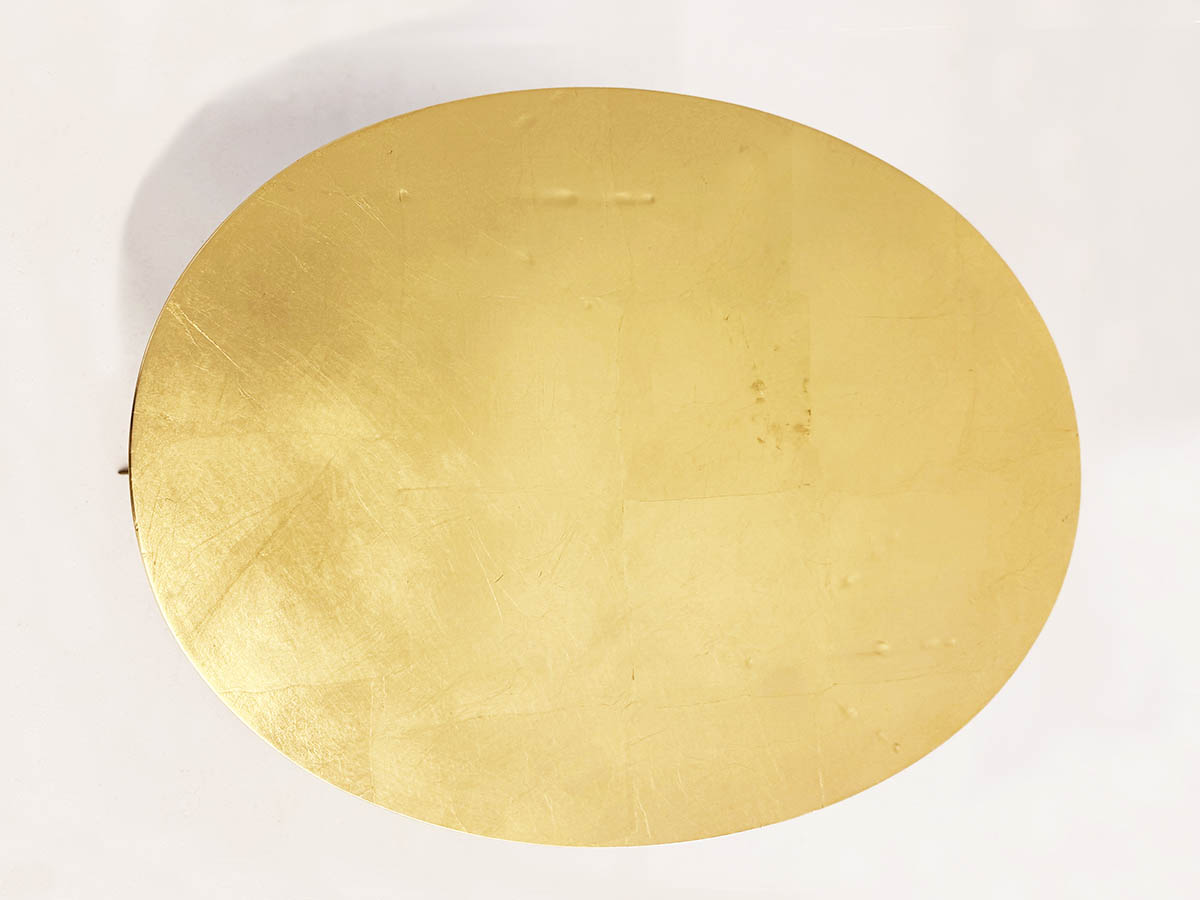
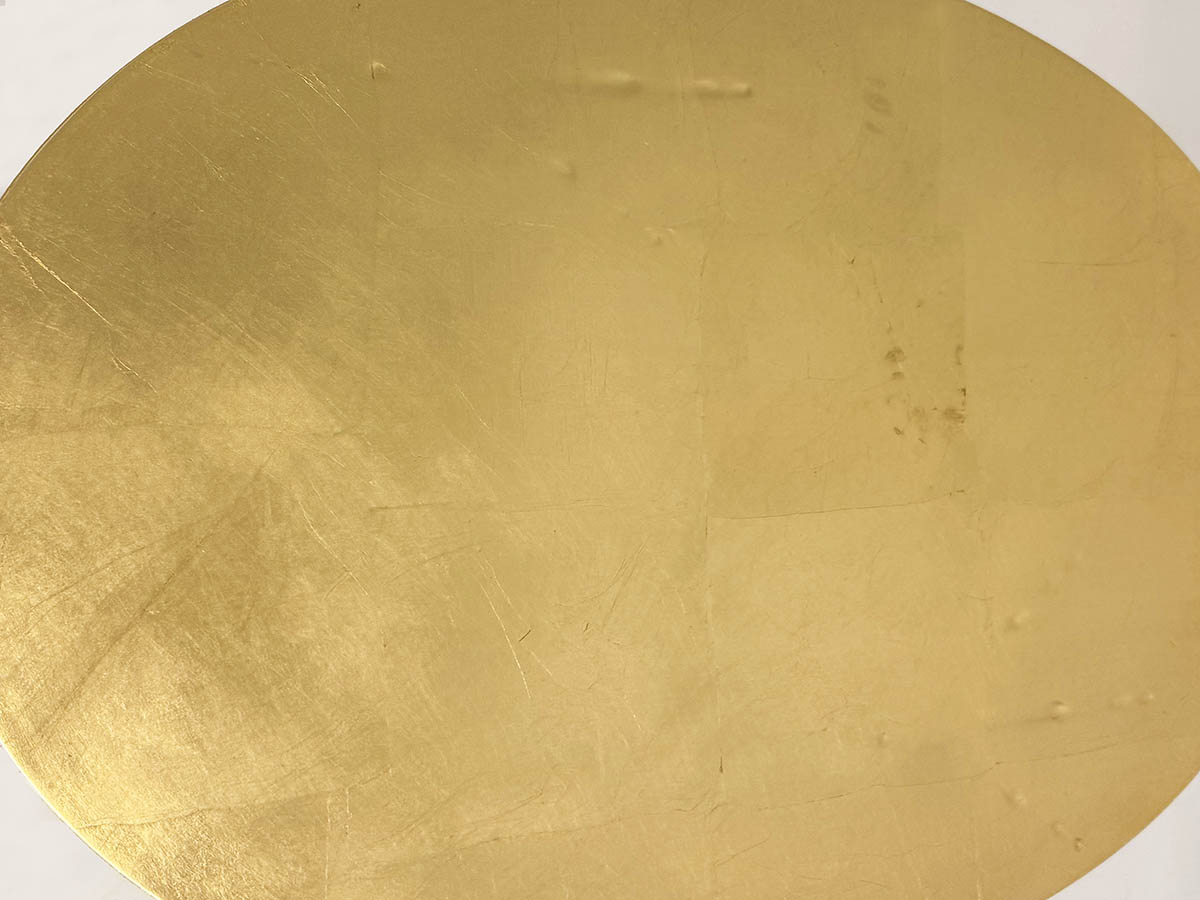
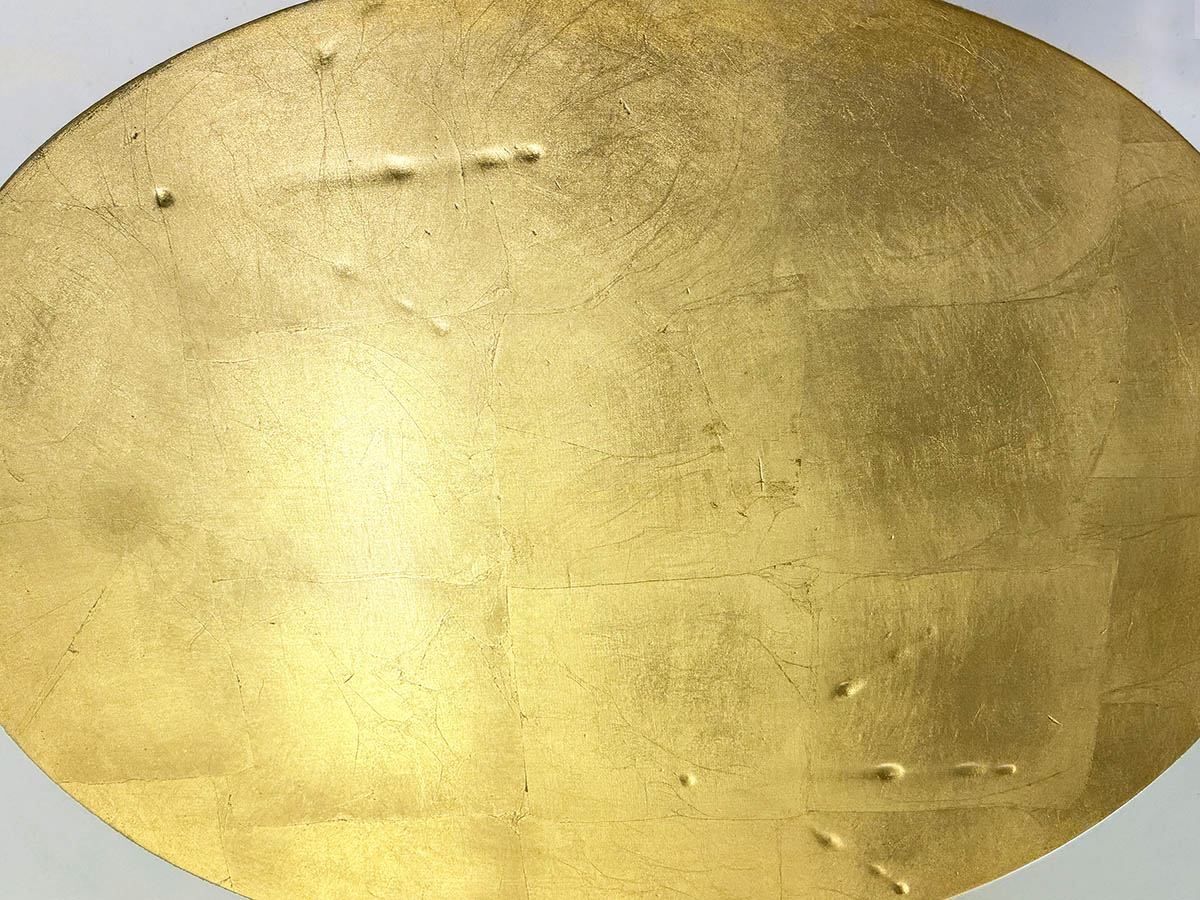
Alongside painting and sculpture, Oppenheim developed a growing interest in objects and design, anticipating a dialogue between art and function that would become central in the second half of the 20th century. Within this context, she conceived the Traccia table, originally designed in 1939 under the name Bird Leg Table. The work represents a perfect synthesis of Surrealist language applied to furniture design: a table whose legs are replaced by bronze bird legs, slender and claw-like, while the elliptical top in gold leaf features marks and impressions evoking animal traces. The result is an object suspended between function and imagination, closer to sculpture than to traditional furniture.
The project remained an artistic concept for decades until it was rediscovered in the 1970s by Dino Gavina, a key figure in Italian design and a pioneer of the idea of the “functional work of art.” Through his company Simon International, Gavina included the table in the “Ultramobile” collection, transforming the original design into a limited-edition design object. This operation marked a crucial shift: from a unique Surrealist artwork to a collectible design piece, while preserving the conceptual strength of the original work.
Later, the project was reissued by Cassina, which consolidated its presence in the international design landscape. Today, the Traccia table is considered an icon because it fully expresses Meret Oppenheim’s vision: the dissolution of boundaries between art and design, the transformation of everyday objects into poetic language, and the central role of imagination as a design principle.
More than a simple piece of furniture, Traccia is a conceptual object that moves between Surrealism, authorial design, and contemporary collecting, becoming one of the most emblematic expressions of the dialogue between art and function in the 20th century.