

Osvaldo Borsani (1911–1985) was an influential Italian designer and architect, a key figure in post-war Italian design, renowned for his elegance, technical innovation, and functional design solutions. In 1946, he designed the iconic E60 bookshelf, a perfect example of modularity, clean lines, and material experimentation, anticipating the trends of modern Italian design.


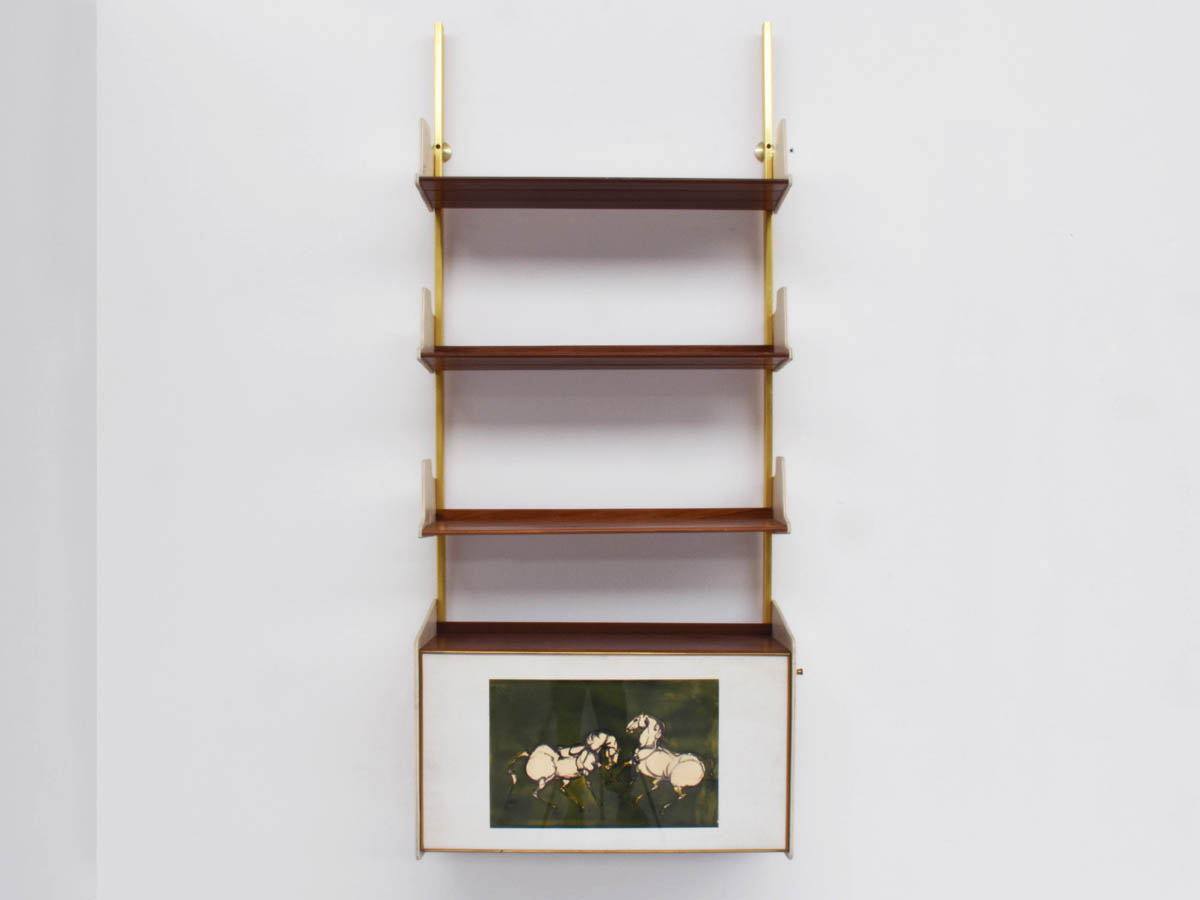
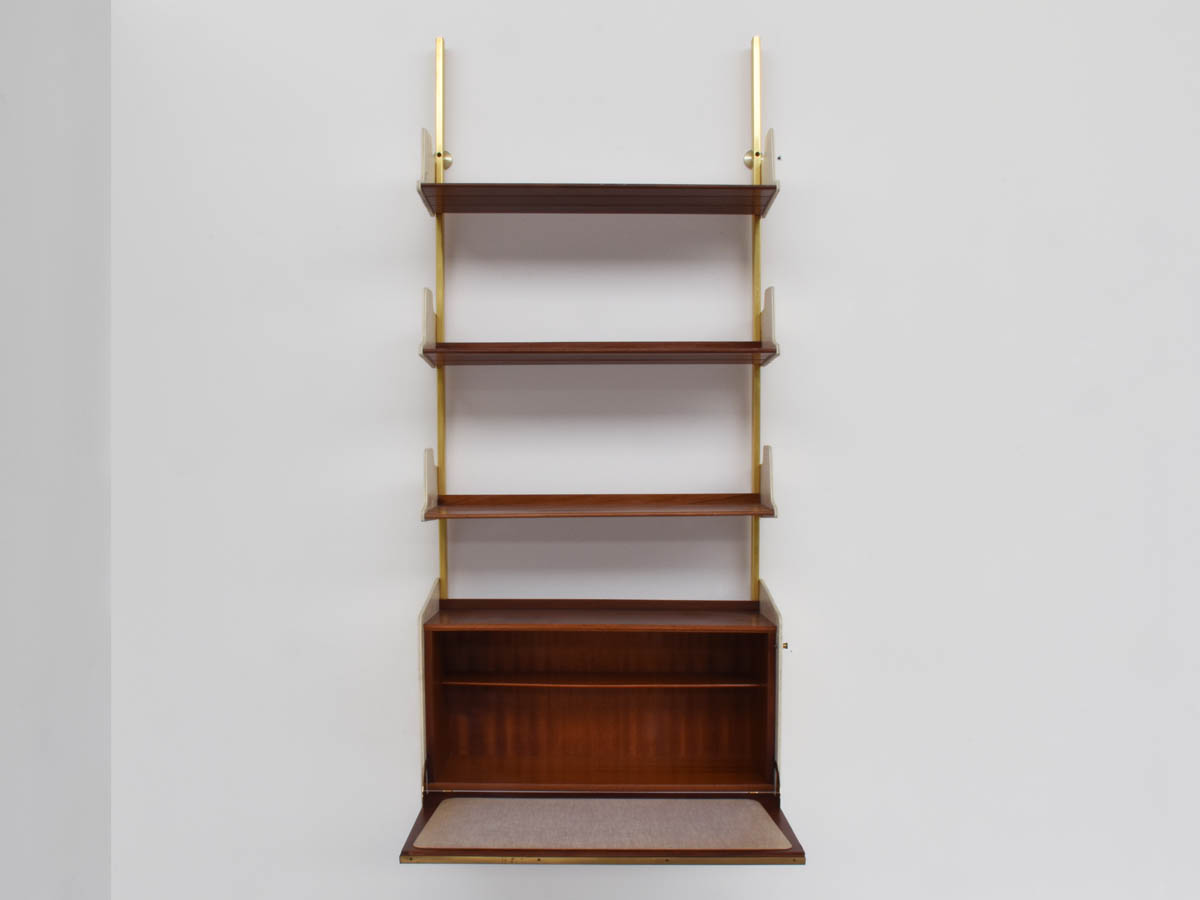
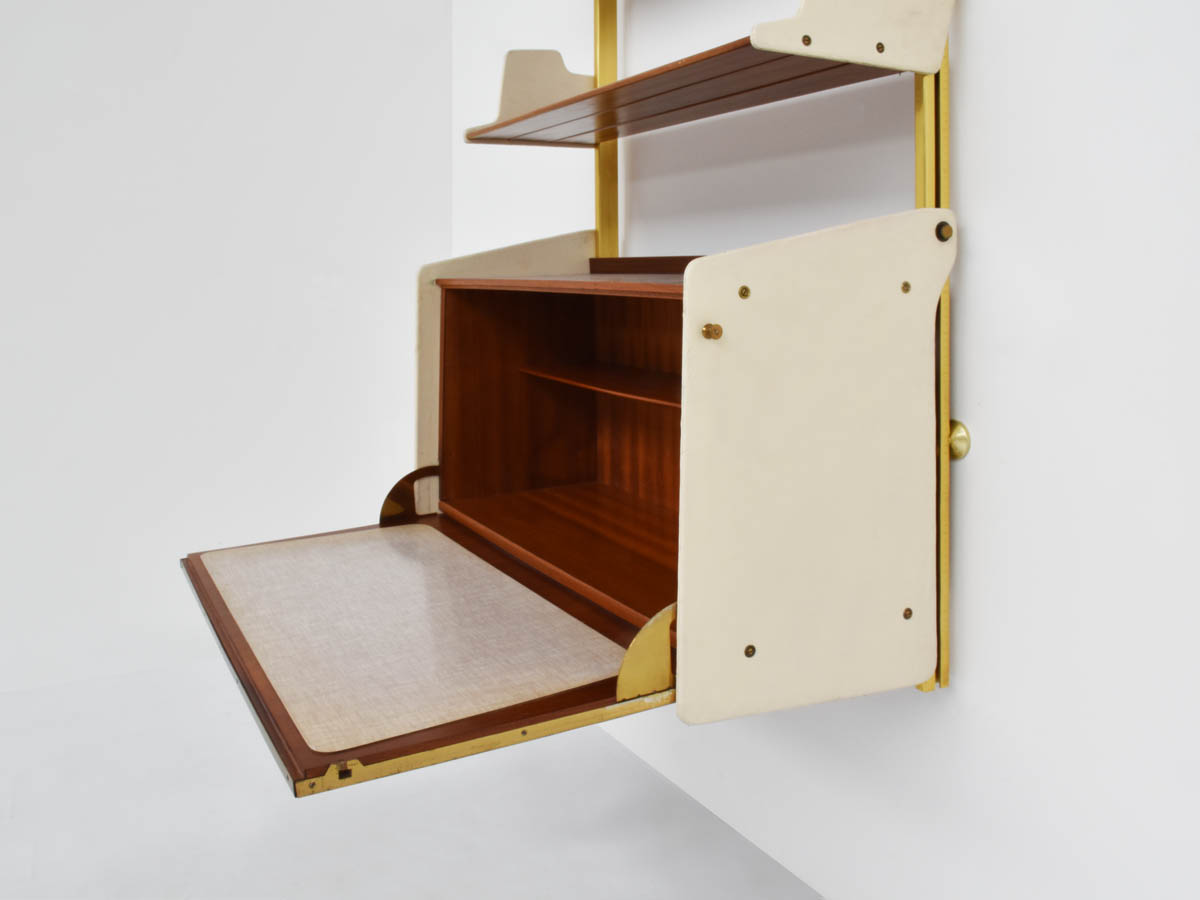
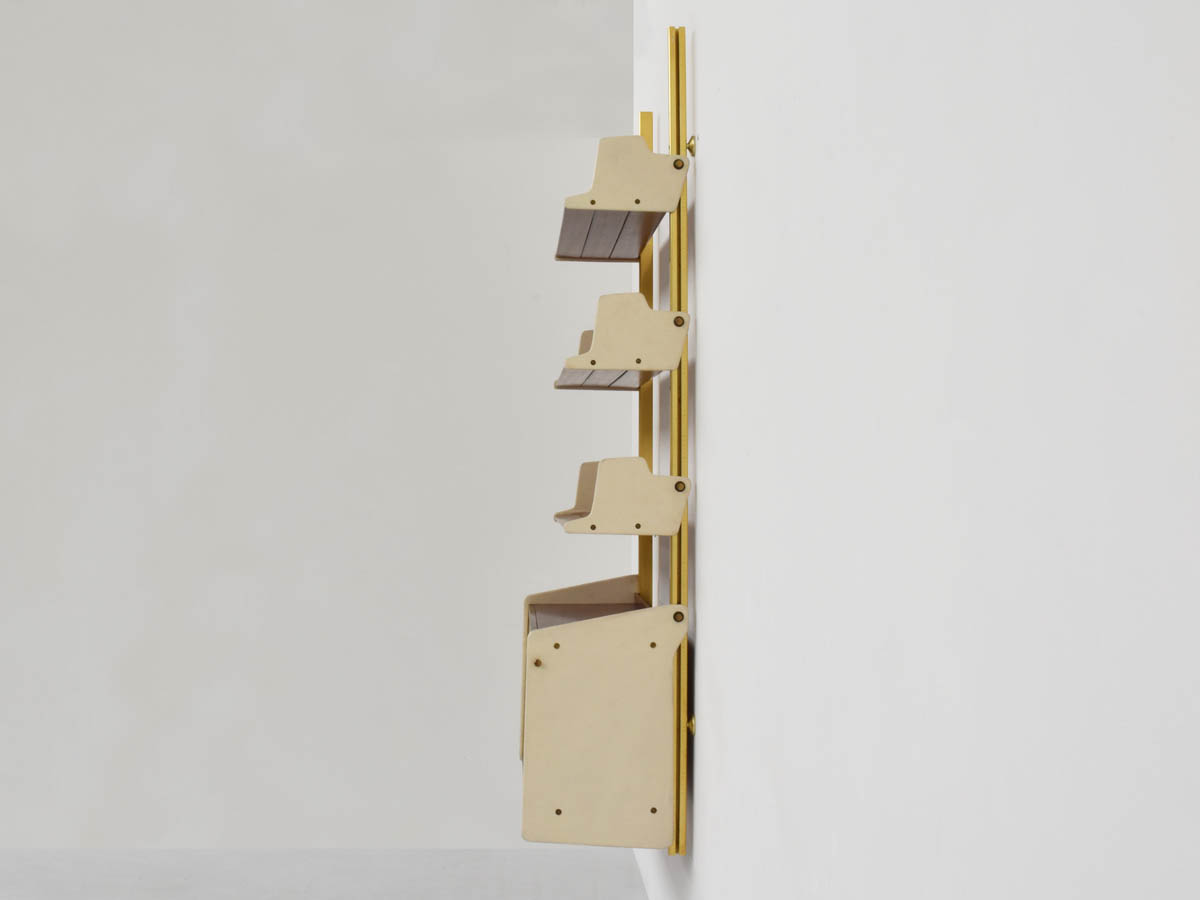
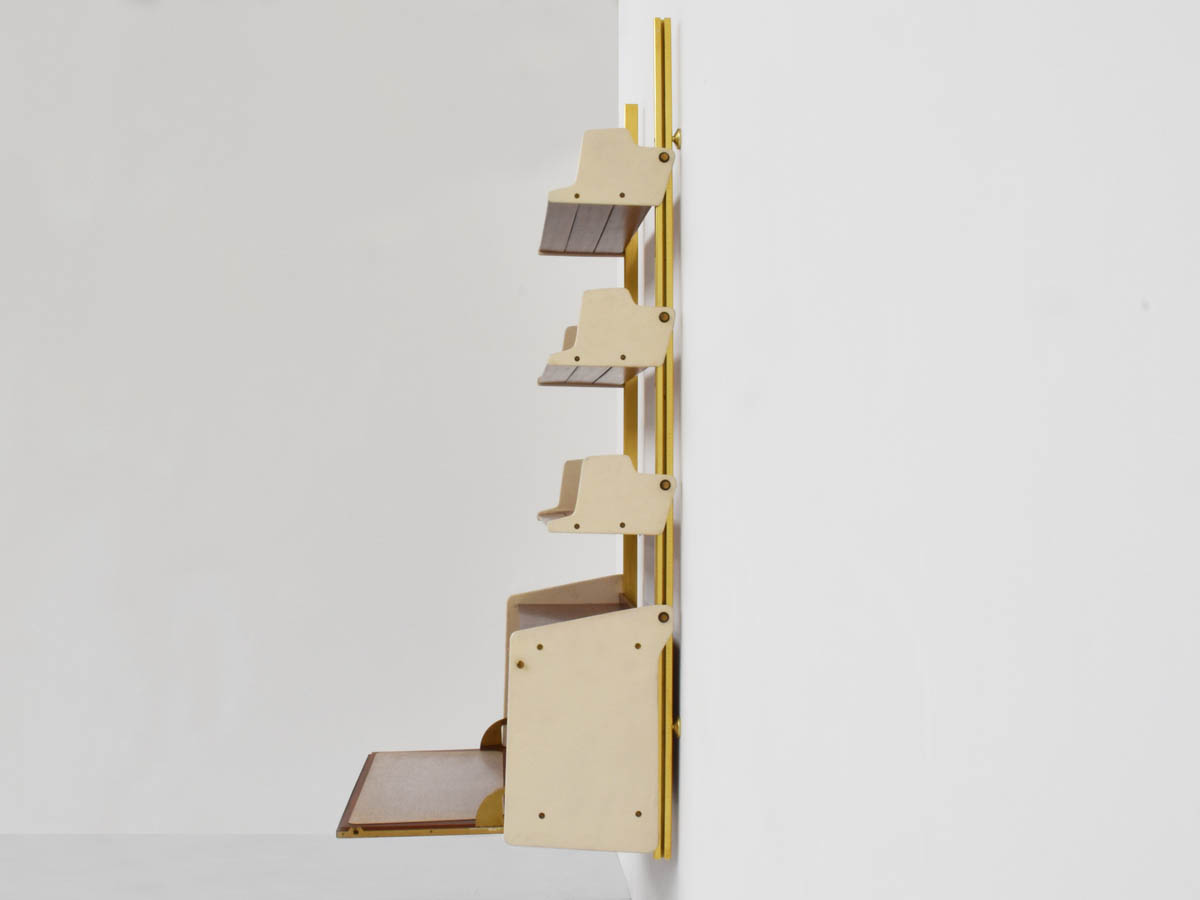
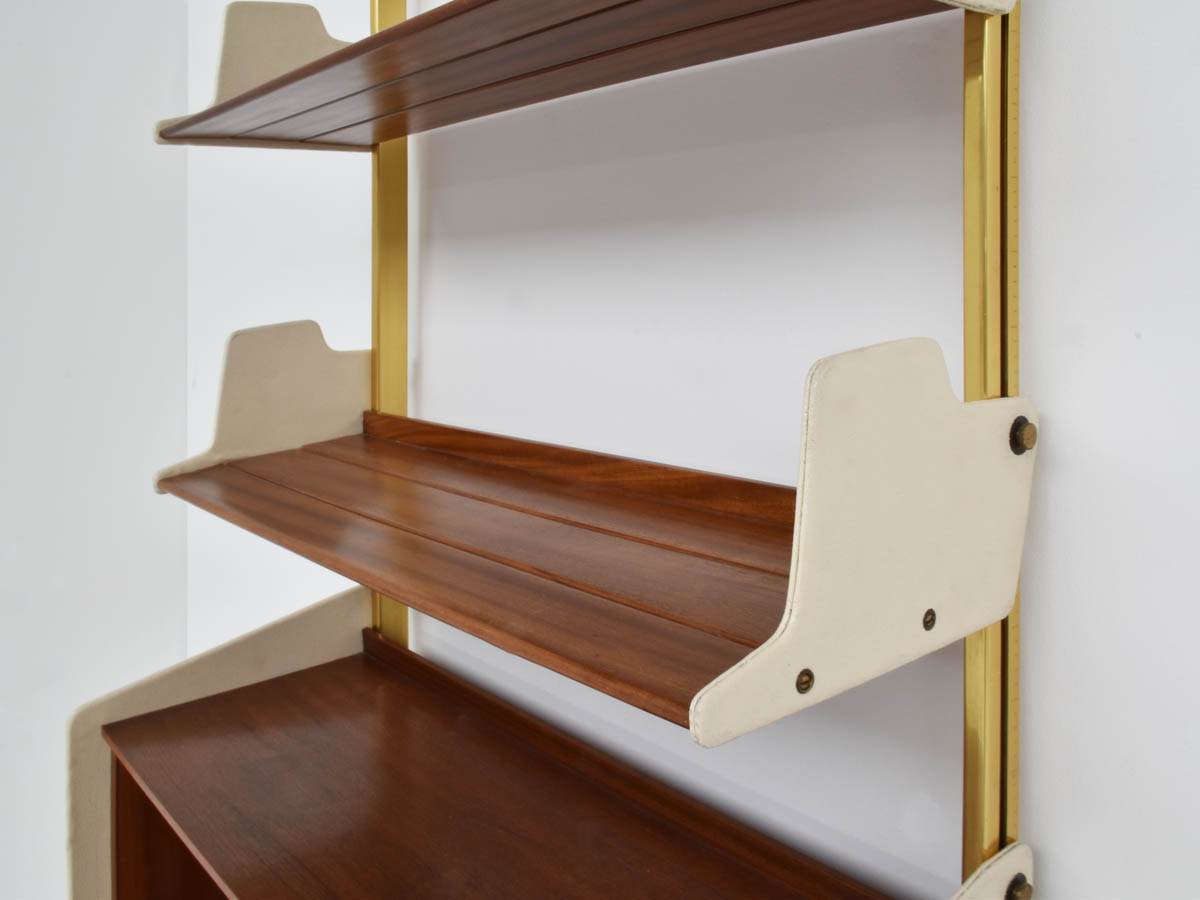
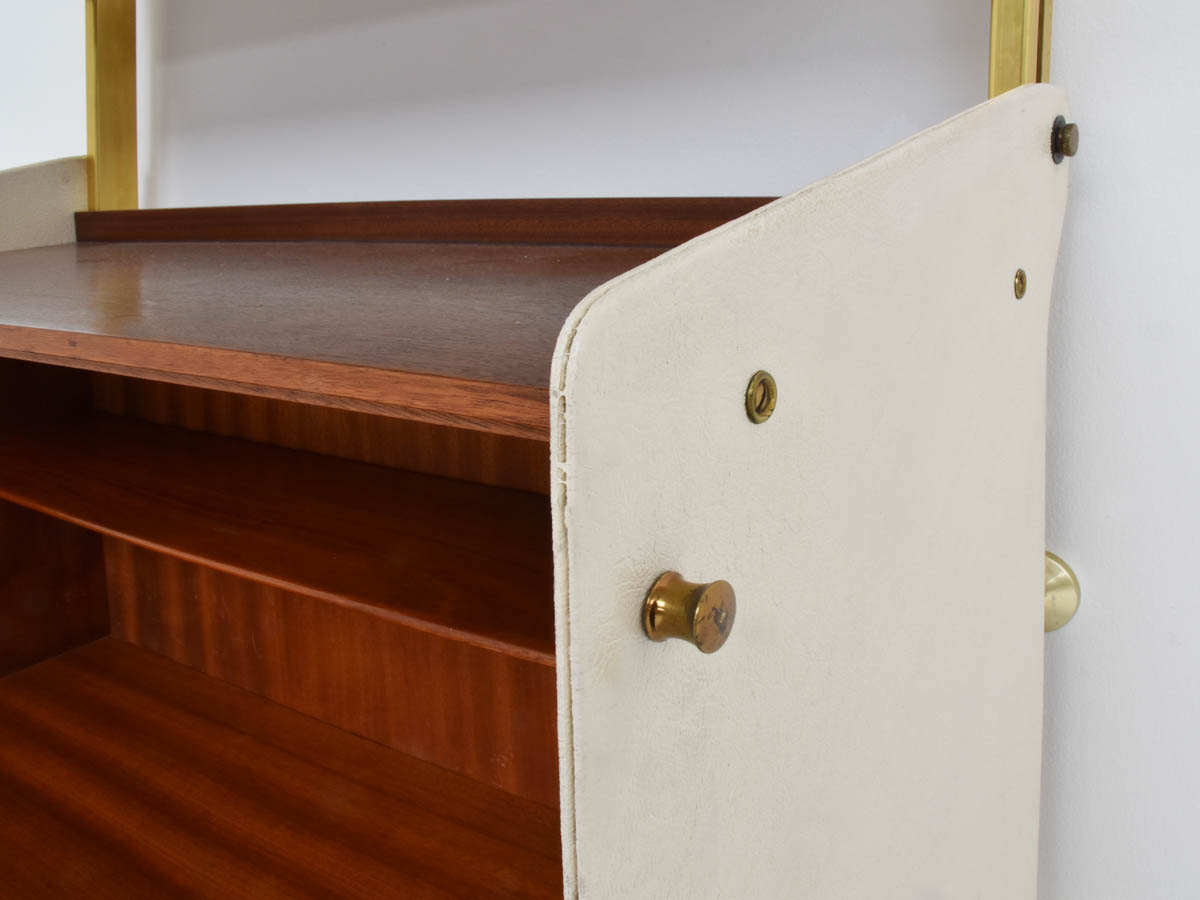
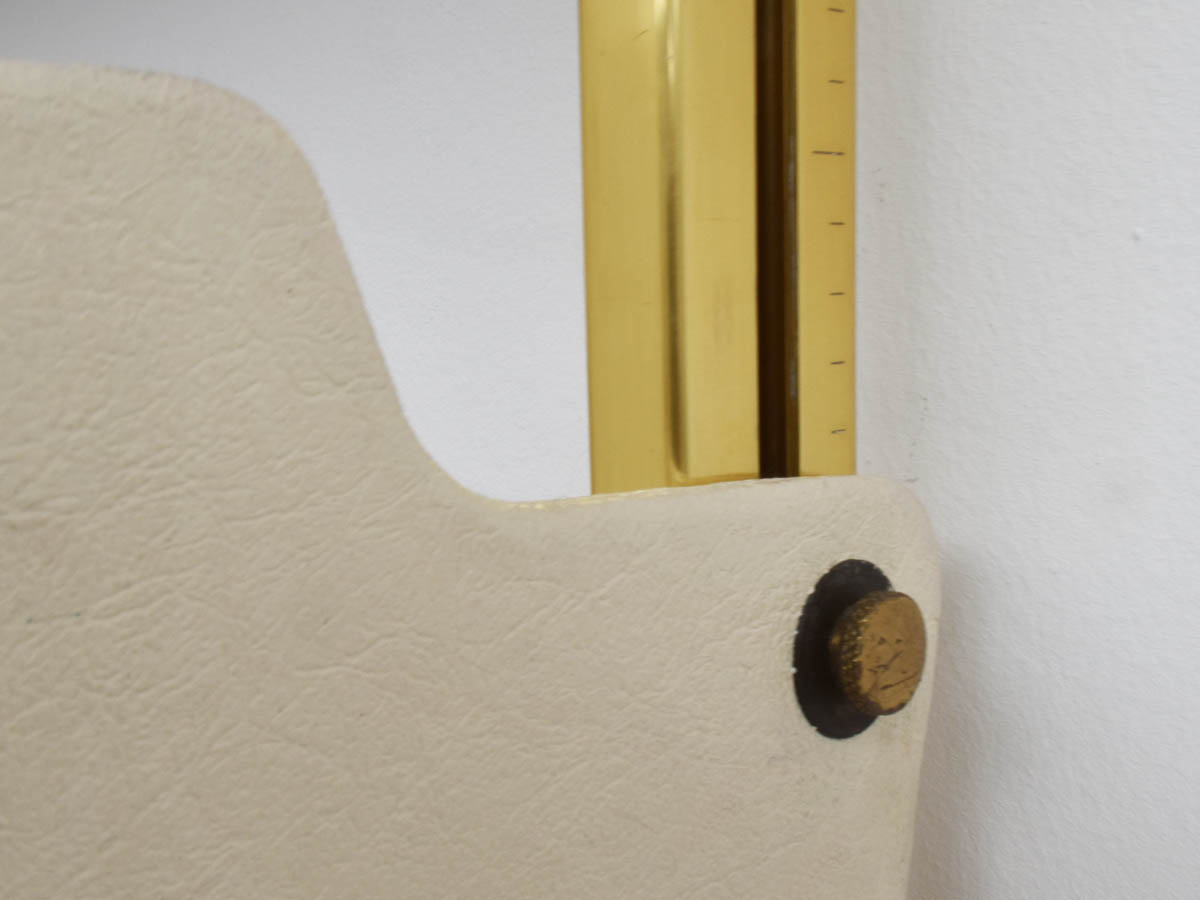
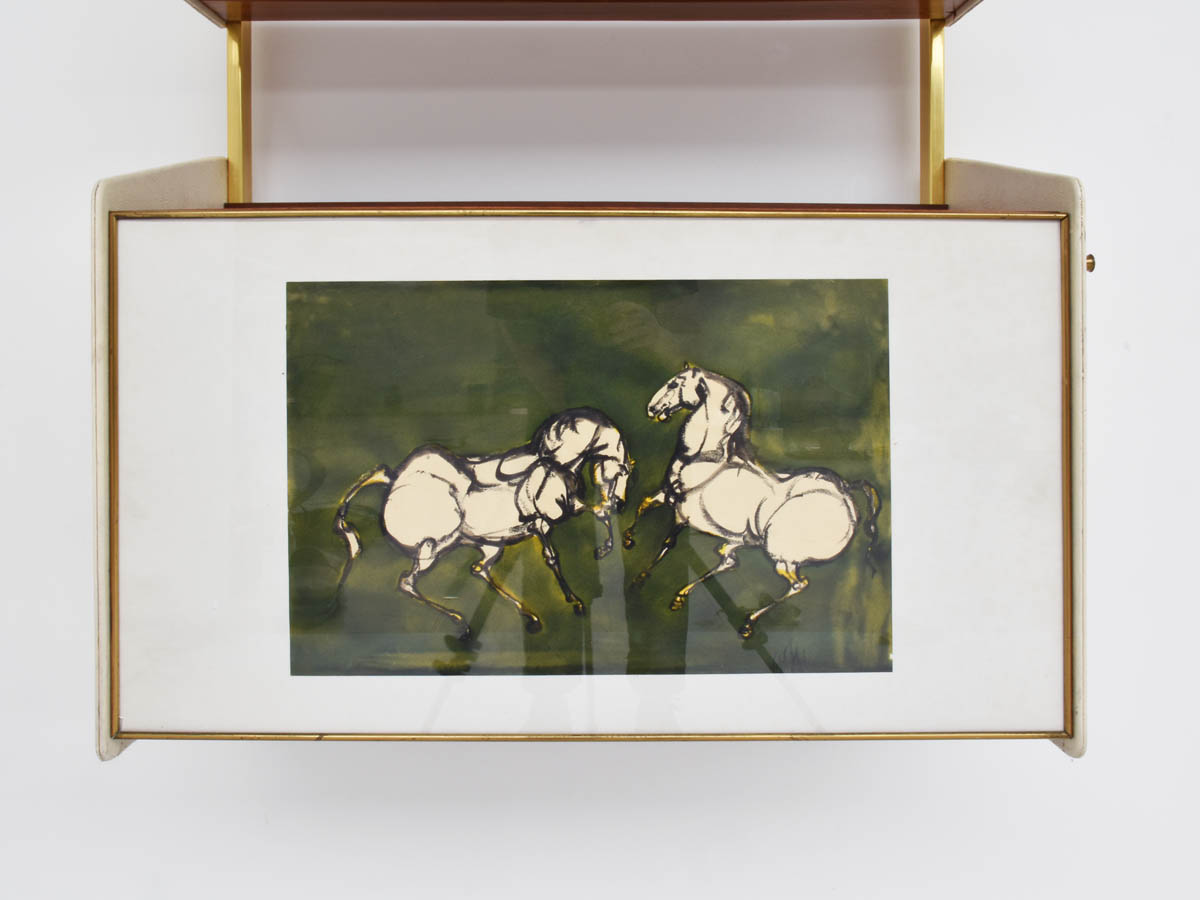
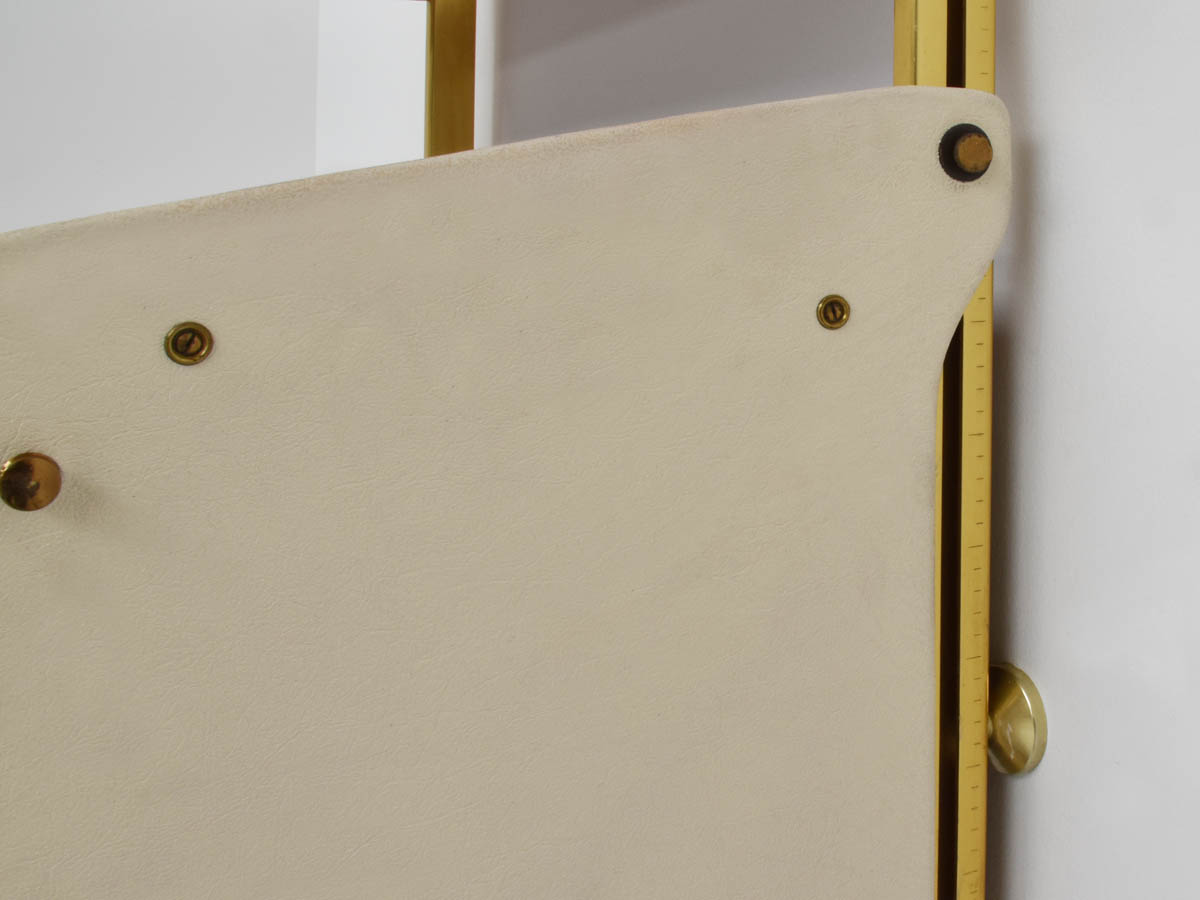
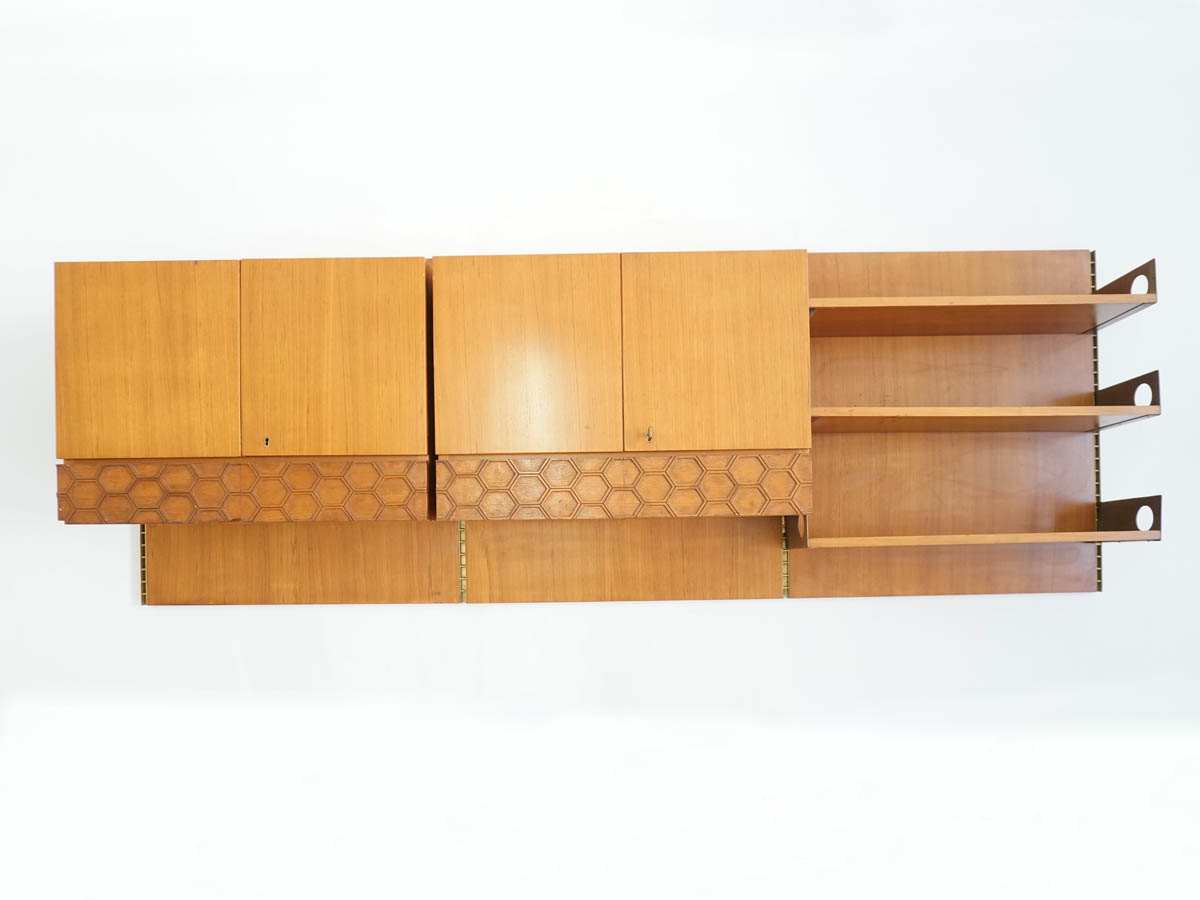
The E60 bookshelf stands out for its use of ivory embossed vinyl and leather panels on the sides, creating a sophisticated and contemporary visual effect, while the combination of wood and brass in the shelves and structural elements adds elegance, lightness, and a strong aesthetic character.


During this period, Borsani collaborated with sculptor Agenore Fabbri (1911–1998), a leading figure in Italian post-war sculpture, known for his expressive forms and integration of art into design. Their collaboration brought refined sculptural details into Borsani’s furniture, transforming pieces into functional works of art.


Borsani’s ability to combine craftsmanship, industrial design, and artistic aesthetics makes him a pivotal figure in the history of 20th-century Italian design, while Fabbri’s contribution highlights the seamless fusion of art and furniture design in mid-century Italy.
Item nr. 25112

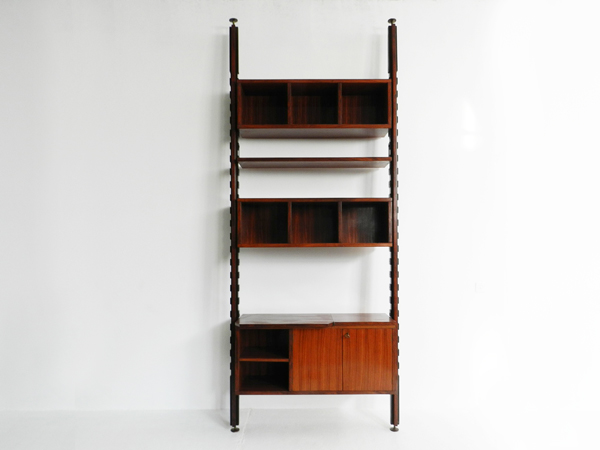
Suspended Bookshelf mod. E60 with closed module and lithography

Designers,

ProductionTecno 1946

MaterialBrass | walnut | eco leather | paper | plexiglass laminate

Dimension82.5 x 40 x HT 200 cm

suspended-bookshelf-mod-e60-with-closed-module-and-lithography


Osvaldo Borsani (1911–1985) was an influential Italian designer and architect, a key figure in post-war Italian design, renowned for his elegance, technical innovation, and functional design solutions. In 1946, he designed the iconic E60 bookshelf, a perfect example of modularity, clean lines, and material experimentation, anticipating the trends of modern Italian design.


The E60 bookshelf stands out for its use of ivory embossed vinyl and leather panels on the sides, creating a sophisticated and contemporary visual effect, while the combination of wood and brass in the shelves and structural elements adds elegance, lightness, and a strong aesthetic character.


During this period, Borsani collaborated with sculptor Agenore Fabbri (1911–1998), a leading figure in Italian post-war sculpture, known for his expressive forms and integration of art into design. Their collaboration brought refined sculptural details into Borsani’s furniture, transforming pieces into functional works of art.


Borsani’s ability to combine craftsmanship, industrial design, and artistic aesthetics makes him a pivotal figure in the history of 20th-century Italian design, while Fabbri’s contribution highlights the seamless fusion of art and furniture design in mid-century Italy.
Description

Osvaldo Borsani (1911–1985) was an influential Italian designer and architect, a key figure in post-war Italian design, renowned for his elegance, technical innovation, and functional design solutions. In 1946, he designed the iconic E60 bookshelf, a perfect example of modularity, clean lines, and material experimentation, anticipating the trends of modern Italian design.

The E60 bookshelf stands out for its use of ivory embossed vinyl and leather panels on the sides, creating a sophisticated and contemporary visual effect, while the combination of wood and brass in the shelves and structural elements adds elegance, lightness, and a strong aesthetic character.

During this period, Borsani collaborated with sculptor Agenore Fabbri (1911–1998), a leading figure in Italian post-war sculpture, known for his expressive forms and integration of art into design. Their collaboration brought refined sculptural details into Borsani’s furniture, transforming pieces into functional works of art.

Borsani’s ability to combine craftsmanship, industrial design, and artistic aesthetics makes him a pivotal figure in the history of 20th-century Italian design, while Fabbri’s contribution highlights the seamless fusion of art and furniture design in mid-century Italy.
Additional information

Material

Dimension