










Design galleries play a fundamental role in attribution research, especially when dealing with pieces that have not yet been formally published. In a market increasingly focused on authenticity and provenance, attribution is not just a technical detail but a key element that affects the cultural, historical, and economic value of a design object.


Attributing a design piece means placing it within a precise context: identifying its author, period, production, and design language. When no publication exists, this process becomes more complex and requires in-depth research, comparison, and analysis. This is where galleries step in, acting not only as exhibition spaces but also as centers of study and expertise.


Specialized galleries develop cross-disciplinary knowledge, ranging from direct access to archives to the ability to interpret formal and construction details. By comparing unpublished works with documented pieces, consulting historical sources, and engaging with experts—or even designers’ estates—galleries contribute to building well-founded attributions, even in the absence of published references.


In this context, attribution is never arbitrary but a critical and well-argued process. An unpublished object can still be placed within a coherent framework through concrete evidence such as production techniques, materials, proportions, recurring details, and provenance. Galleries have the expertise to recognize these connections and turn them into a solid narrative that supports the piece over time and within the market.


The meaning of attribution therefore goes beyond simply assigning a name. It is an act of cultural responsibility that contributes to the construction of design history. Each well-supported attribution expands existing knowledge, fills gaps, and, in some cases, opens new avenues for research.


In a context where many objects emerge from private collections or undocumented circuits, the role of galleries becomes even more crucial. They not only select and present pieces but actively contribute to defining their significance. Without this research, many objects would remain anonymous, lacking context and therefore full value.


For this reason, relying on knowledgeable galleries means not only acquiring an object but also accessing expertise—expertise that transforms a design piece into a recognized, studied work embedded in history, even before an official publication exists.

Item nr. 26067

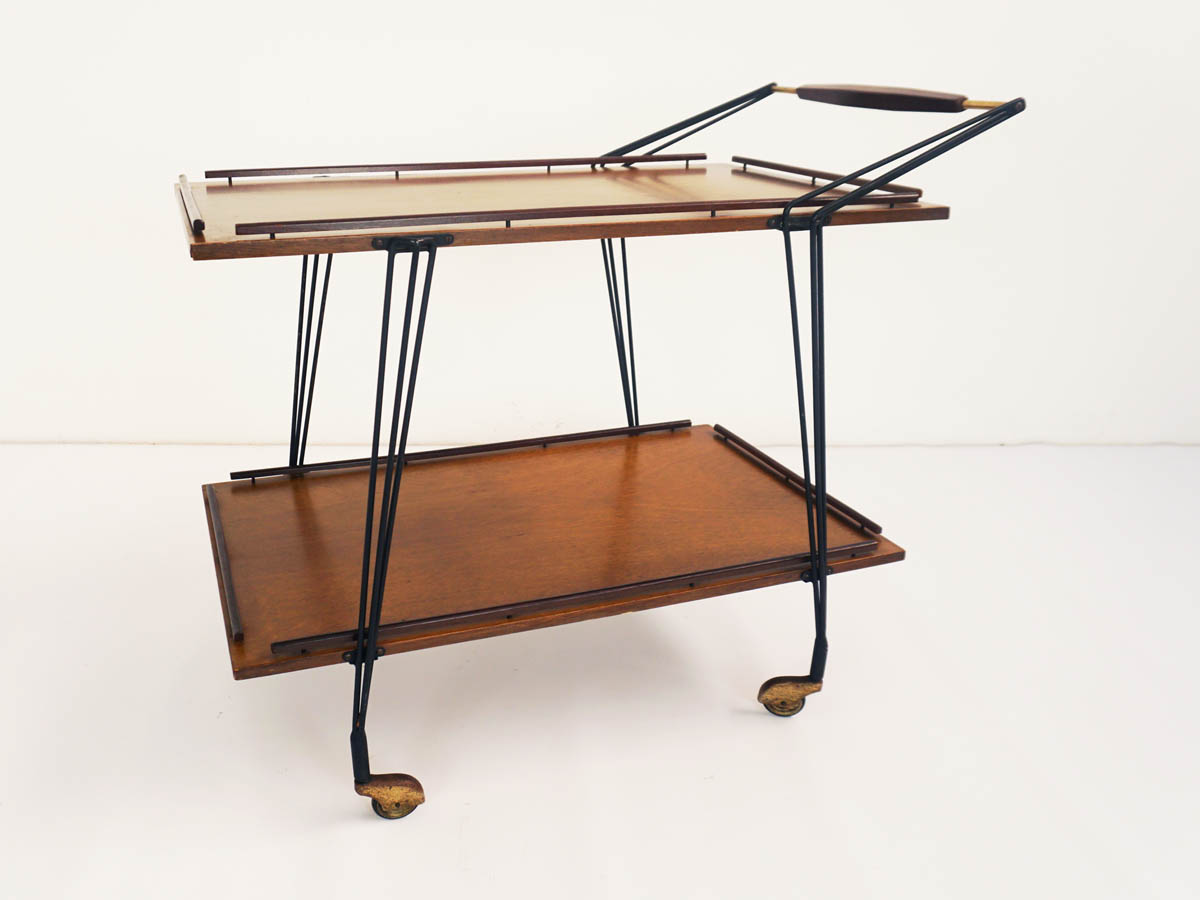
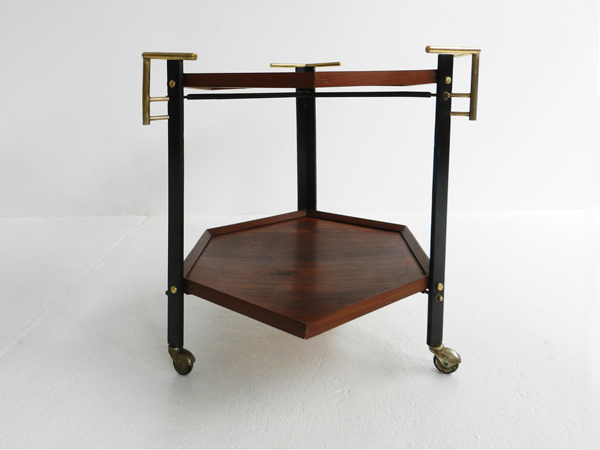
Serving cart with a turned wooden handle

ProductionFontana Arte (Attributed)
Italy 1960 Approx.

MaterialTeak | brass | colored mirror glass | glass

Dimension54.5 x 81 x Top HT 59.5 x Total HT 75 cm

Price in Swiss Francs / Euro 1'800.00

serving-table-with-a-turned-wooden-handle


Design galleries play a fundamental role in attribution research, especially when dealing with pieces that have not yet been formally published. In a market increasingly focused on authenticity and provenance, attribution is not just a technical detail but a key element that affects the cultural, historical, and economic value of a design object.


Attributing a design piece means placing it within a precise context: identifying its author, period, production, and design language. When no publication exists, this process becomes more complex and requires in-depth research, comparison, and analysis. This is where galleries step in, acting not only as exhibition spaces but also as centers of study and expertise.


Specialized galleries develop cross-disciplinary knowledge, ranging from direct access to archives to the ability to interpret formal and construction details. By comparing unpublished works with documented pieces, consulting historical sources, and engaging with experts—or even designers’ estates—galleries contribute to building well-founded attributions, even in the absence of published references.


In this context, attribution is never arbitrary but a critical and well-argued process. An unpublished object can still be placed within a coherent framework through concrete evidence such as production techniques, materials, proportions, recurring details, and provenance. Galleries have the expertise to recognize these connections and turn them into a solid narrative that supports the piece over time and within the market.


The meaning of attribution therefore goes beyond simply assigning a name. It is an act of cultural responsibility that contributes to the construction of design history. Each well-supported attribution expands existing knowledge, fills gaps, and, in some cases, opens new avenues for research.


In a context where many objects emerge from private collections or undocumented circuits, the role of galleries becomes even more crucial. They not only select and present pieces but actively contribute to defining their significance. Without this research, many objects would remain anonymous, lacking context and therefore full value.


For this reason, relying on knowledgeable galleries means not only acquiring an object but also accessing expertise—expertise that transforms a design piece into a recognized, studied work embedded in history, even before an official publication exists.
Description

Design galleries play a fundamental role in attribution research, especially when dealing with pieces that have not yet been formally published. In a market increasingly focused on authenticity and provenance, attribution is not just a technical detail but a key element that affects the cultural, historical, and economic value of a design object.

Attributing a design piece means placing it within a precise context: identifying its author, period, production, and design language. When no publication exists, this process becomes more complex and requires in-depth research, comparison, and analysis. This is where galleries step in, acting not only as exhibition spaces but also as centers of study and expertise.

Specialized galleries develop cross-disciplinary knowledge, ranging from direct access to archives to the ability to interpret formal and construction details. By comparing unpublished works with documented pieces, consulting historical sources, and engaging with experts—or even designers’ estates—galleries contribute to building well-founded attributions, even in the absence of published references.

In this context, attribution is never arbitrary but a critical and well-argued process. An unpublished object can still be placed within a coherent framework through concrete evidence such as production techniques, materials, proportions, recurring details, and provenance. Galleries have the expertise to recognize these connections and turn them into a solid narrative that supports the piece over time and within the market.

The meaning of attribution therefore goes beyond simply assigning a name. It is an act of cultural responsibility that contributes to the construction of design history. Each well-supported attribution expands existing knowledge, fills gaps, and, in some cases, opens new avenues for research.

In a context where many objects emerge from private collections or undocumented circuits, the role of galleries becomes even more crucial. They not only select and present pieces but actively contribute to defining their significance. Without this research, many objects would remain anonymous, lacking context and therefore full value.

For this reason, relying on knowledgeable galleries means not only acquiring an object but also accessing expertise—expertise that transforms a design piece into a recognized, studied work embedded in history, even before an official publication exists.

Additional information

Material

Dimension