

Carlo De Carli (1910–1999) was one of the leading figures in 20th-century Italian architecture and design. Born in Milan, he graduated in architecture from the Politecnico di Milano in 1934 and developed his career within the vibrant cultural environment of Milanese Rationalism and the Modern Movement. His design philosophy is distinguished by a balance of functionality, ergonomics, formal simplicity, and material quality, with particular attention to the relationship between people and domestic space.


From the 1940s and 1950s onward, De Carli developed a distinctive language in which architectural rigor was combined with more fluid forms and a strong emphasis on comfort. The result was a refined yet understated design approach, combining structure, visual lightness, and fine craftsmanship. His work represents an important chapter in Italian modernism and remains highly appreciated in the international collectible design market.


Carlo De Carli and Sormani


De Carli’s collaboration with Sormani, developed particularly during the 1960s, was one of the most significant periods of his career in industrial design. For the Milanese company, he designed a series of furnishings using precious woods, glass, and clean-lined structures, successfully combining industrial production with exceptional attention to detail.


Pair of Rosewood and Glass Bedside and Side Tables


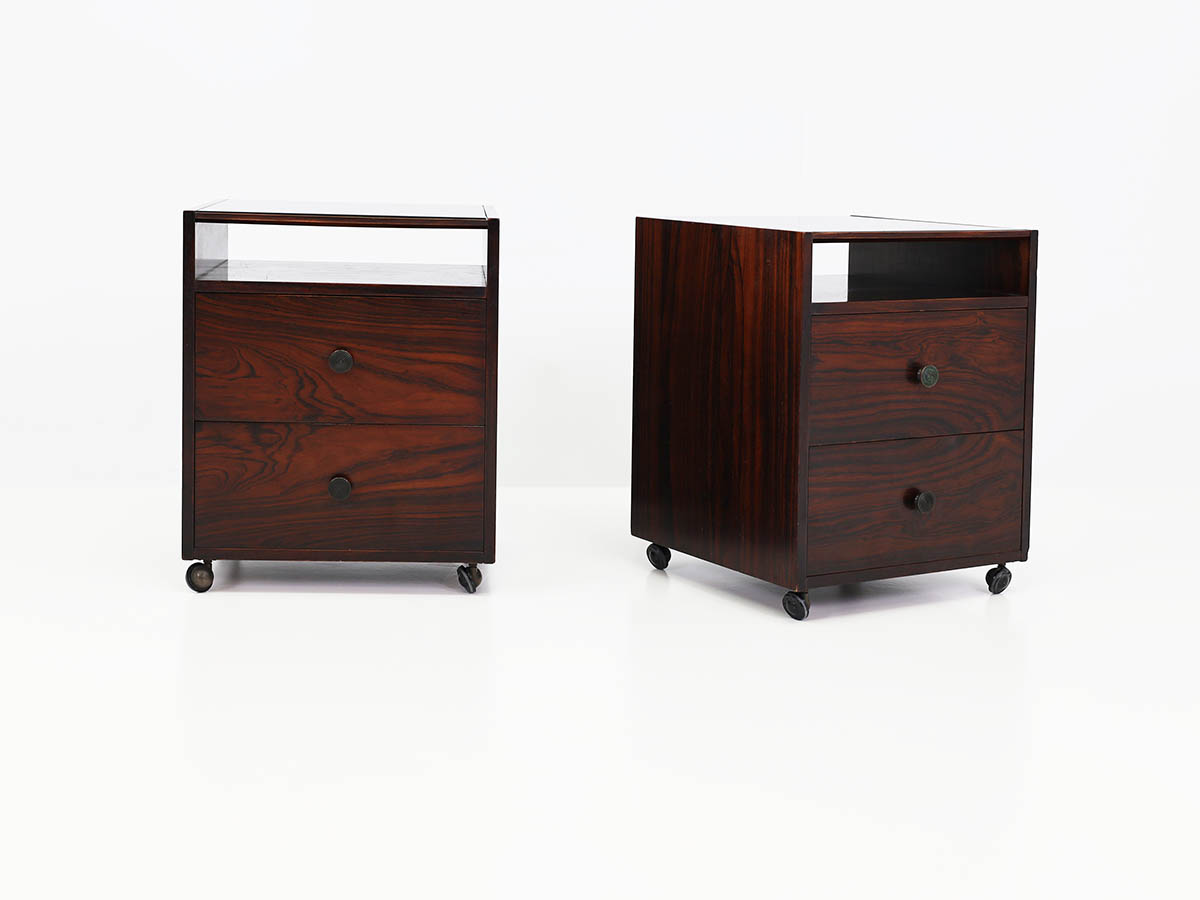
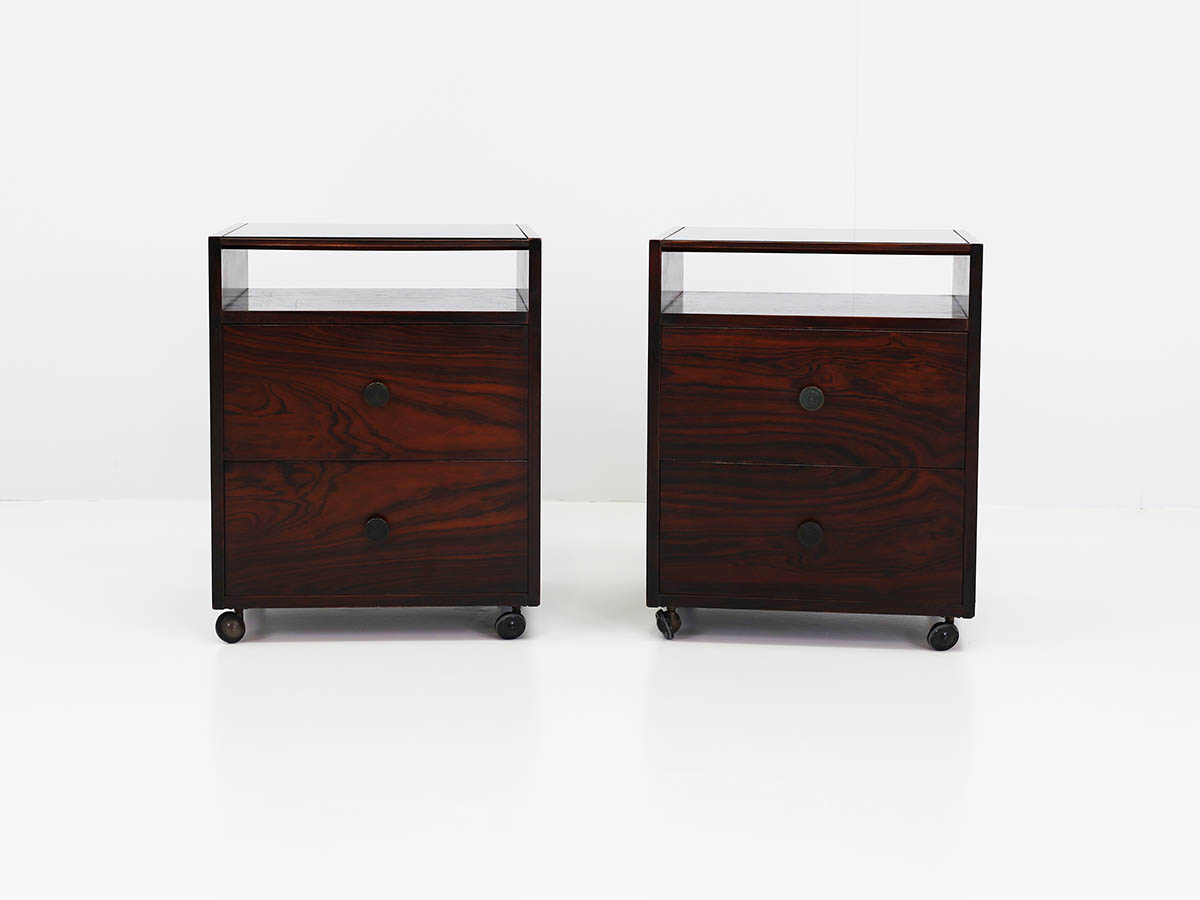
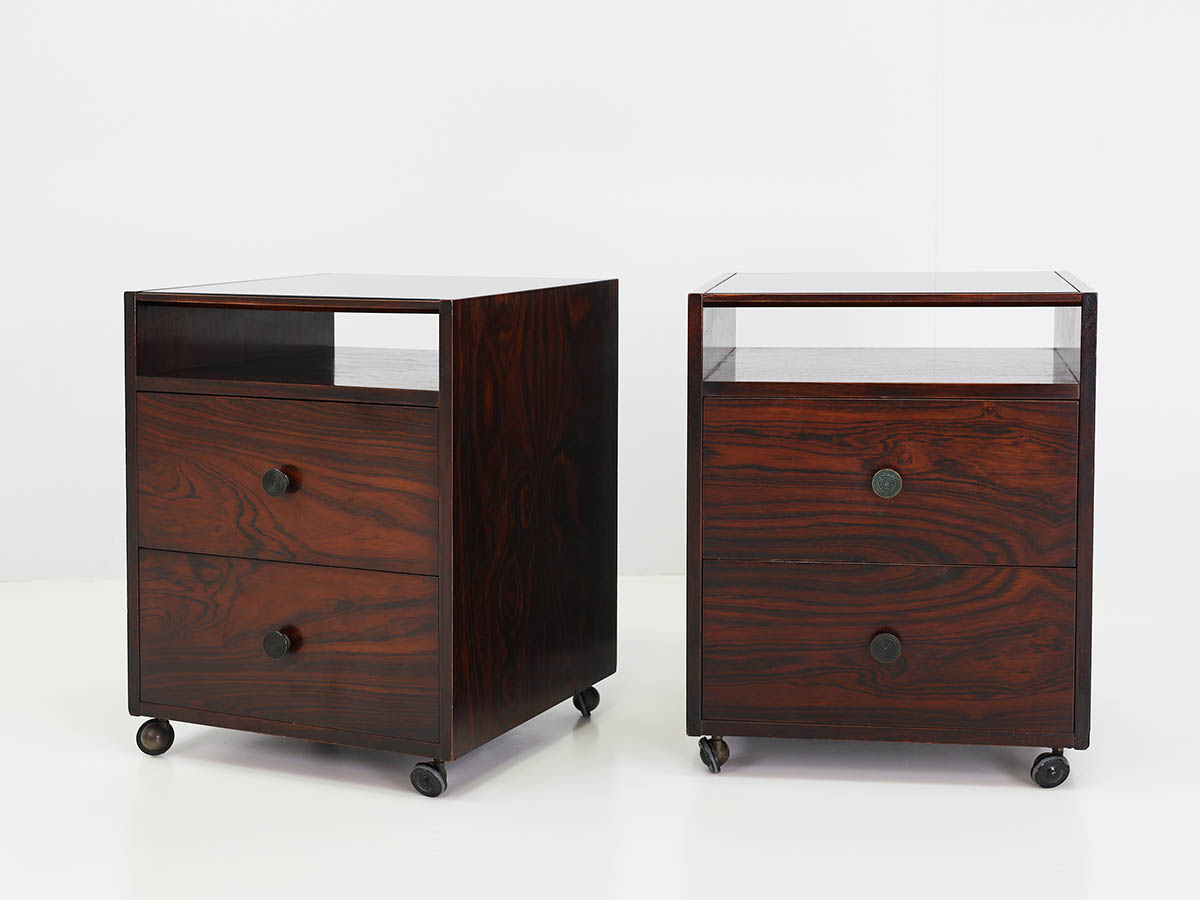
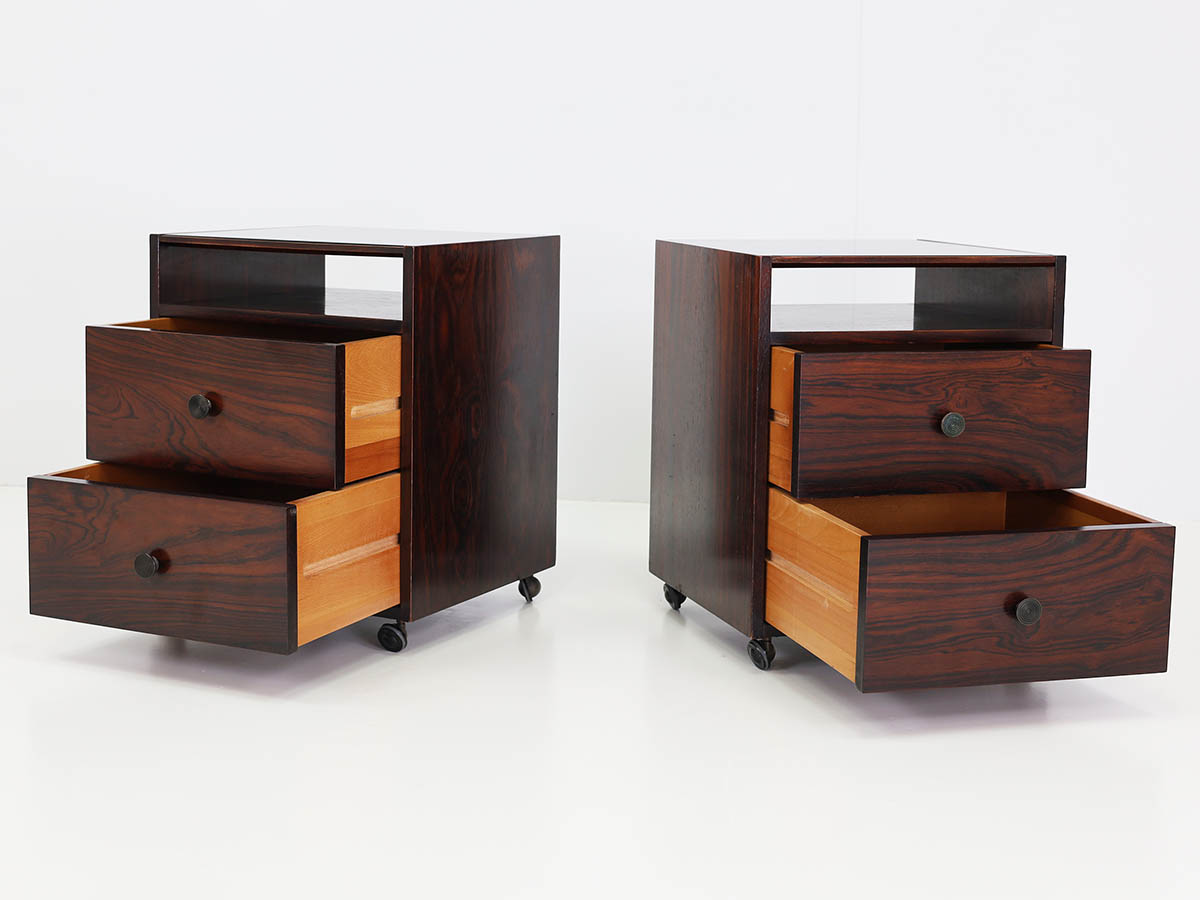
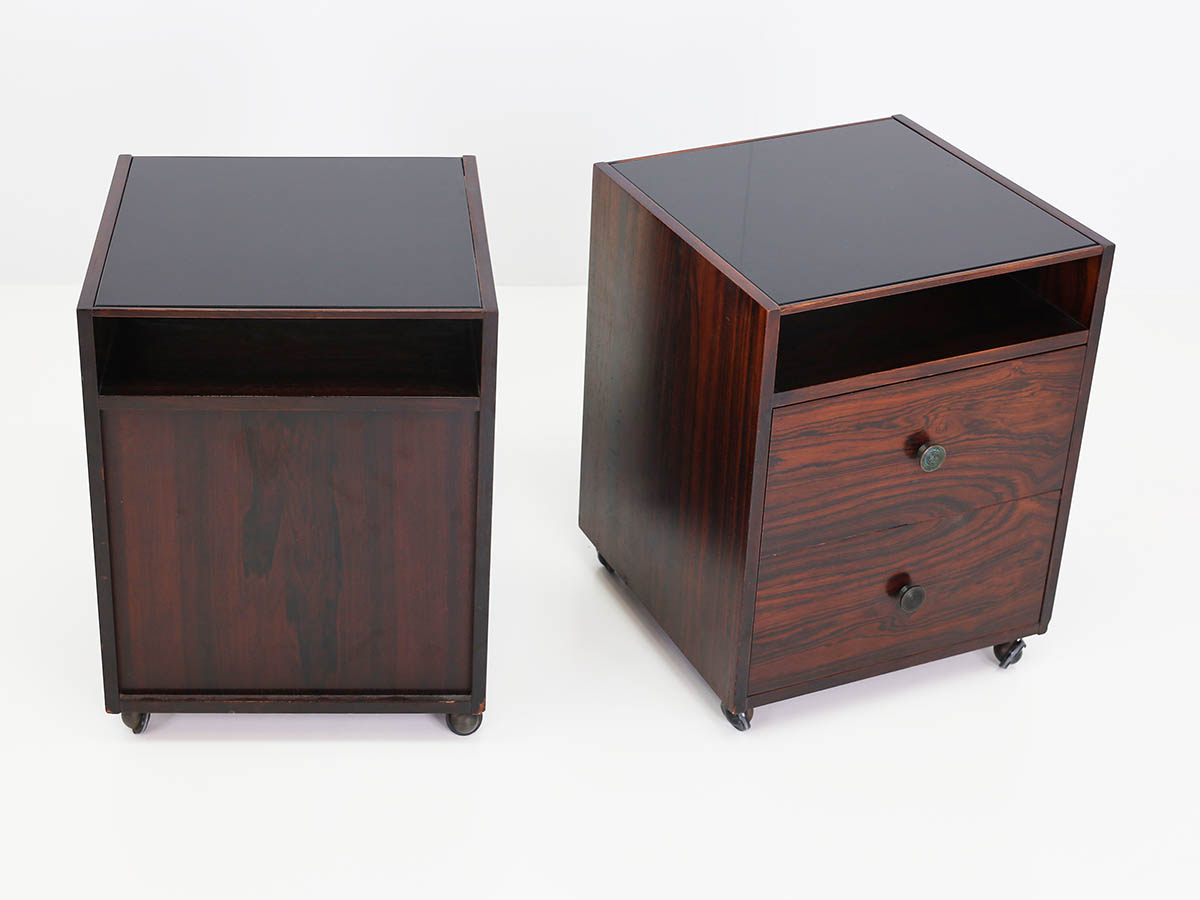
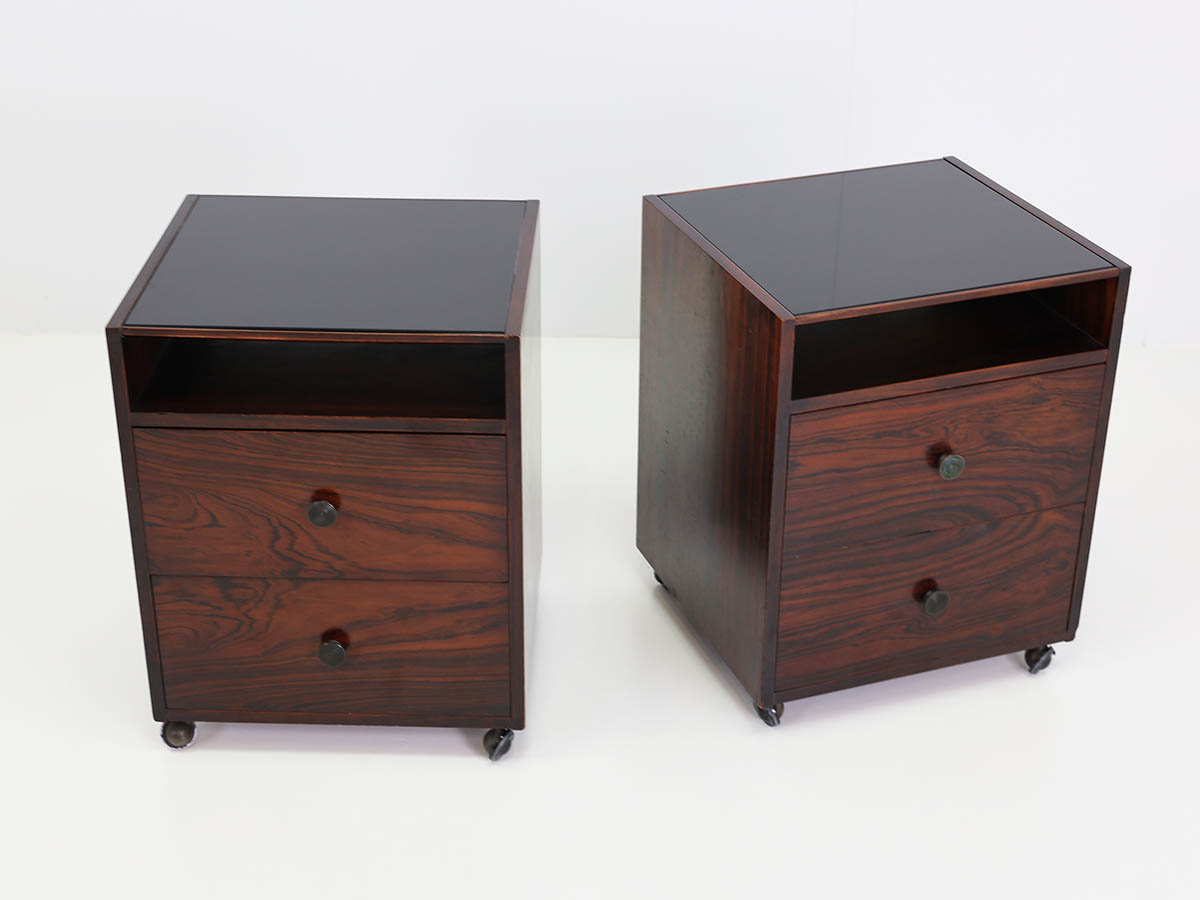
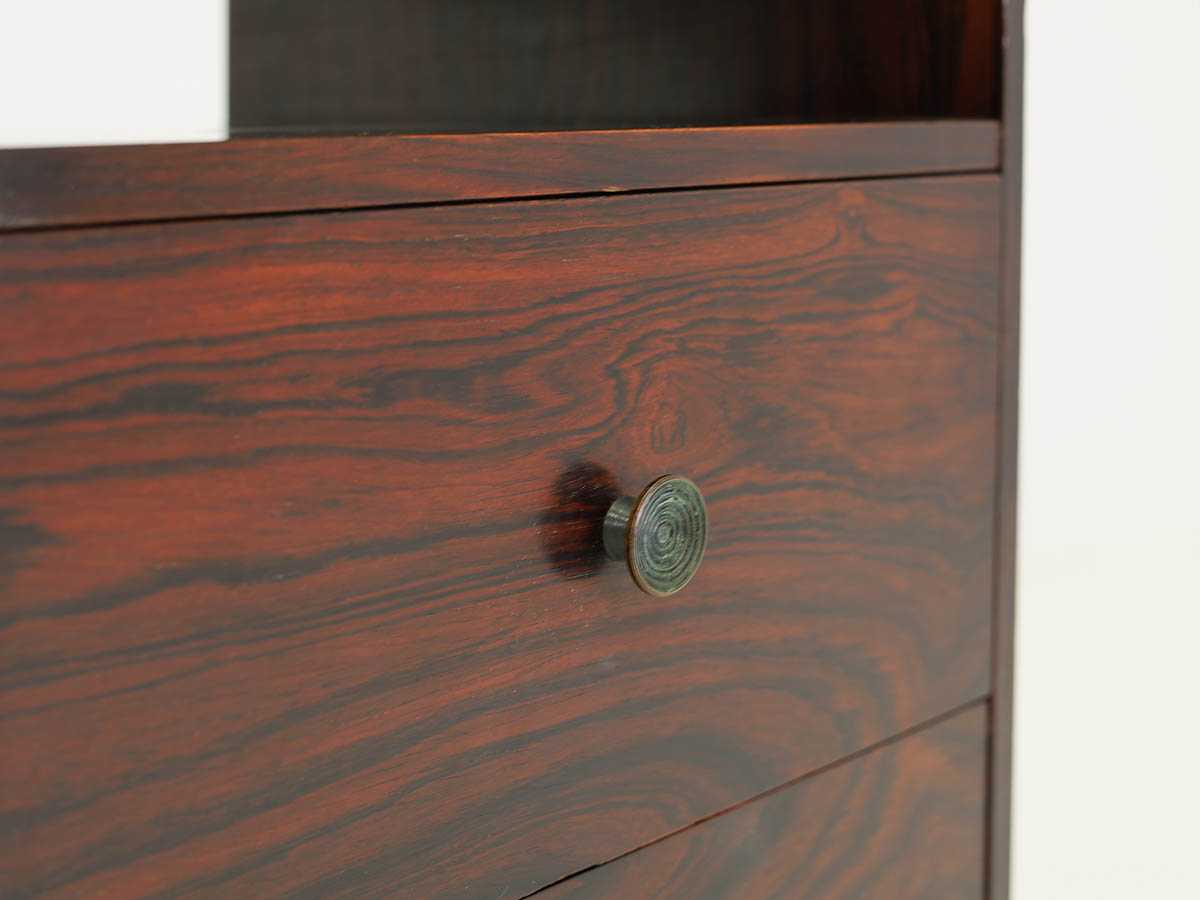
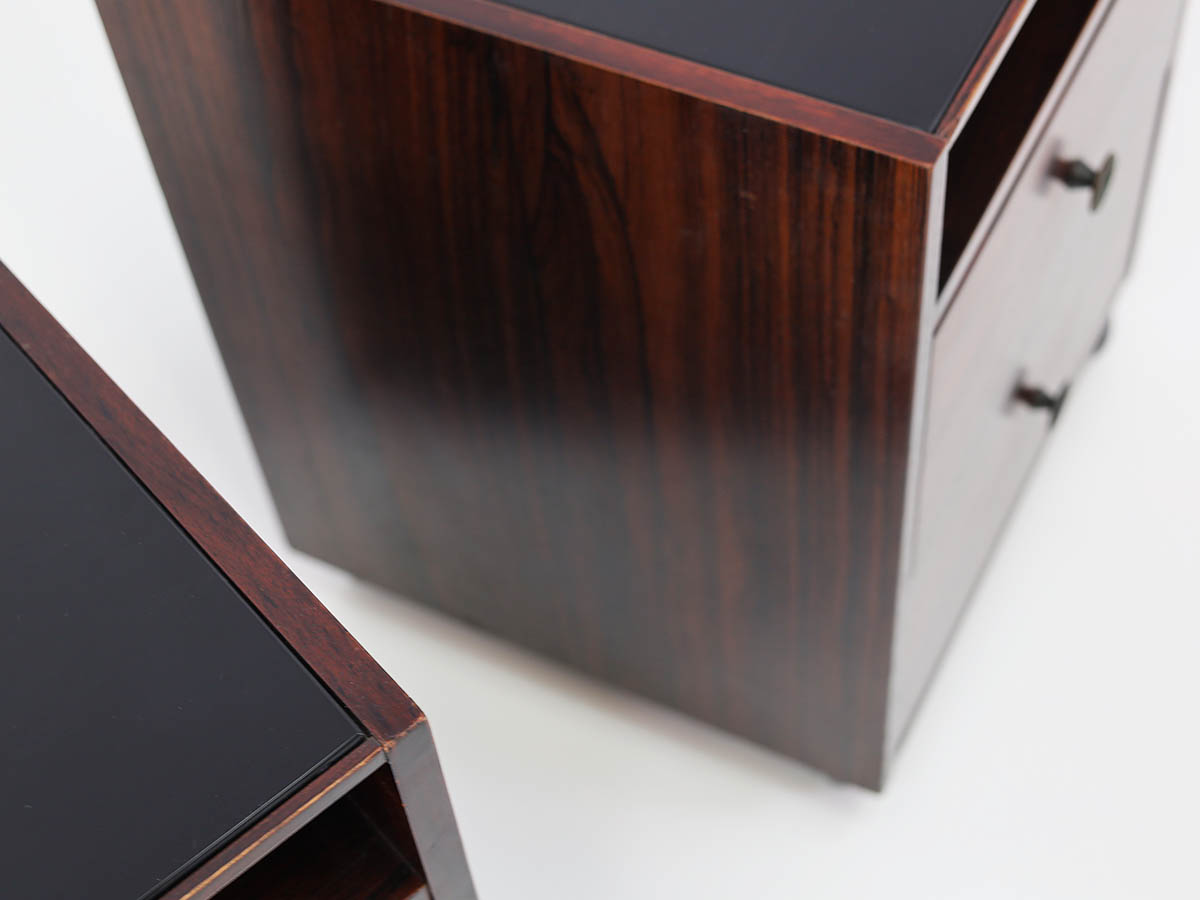
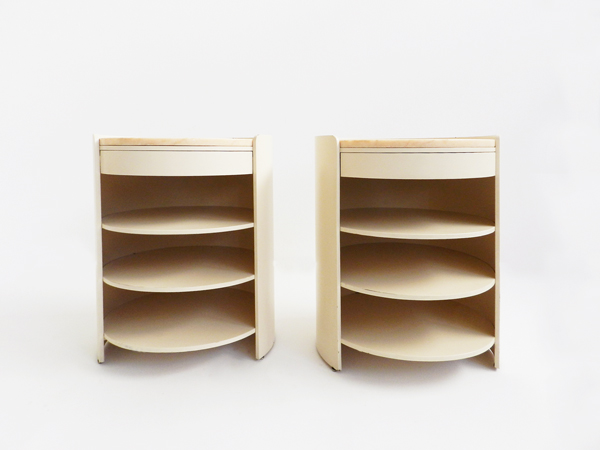
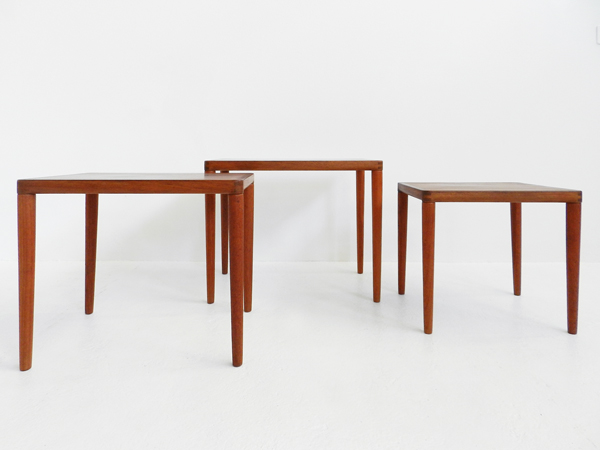
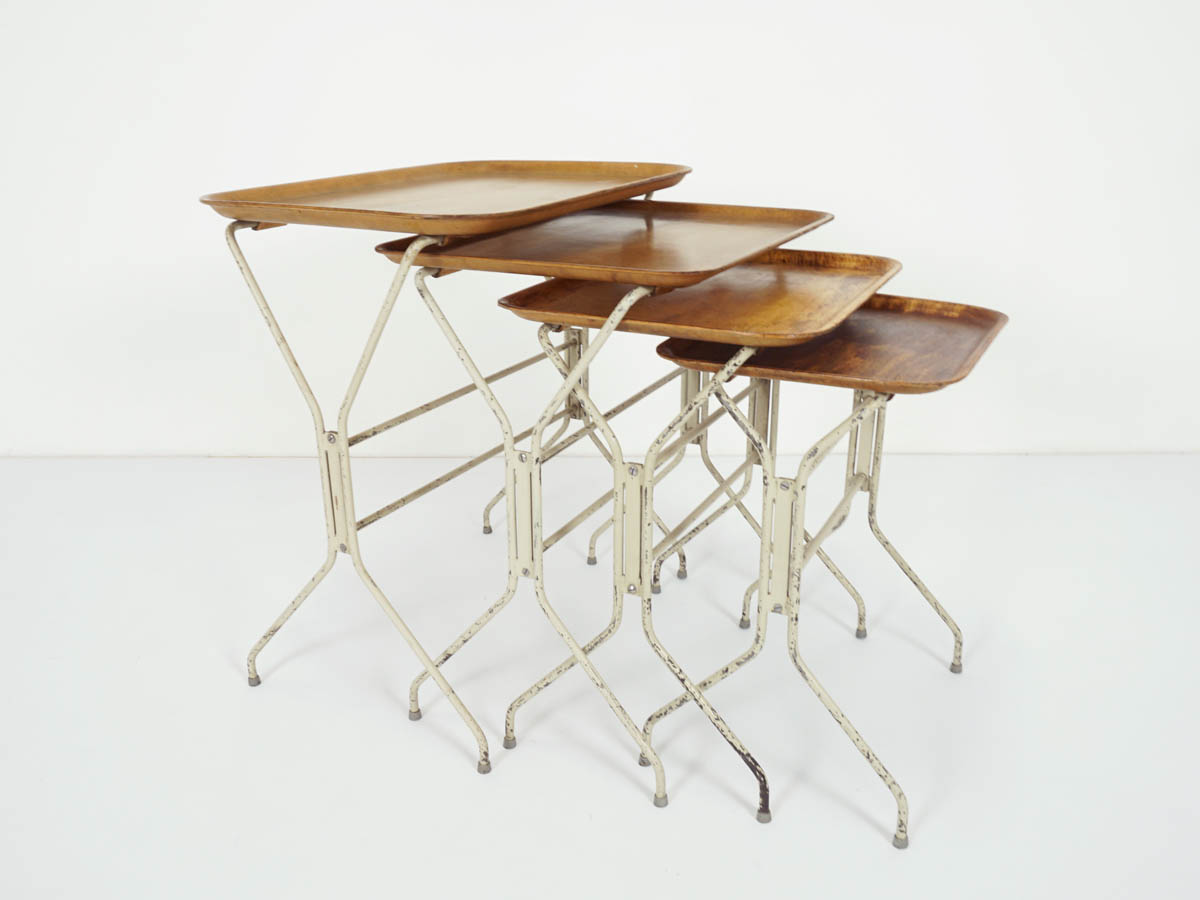
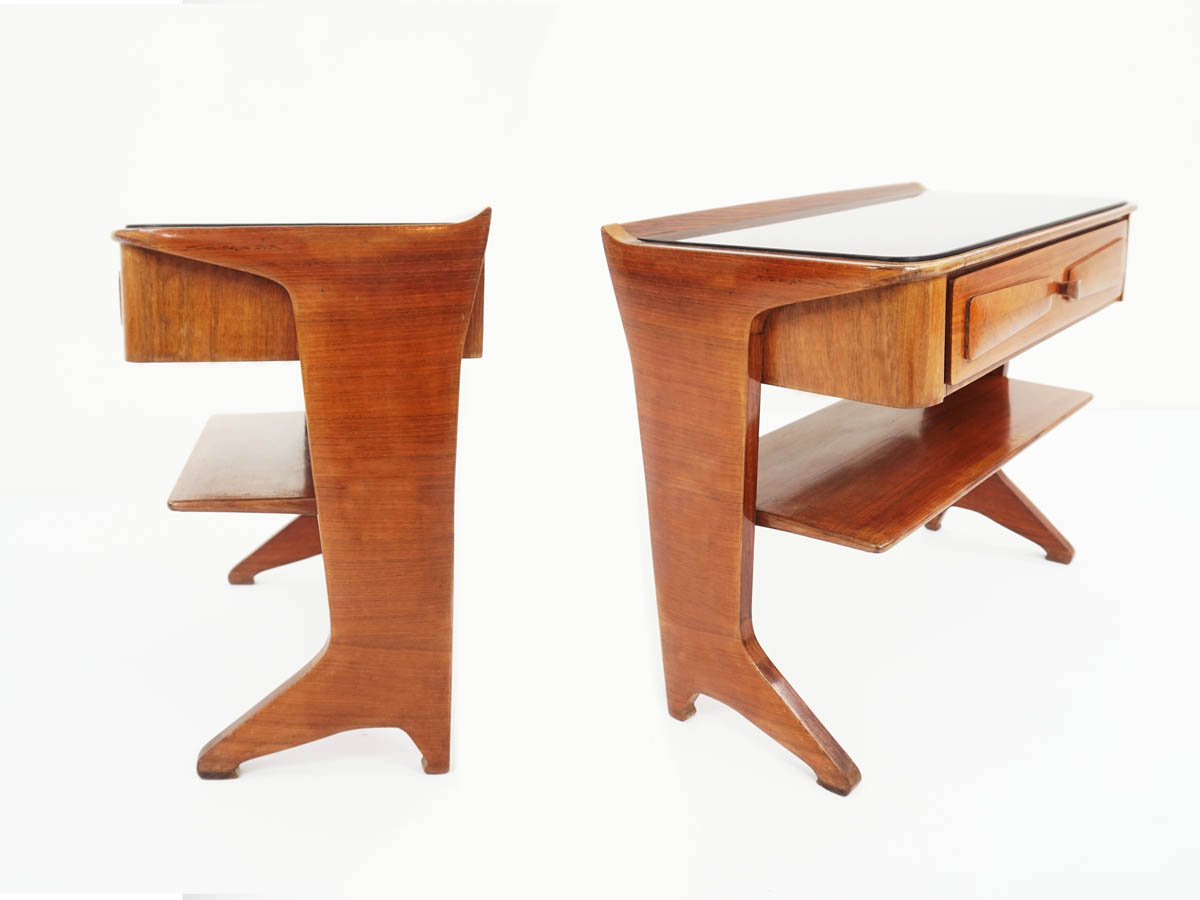
This refined pair of Carlo De Carli bedside tables for Sormani, designed and produced in 1964, features a structure in rosewood, prized for its rich grain and deep tones, combined with glass tops that visually lighten the overall design.


A particularly interesting detail is the presence of casters at the base, designed to allow the tables to be moved easily. This practical feature enhances their versatility: originally conceived as bedside tables, they can also be used as side tables or small mobile occasional tables, adapting naturally to different interiors and functions.


The combination of rosewood, glass, and a mobile structure perfectly reflects De Carli’s approach to functional yet sophisticated design. The wood introduces warmth and material richness, while the glass adds transparency and lightness; the casters provide an additional practical dimension that makes these tables remarkably contemporary even today.


With their elegant proportions, high-quality materials, and versatile design, these Carlo De Carli bedside and side tables for Sormani, designed and produced in 1964, represent a refined example of 1960s Italian design, ideal for collectors and enthusiasts of Italian modernism, Milanese design, and historic high-quality furniture.



Item nr. 26109

Pair of Sliding Bedside, Suitable as Side Tables or Center Tables

Designer

ProductionSormani
Italy 1964

MaterialRosewood | copper | glass

Dimension40 x 36.5 x HT 51 cm

Price in Swiss Francs / Euro 1'800.00

pair-of-sliding-bedside-suitable-as-side-tables-or-center-tables


Carlo De Carli (1910–1999) was one of the leading figures in 20th-century Italian architecture and design. Born in Milan, he graduated in architecture from the Politecnico di Milano in 1934 and developed his career within the vibrant cultural environment of Milanese Rationalism and the Modern Movement. His design philosophy is distinguished by a balance of functionality, ergonomics, formal simplicity, and material quality, with particular attention to the relationship between people and domestic space.


From the 1940s and 1950s onward, De Carli developed a distinctive language in which architectural rigor was combined with more fluid forms and a strong emphasis on comfort. The result was a refined yet understated design approach, combining structure, visual lightness, and fine craftsmanship. His work represents an important chapter in Italian modernism and remains highly appreciated in the international collectible design market.


Carlo De Carli and Sormani


De Carli’s collaboration with Sormani, developed particularly during the 1960s, was one of the most significant periods of his career in industrial design. For the Milanese company, he designed a series of furnishings using precious woods, glass, and clean-lined structures, successfully combining industrial production with exceptional attention to detail.


Pair of Rosewood and Glass Bedside and Side Tables


This refined pair of Carlo De Carli bedside tables for Sormani, designed and produced in 1964, features a structure in rosewood, prized for its rich grain and deep tones, combined with glass tops that visually lighten the overall design.


A particularly interesting detail is the presence of casters at the base, designed to allow the tables to be moved easily. This practical feature enhances their versatility: originally conceived as bedside tables, they can also be used as side tables or small mobile occasional tables, adapting naturally to different interiors and functions.


The combination of rosewood, glass, and a mobile structure perfectly reflects De Carli’s approach to functional yet sophisticated design. The wood introduces warmth and material richness, while the glass adds transparency and lightness; the casters provide an additional practical dimension that makes these tables remarkably contemporary even today.


With their elegant proportions, high-quality materials, and versatile design, these Carlo De Carli bedside and side tables for Sormani, designed and produced in 1964, represent a refined example of 1960s Italian design, ideal for collectors and enthusiasts of Italian modernism, Milanese design, and historic high-quality furniture.


Description

Carlo De Carli (1910–1999) was one of the leading figures in 20th-century Italian architecture and design. Born in Milan, he graduated in architecture from the Politecnico di Milano in 1934 and developed his career within the vibrant cultural environment of Milanese Rationalism and the Modern Movement. His design philosophy is distinguished by a balance of functionality, ergonomics, formal simplicity, and material quality, with particular attention to the relationship between people and domestic space.

From the 1940s and 1950s onward, De Carli developed a distinctive language in which architectural rigor was combined with more fluid forms and a strong emphasis on comfort. The result was a refined yet understated design approach, combining structure, visual lightness, and fine craftsmanship. His work represents an important chapter in Italian modernism and remains highly appreciated in the international collectible design market.

Carlo De Carli and Sormani

De Carli’s collaboration with Sormani, developed particularly during the 1960s, was one of the most significant periods of his career in industrial design. For the Milanese company, he designed a series of furnishings using precious woods, glass, and clean-lined structures, successfully combining industrial production with exceptional attention to detail.

Pair of Rosewood and Glass Bedside and Side Tables

This refined pair of Carlo De Carli bedside tables for Sormani, designed and produced in 1964, features a structure in rosewood, prized for its rich grain and deep tones, combined with glass tops that visually lighten the overall design.

A particularly interesting detail is the presence of casters at the base, designed to allow the tables to be moved easily. This practical feature enhances their versatility: originally conceived as bedside tables, they can also be used as side tables or small mobile occasional tables, adapting naturally to different interiors and functions.

The combination of rosewood, glass, and a mobile structure perfectly reflects De Carli’s approach to functional yet sophisticated design. The wood introduces warmth and material richness, while the glass adds transparency and lightness; the casters provide an additional practical dimension that makes these tables remarkably contemporary even today.

With their elegant proportions, high-quality materials, and versatile design, these Carlo De Carli bedside and side tables for Sormani, designed and produced in 1964, represent a refined example of 1960s Italian design, ideal for collectors and enthusiasts of Italian modernism, Milanese design, and historic high-quality furniture.

Additional information

Material

Dimension