

George Nakashima: The Philosophy of Material and Nature


George Nakashima’s philosophy is rooted in a profound relationship with nature, material, and the intrinsic value of wood. For Nakashima, designing a piece of furniture did not mean imposing a form upon the material, but entering into a dialogue with it, allowing the characteristics of the wood itself to suggest the design. Solid wood was regarded as a living material, carrying its own history, expressed through grain, knots, cracks, variations in colour, and irregularities. These elements were not flaws to be corrected, but qualities to be preserved and brought to the fore.


His vision emerged from the meeting of traditional Japanese craftsmanship and the culture of modern Western design. The result is an essential and rigorous language, yet one of remarkable expressive power, founded on balanced proportions, restrained details, and an exceptional sensitivity to the quality of the material. In his work, large wooden slabs often retain their natural edges, fissures, and irregularities: the design does not seek to erase nature, but to make it the protagonist. From this perspective, furniture also takes on an almost spiritual dimension, establishing a relationship with both the person who uses it and the environment in which it is placed.


Today, this philosophy continues to serve as a reference for artisans and designers who choose to work with wood through a respectful approach to the material. Those who carry forward Nakashima’s legacy do not simply reproduce his forms, but interpret his fundamental principle: allowing the wood itself to suggest the design. The search for unique slabs, the preservation of natural edges, grain patterns, and imperfections, together with careful and measured craftsmanship, become part of an approach in which each piece retains its own identity. It is a vision far removed from serial production, one that places the relationship between human being, material, and environment at its centre, creating furniture intended to evolve and mature over time.


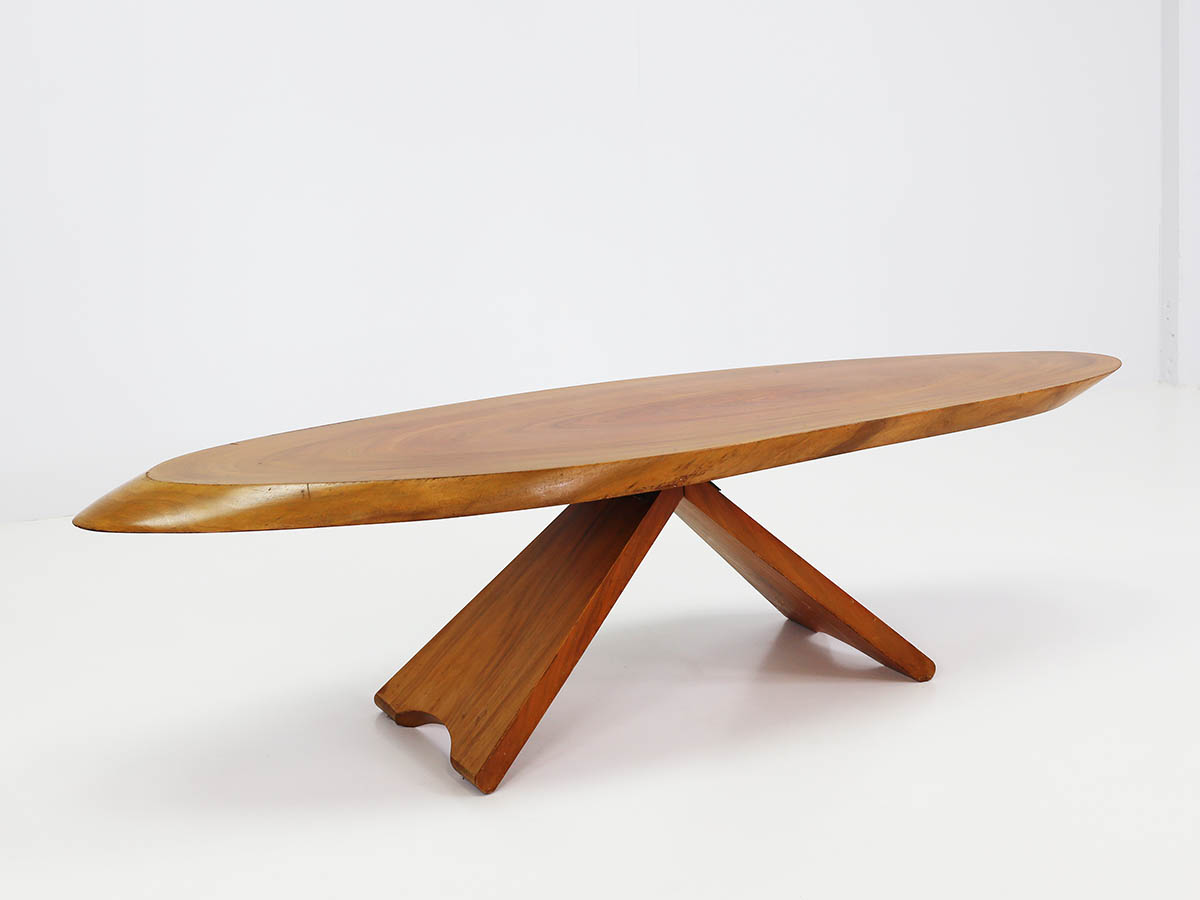
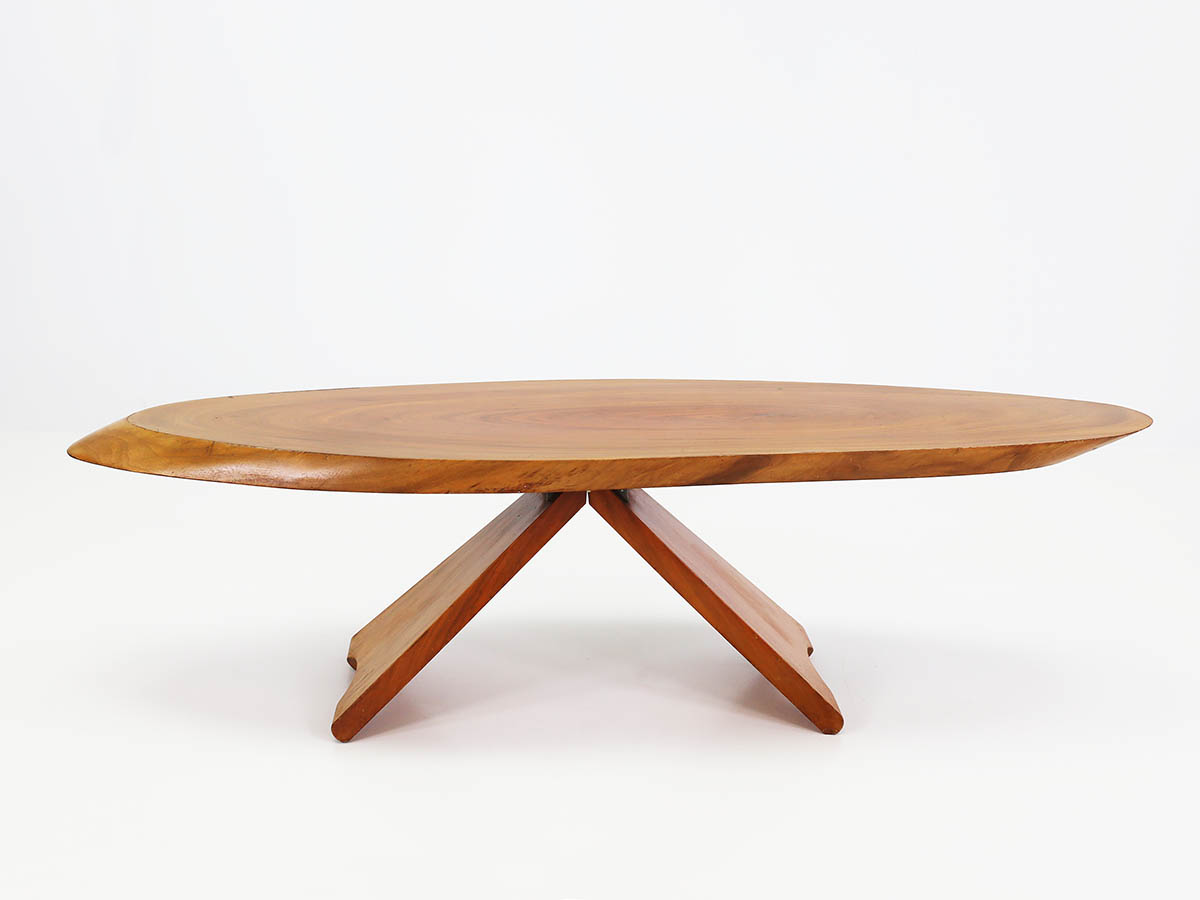
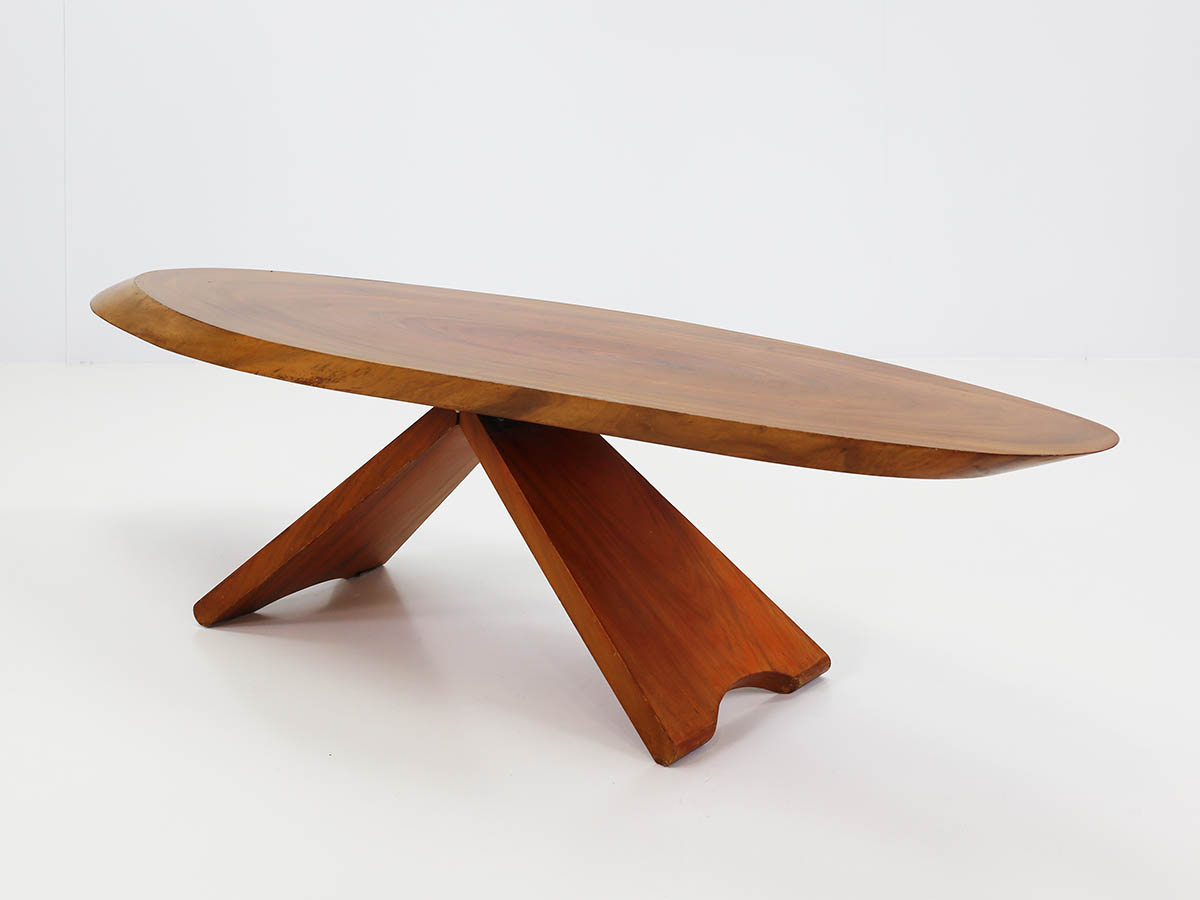
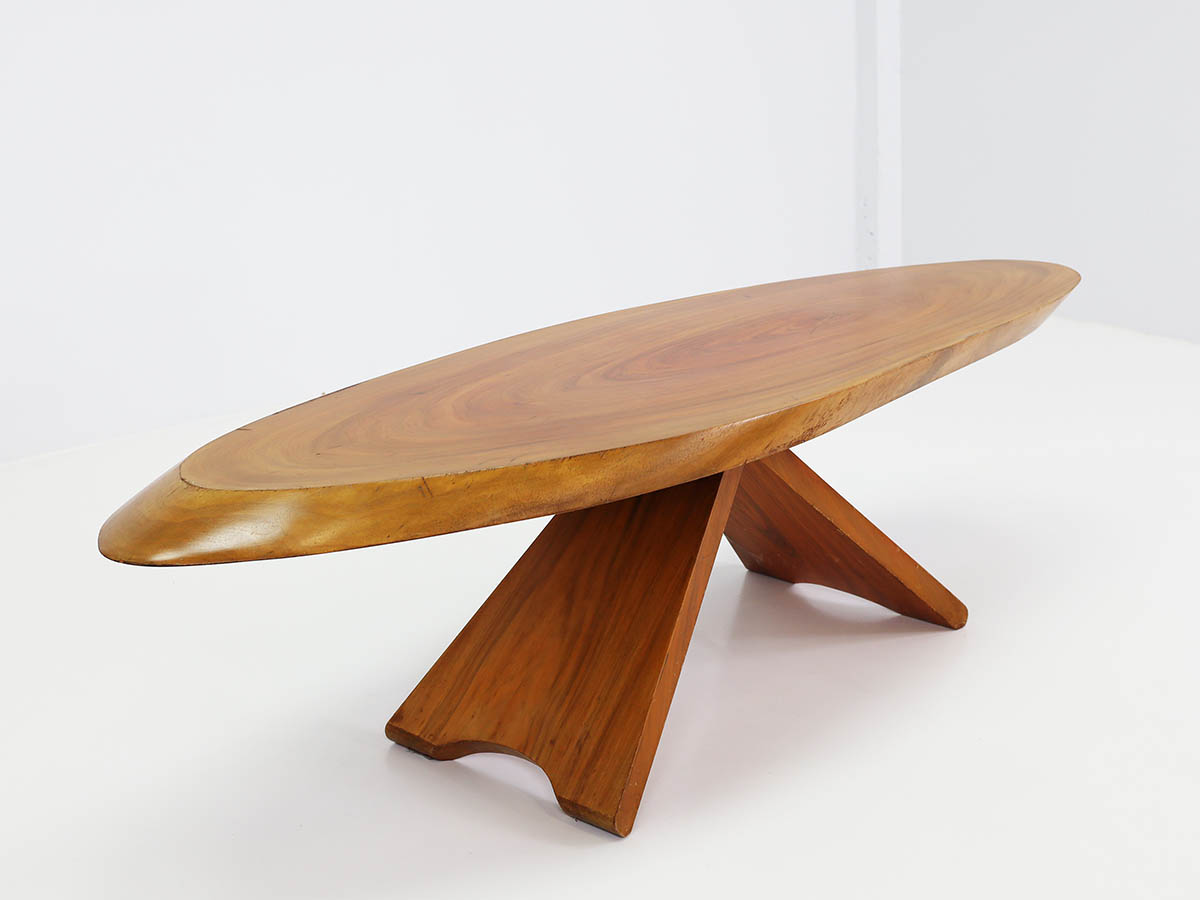
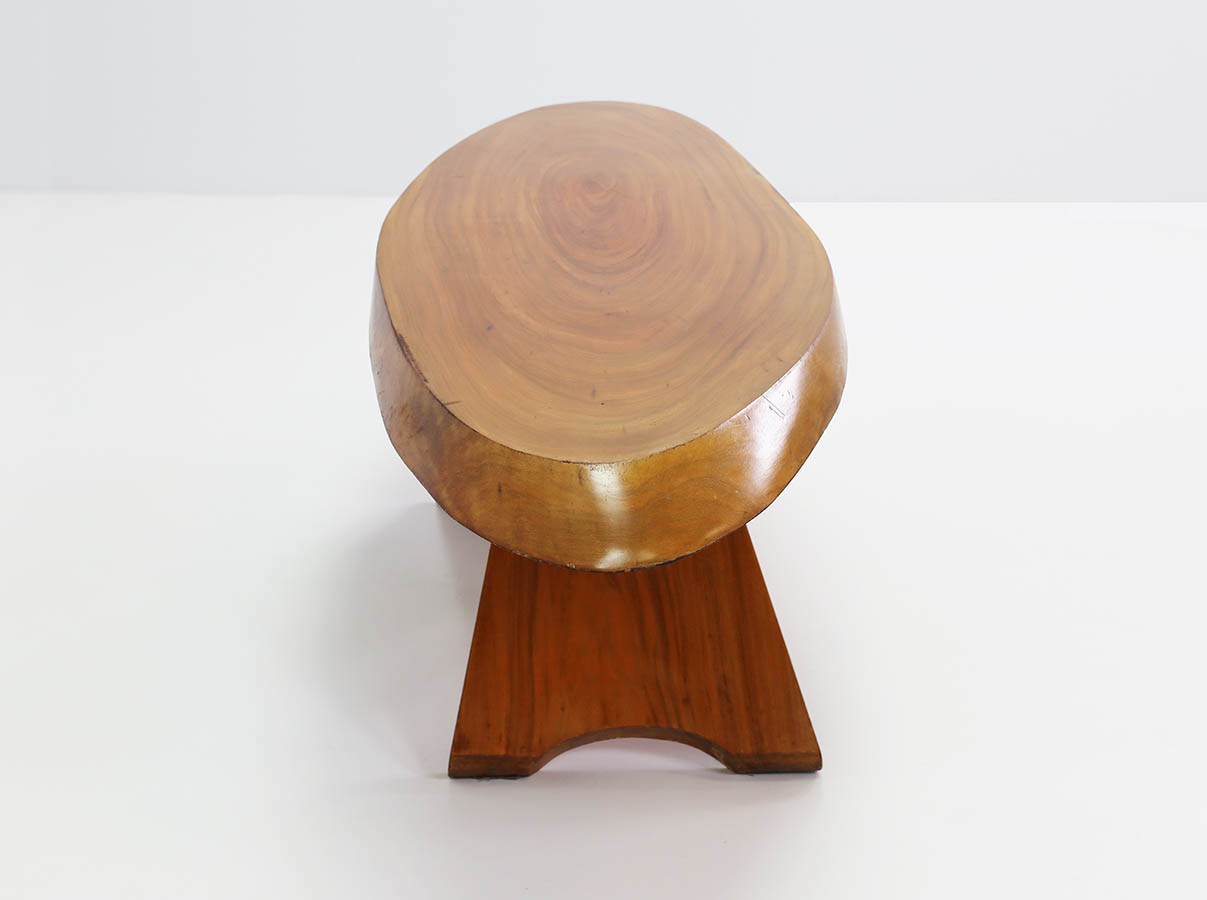
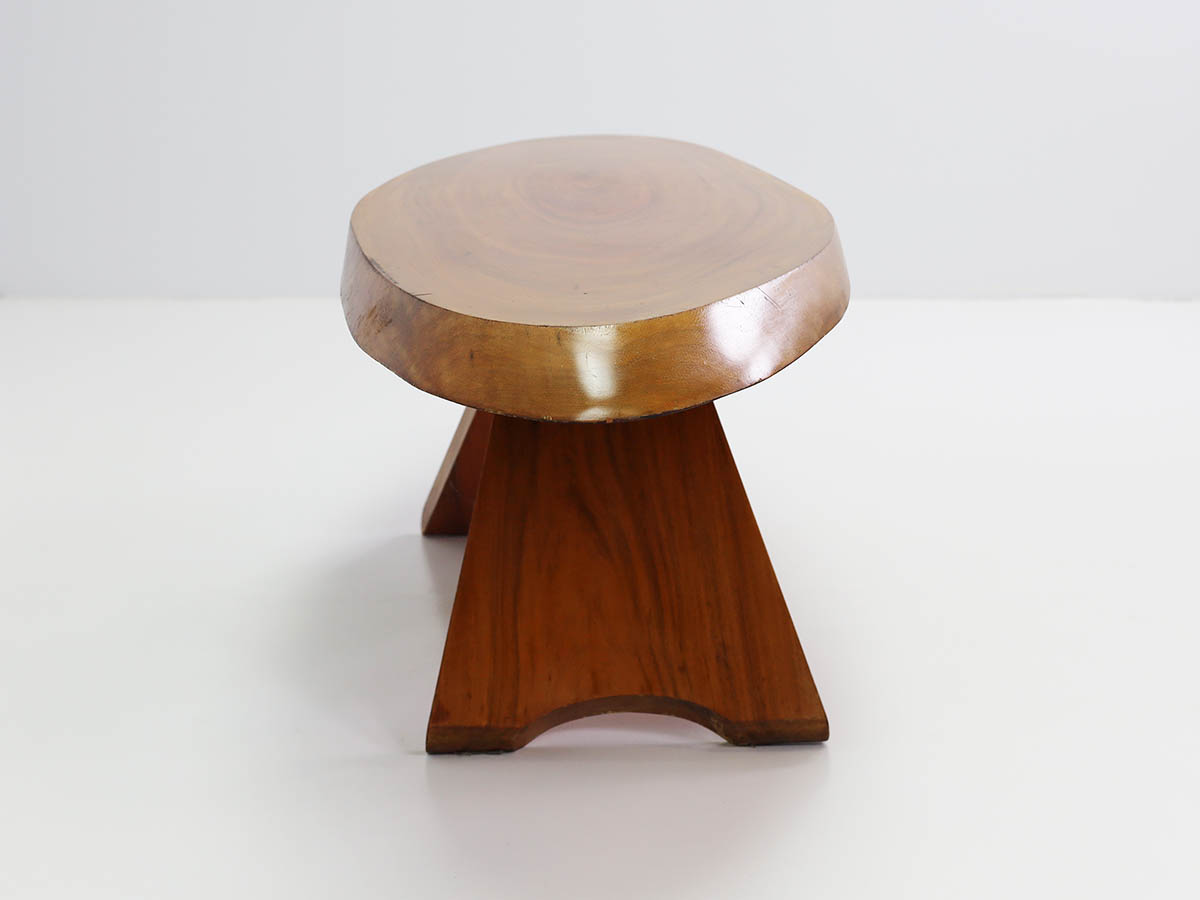
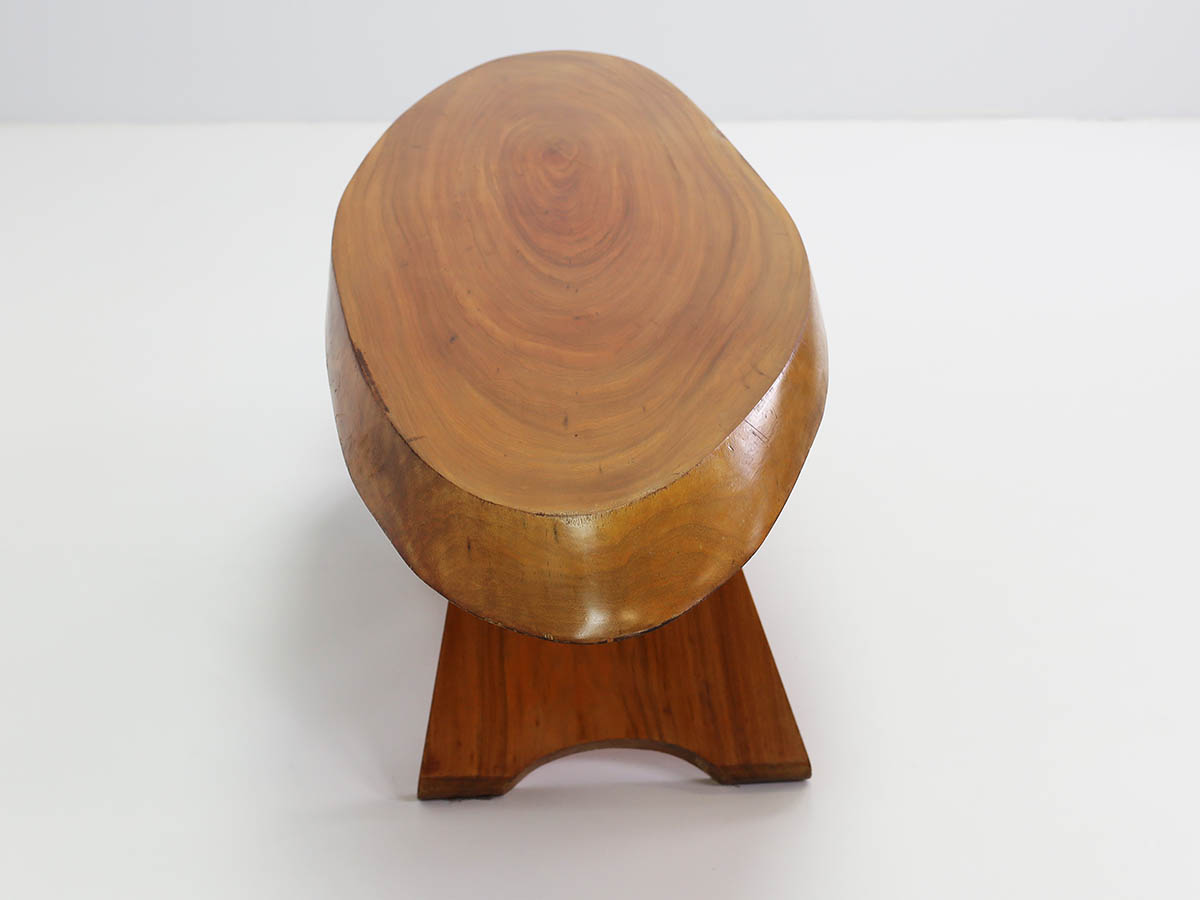
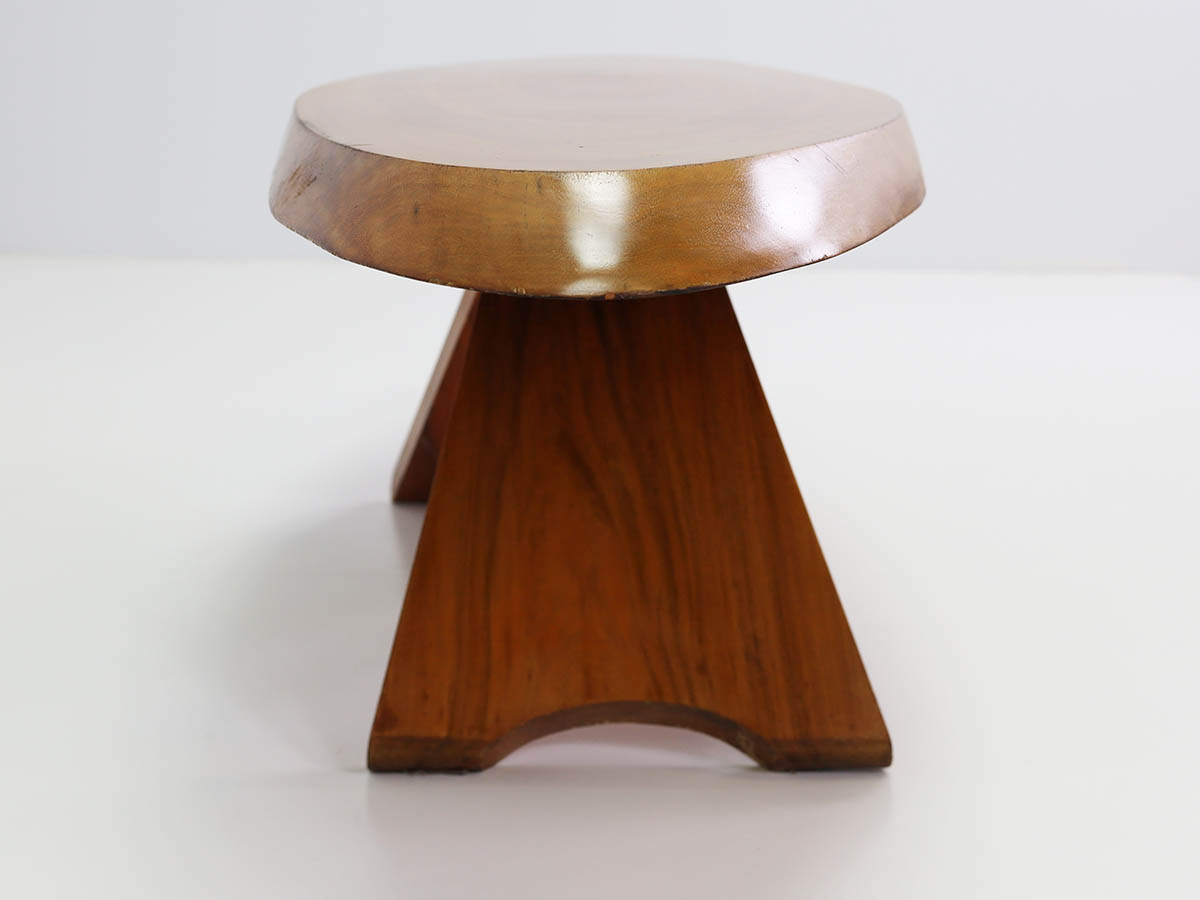
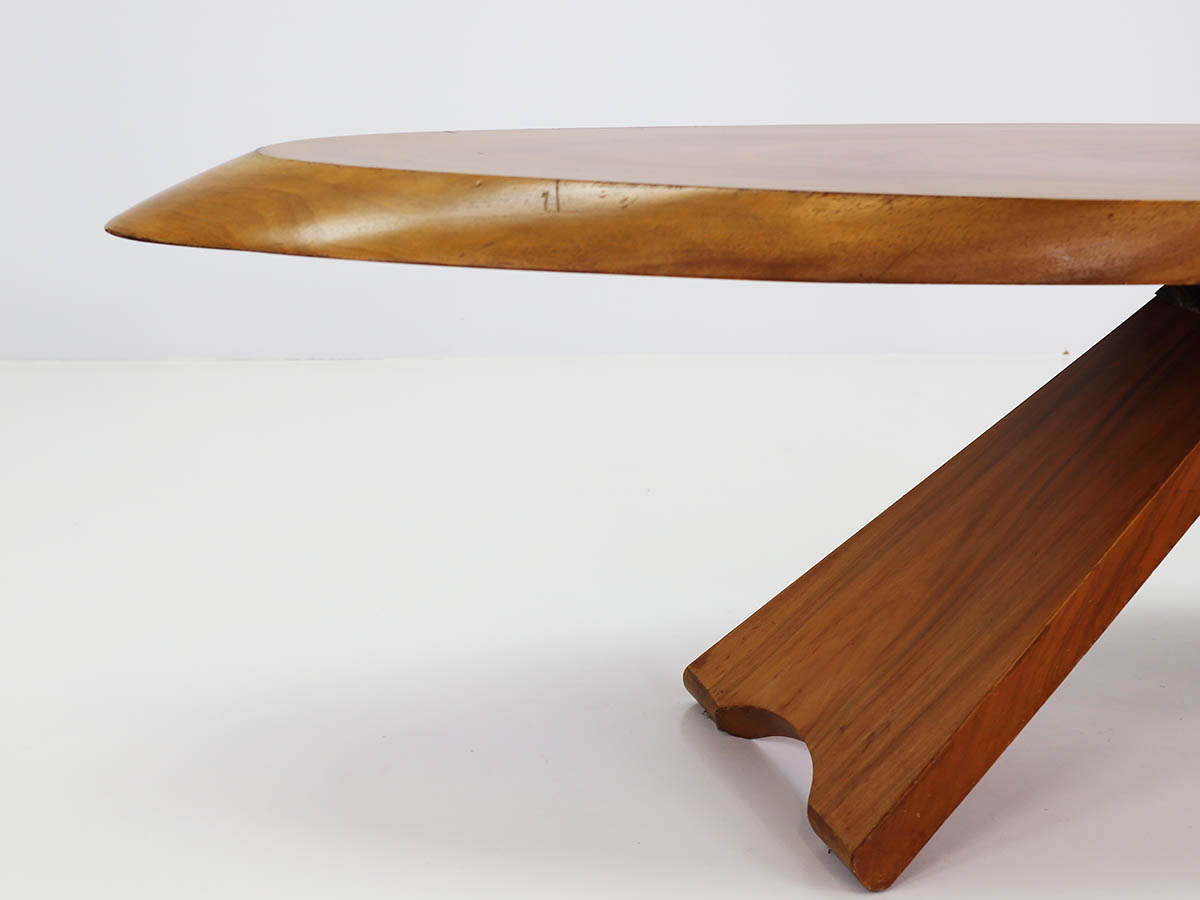
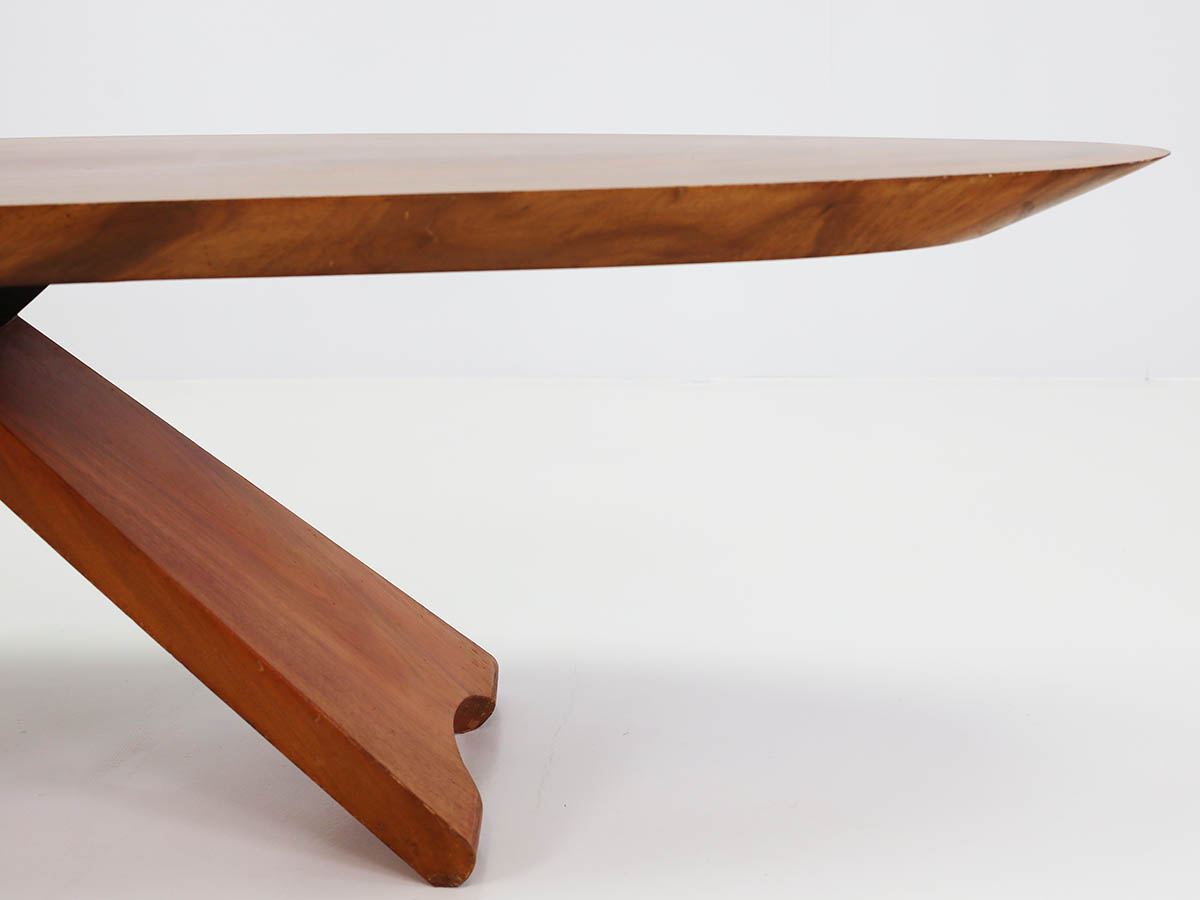
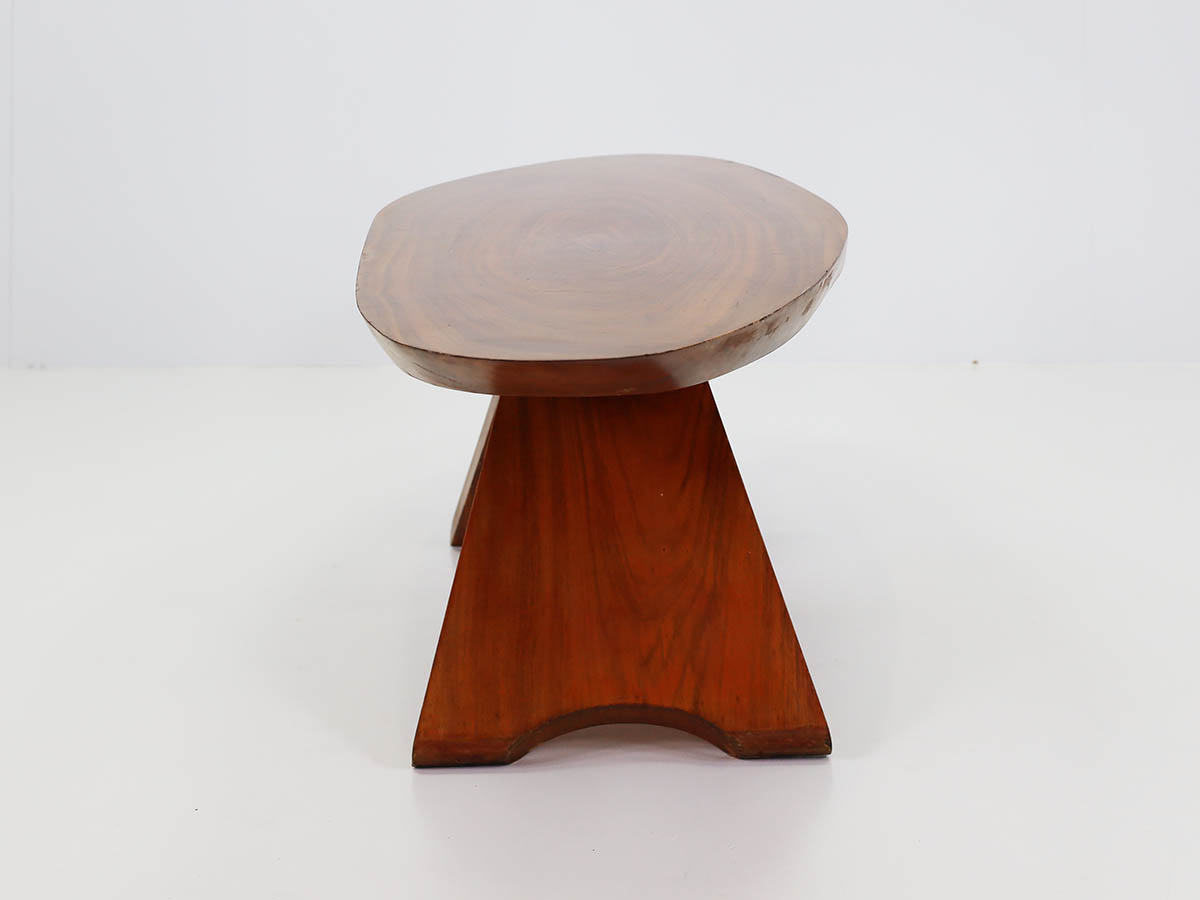
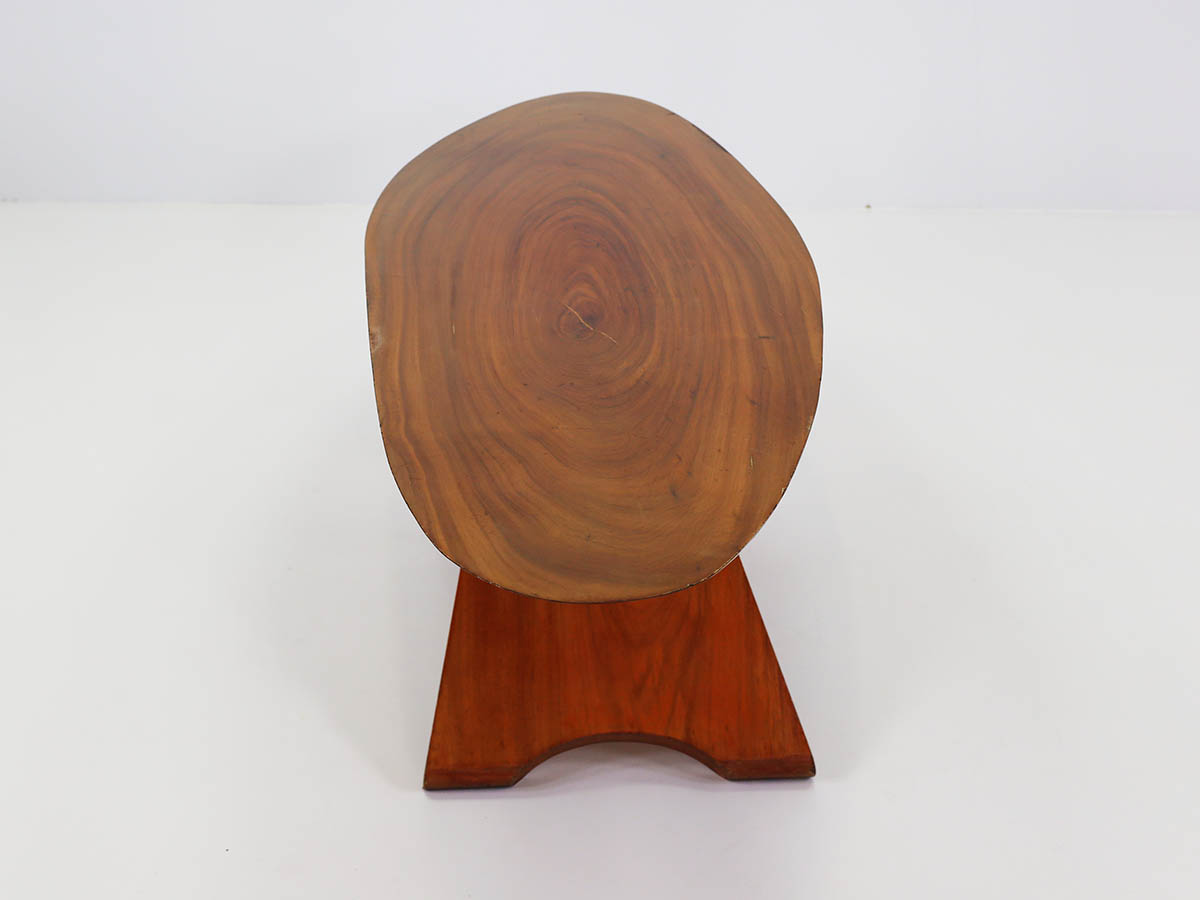
Among the pieces that best embody this sensibility is a large table made more than fifty years ago, constructed according to the principles and formal language of the Nakashima school. Its top, crafted from a single section of African wood, measures approximately 200 × 54 cm and retains the expressive strength of the material in its natural continuity. Acquired directly from its previous owners, the table carries not only the quality of its craftsmanship, but also the authentic traces of time and its own history. The decision to allow the wood to remain the protagonist, revealing its grain, irregularities, and character, fully conveys the conception of furniture as an encounter between nature and design that continues to make George Nakashima’s legacy so relevant today.


More than simply a piece of furniture, the table therefore represents a precise idea of design: an object in which material is not subordinated to form, but becomes the very origin and substance of the design. It is precisely this ability to embrace imperfection, time, and the uniqueness of wood that makes Nakashima’s philosophy remain profoundly contemporary.
Item nr. 26124

Large Organic Solid Wood Coffee Table, Crafted from a 2-Metre Tree Slice

Designer

ProductionUnited States 1970 Approx

MaterialSolid Limba-Korina wood

Dimension200 x 54 x HT 53.5 cm

large-organic-solid-wood-coffee-table-crafted-from-a-2-metre-tree-slice


George Nakashima: The Philosophy of Material and Nature


George Nakashima’s philosophy is rooted in a profound relationship with nature, material, and the intrinsic value of wood. For Nakashima, designing a piece of furniture did not mean imposing a form upon the material, but entering into a dialogue with it, allowing the characteristics of the wood itself to suggest the design. Solid wood was regarded as a living material, carrying its own history, expressed through grain, knots, cracks, variations in colour, and irregularities. These elements were not flaws to be corrected, but qualities to be preserved and brought to the fore.


His vision emerged from the meeting of traditional Japanese craftsmanship and the culture of modern Western design. The result is an essential and rigorous language, yet one of remarkable expressive power, founded on balanced proportions, restrained details, and an exceptional sensitivity to the quality of the material. In his work, large wooden slabs often retain their natural edges, fissures, and irregularities: the design does not seek to erase nature, but to make it the protagonist. From this perspective, furniture also takes on an almost spiritual dimension, establishing a relationship with both the person who uses it and the environment in which it is placed.


Today, this philosophy continues to serve as a reference for artisans and designers who choose to work with wood through a respectful approach to the material. Those who carry forward Nakashima’s legacy do not simply reproduce his forms, but interpret his fundamental principle: allowing the wood itself to suggest the design. The search for unique slabs, the preservation of natural edges, grain patterns, and imperfections, together with careful and measured craftsmanship, become part of an approach in which each piece retains its own identity. It is a vision far removed from serial production, one that places the relationship between human being, material, and environment at its centre, creating furniture intended to evolve and mature over time.


Among the pieces that best embody this sensibility is a large table made more than fifty years ago, constructed according to the principles and formal language of the Nakashima school. Its top, crafted from a single section of African wood, measures approximately 200 × 54 cm and retains the expressive strength of the material in its natural continuity. Acquired directly from its previous owners, the table carries not only the quality of its craftsmanship, but also the authentic traces of time and its own history. The decision to allow the wood to remain the protagonist, revealing its grain, irregularities, and character, fully conveys the conception of furniture as an encounter between nature and design that continues to make George Nakashima’s legacy so relevant today.


More than simply a piece of furniture, the table therefore represents a precise idea of design: an object in which material is not subordinated to form, but becomes the very origin and substance of the design. It is precisely this ability to embrace imperfection, time, and the uniqueness of wood that makes Nakashima’s philosophy remain profoundly contemporary.
Description

George Nakashima: The Philosophy of Material and Nature

George Nakashima’s philosophy is rooted in a profound relationship with nature, material, and the intrinsic value of wood. For Nakashima, designing a piece of furniture did not mean imposing a form upon the material, but entering into a dialogue with it, allowing the characteristics of the wood itself to suggest the design. Solid wood was regarded as a living material, carrying its own history, expressed through grain, knots, cracks, variations in colour, and irregularities. These elements were not flaws to be corrected, but qualities to be preserved and brought to the fore.

His vision emerged from the meeting of traditional Japanese craftsmanship and the culture of modern Western design. The result is an essential and rigorous language, yet one of remarkable expressive power, founded on balanced proportions, restrained details, and an exceptional sensitivity to the quality of the material. In his work, large wooden slabs often retain their natural edges, fissures, and irregularities: the design does not seek to erase nature, but to make it the protagonist. From this perspective, furniture also takes on an almost spiritual dimension, establishing a relationship with both the person who uses it and the environment in which it is placed.

Today, this philosophy continues to serve as a reference for artisans and designers who choose to work with wood through a respectful approach to the material. Those who carry forward Nakashima’s legacy do not simply reproduce his forms, but interpret his fundamental principle: allowing the wood itself to suggest the design. The search for unique slabs, the preservation of natural edges, grain patterns, and imperfections, together with careful and measured craftsmanship, become part of an approach in which each piece retains its own identity. It is a vision far removed from serial production, one that places the relationship between human being, material, and environment at its centre, creating furniture intended to evolve and mature over time.

Among the pieces that best embody this sensibility is a large table made more than fifty years ago, constructed according to the principles and formal language of the Nakashima school. Its top, crafted from a single section of African wood, measures approximately 200 × 54 cm and retains the expressive strength of the material in its natural continuity. Acquired directly from its previous owners, the table carries not only the quality of its craftsmanship, but also the authentic traces of time and its own history. The decision to allow the wood to remain the protagonist, revealing its grain, irregularities, and character, fully conveys the conception of furniture as an encounter between nature and design that continues to make George Nakashima’s legacy so relevant today.

More than simply a piece of furniture, the table therefore represents a precise idea of design: an object in which material is not subordinated to form, but becomes the very origin and substance of the design. It is precisely this ability to embrace imperfection, time, and the uniqueness of wood that makes Nakashima’s philosophy remain profoundly contemporary.
Additional information

Material

Dimension