

Description
Axel Larsson (1898–1975) – Swedish Modern, Scandinavian Design and Functionalist Furniture
Axel Larsson (1898–1975) was one of the most significant Swedish furniture designers and interior architects of the 20th century. A leading figure in the development of Swedish Modern, he developed a distinctive design language based on functional clarity, balanced proportions, refined craftsmanship and a deep understanding of materials.
Trained in cabinetmaking and decorative arts, Larsson studied at the Technical School in Stockholm and worked as a draftsman in the studio of renowned Swedish designer Carl Malmsten between 1920 and 1925. These early experiences helped shape his approach to furniture design, combining traditional woodworking skills with the emerging principles of modern architecture and functionalism.
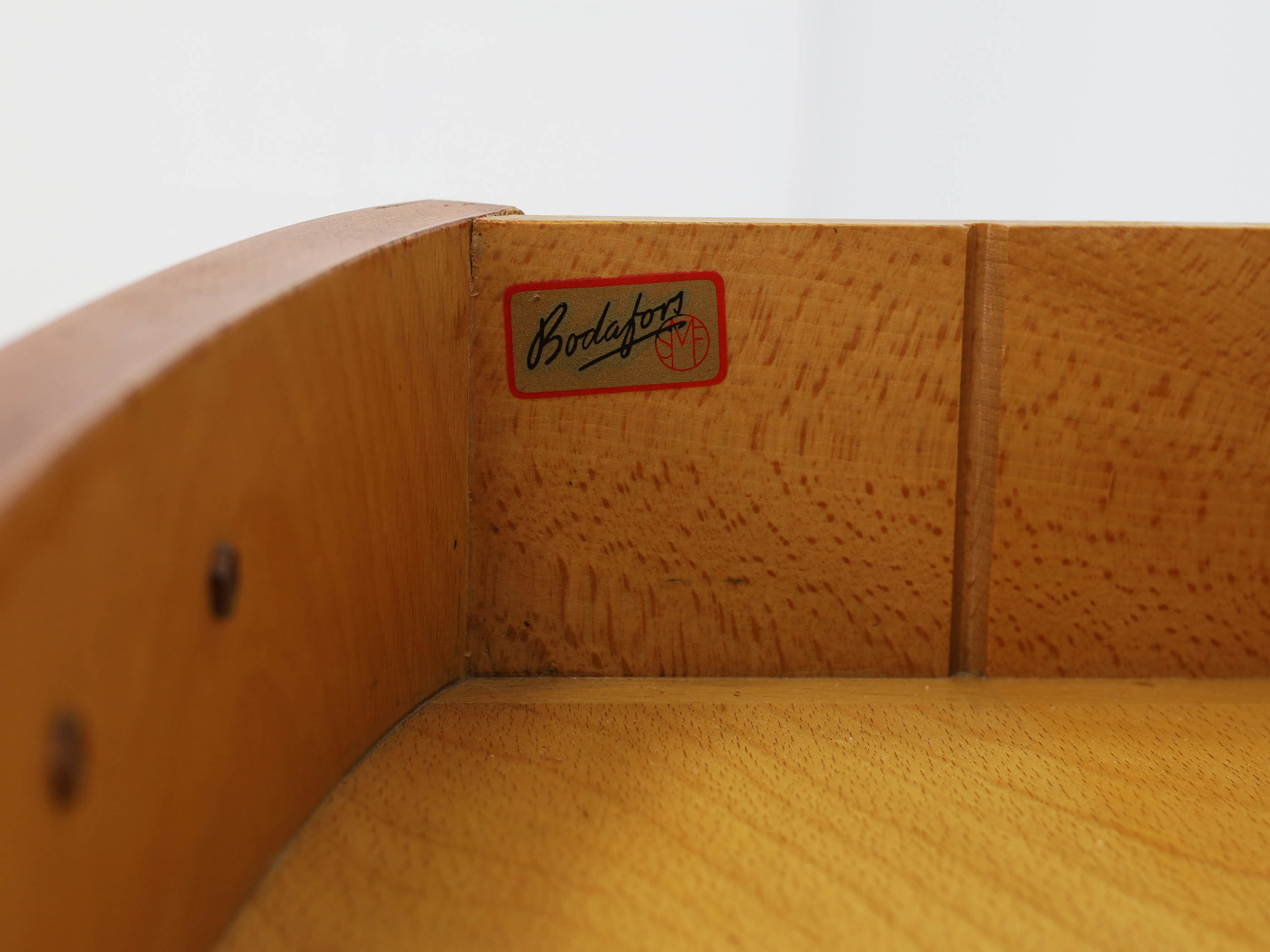
Axel Larsson and Svenska Möbelfabrikerna, Bodafors
In 1925, Larsson joined Svenska Möbelfabrikerna in Bodafors, one of Sweden’s most important furniture manufacturers. His collaboration with the company lasted for more than thirty years and represented a fundamental chapter in his career and in the development of Swedish furniture design.
As chief designer, Larsson was responsible for an extensive range of furniture, developing collections that combined the precision of industrial production with the quality and attention to detail traditionally associated with Swedish cabinetmaking. His work for Svenska Möbelfabrikerna demonstrated how modern manufacturing could preserve the richness of natural materials and the excellence of fine craftsmanship.
Bodafors became closely associated with his design philosophy: furniture conceived for everyday living, yet distinguished by carefully studied proportions, sophisticated construction and an understated elegance. The collaboration also allowed Larsson to experiment with different woods, veneers, finishes and construction techniques, producing furniture that ranged from functionalist forms to more refined and decorative expressions of Swedish Modern.
His designs gained wider recognition at the Stockholm Exhibition of 1930, a landmark event in the history of Scandinavian modern design.
Swedish Modern and the Art of Functional Furniture
Axel Larsson’s furniture is characterised by a thoughtful balance between functionality, comfort and understated elegance. Rather than pursuing decorative excess or spectacular forms, he concentrated on the essential qualities of an object: its proportions, construction, materials and practical use.
His extensive production included chairs, armchairs, tables, desks, cabinets and complete interior furnishings. Among his best-known designs is the reclining armchair model 1207, created in the 1930s, appreciated for its ergonomic construction and carefully considered proportions.
Larsson also received important architectural and interior design commissions. In 1936, he collaborated with architect Nils Einar Eriksson on the furnishings for the Gothenburg Concert Hall. Other significant projects included the Park Avenue Hotel in Gothenburg and the Folksam building in Stockholm, as well as interiors for Swedish America Line ocean liners and the United Nations building in New York.
In 1956, Larsson established his own design studio in Stockholm, continuing to develop furniture for established manufacturers. His later designs included the S-312 chair for Baltzar Beskow and the stackable steel-tube Bankett chair, designed in 1961 for Verkstads AB Lindqvist.
An Elegant Bombé Chest of Drawers in Alder Burl
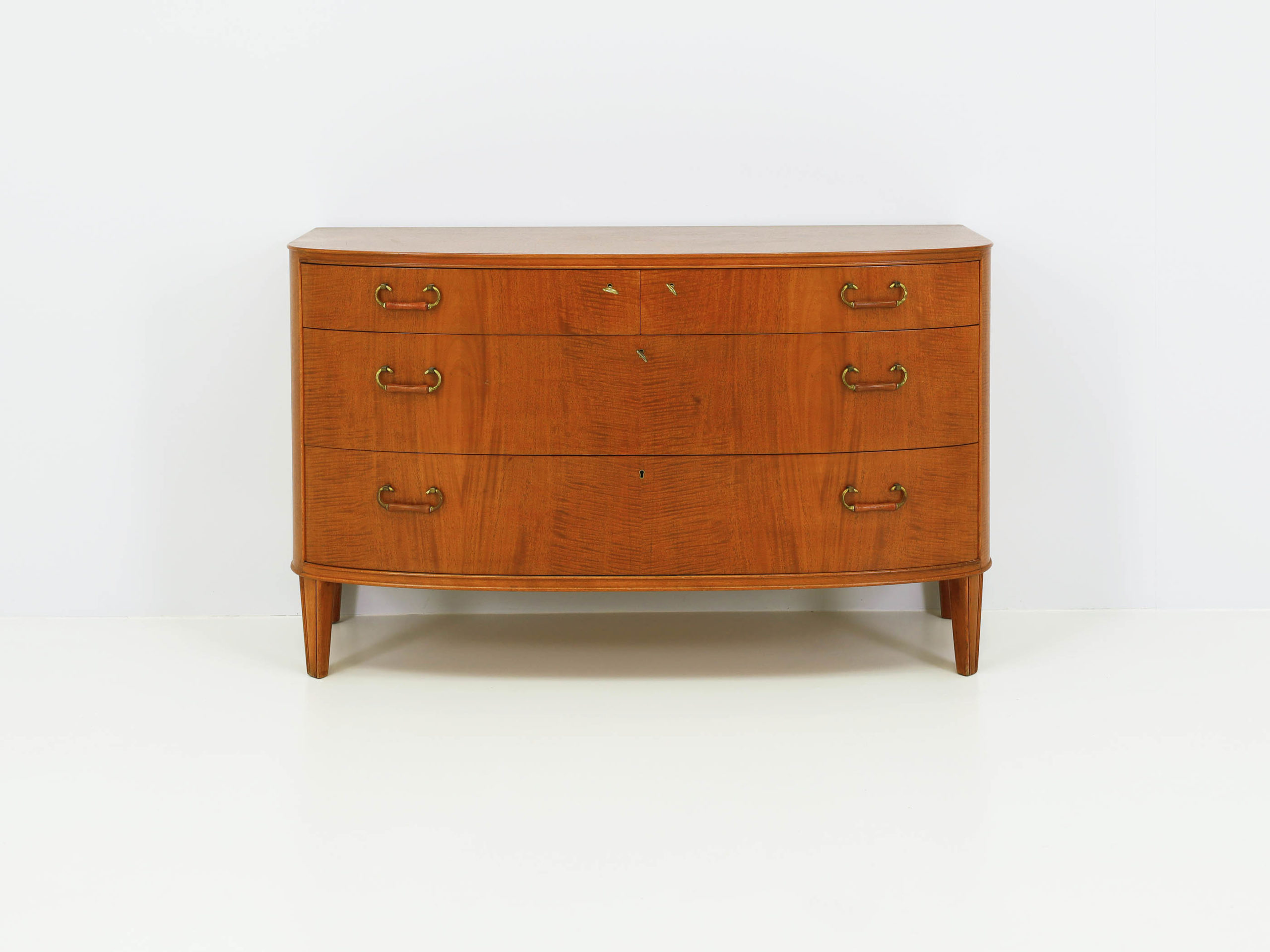
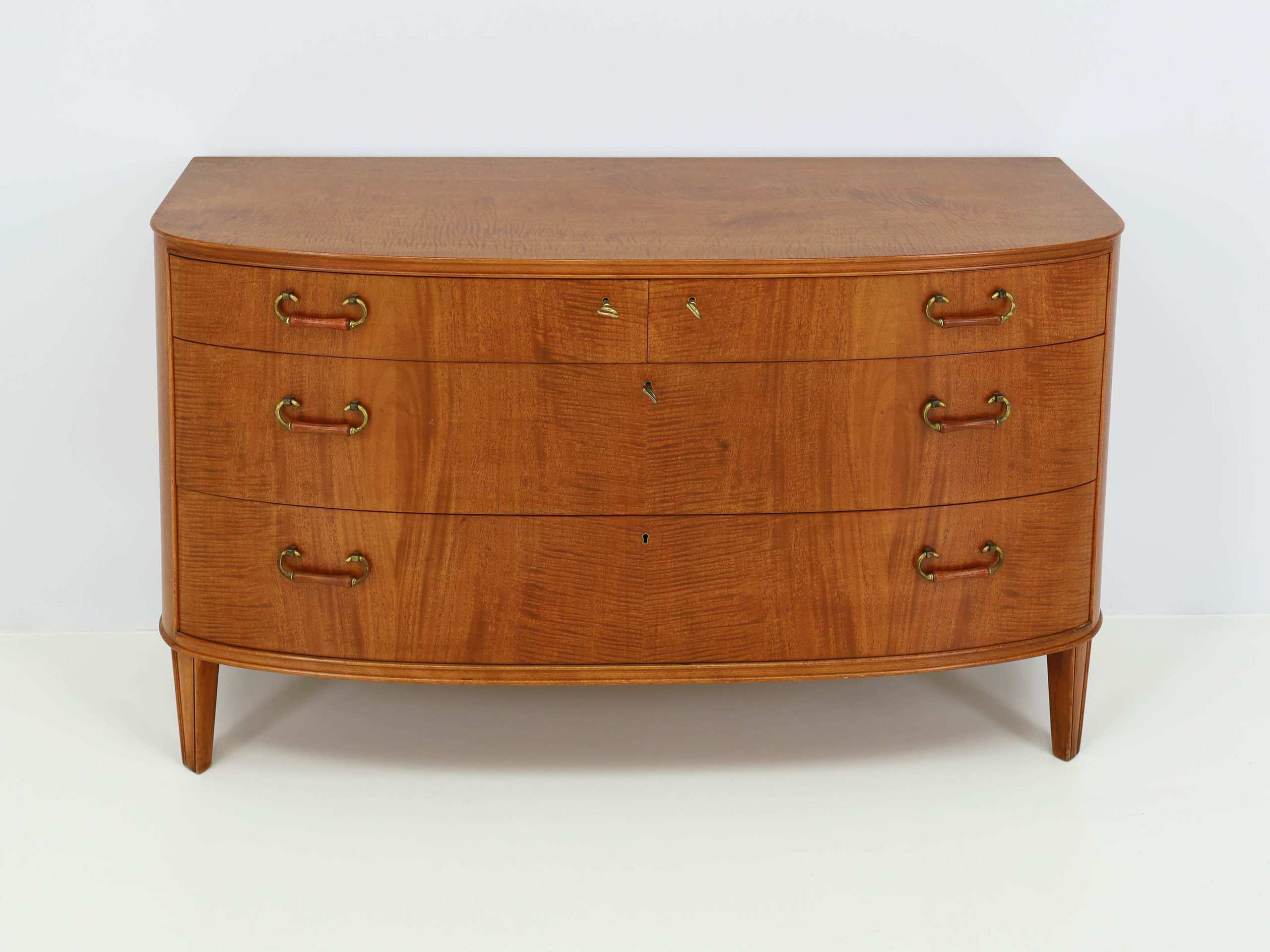
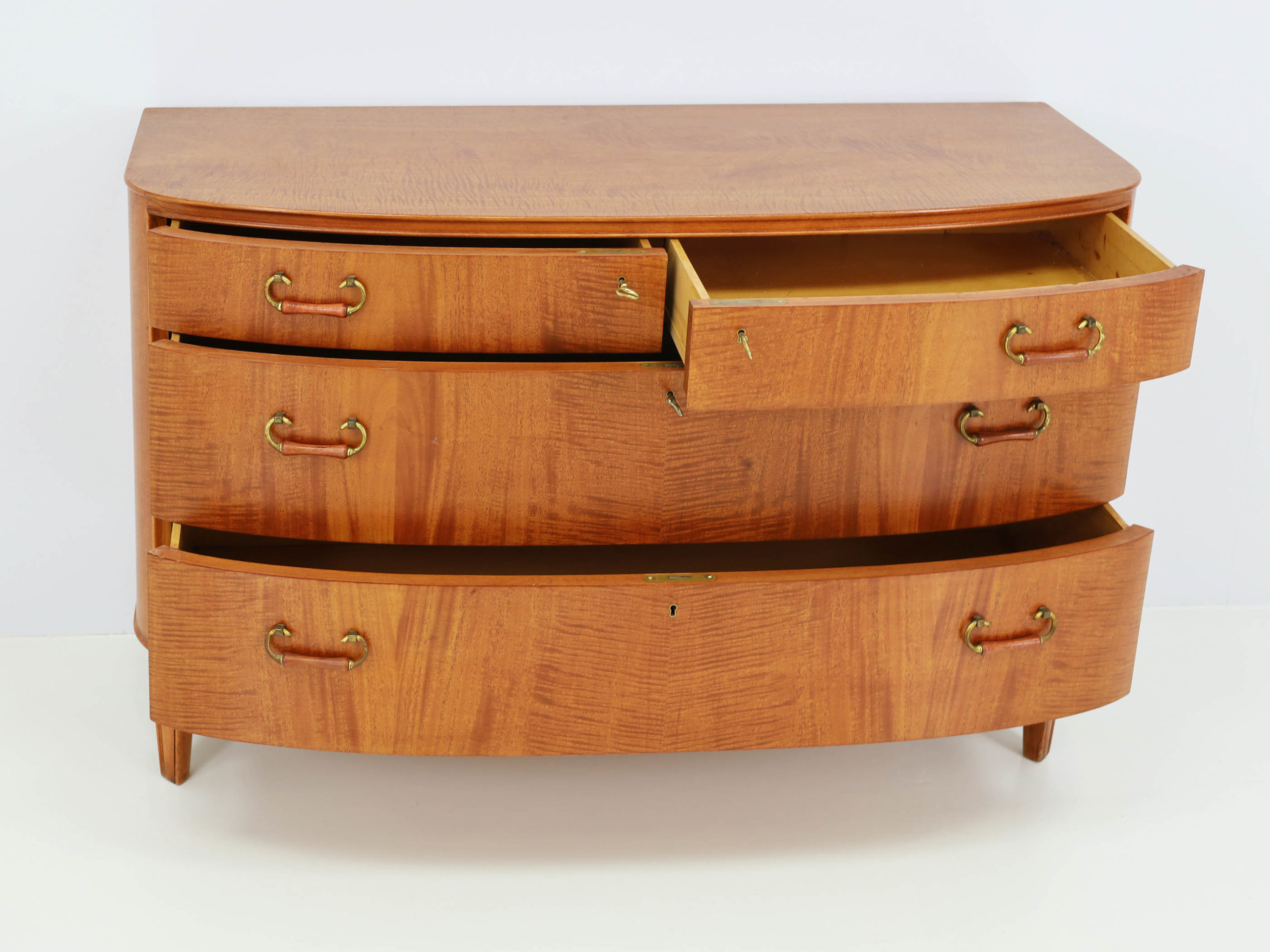
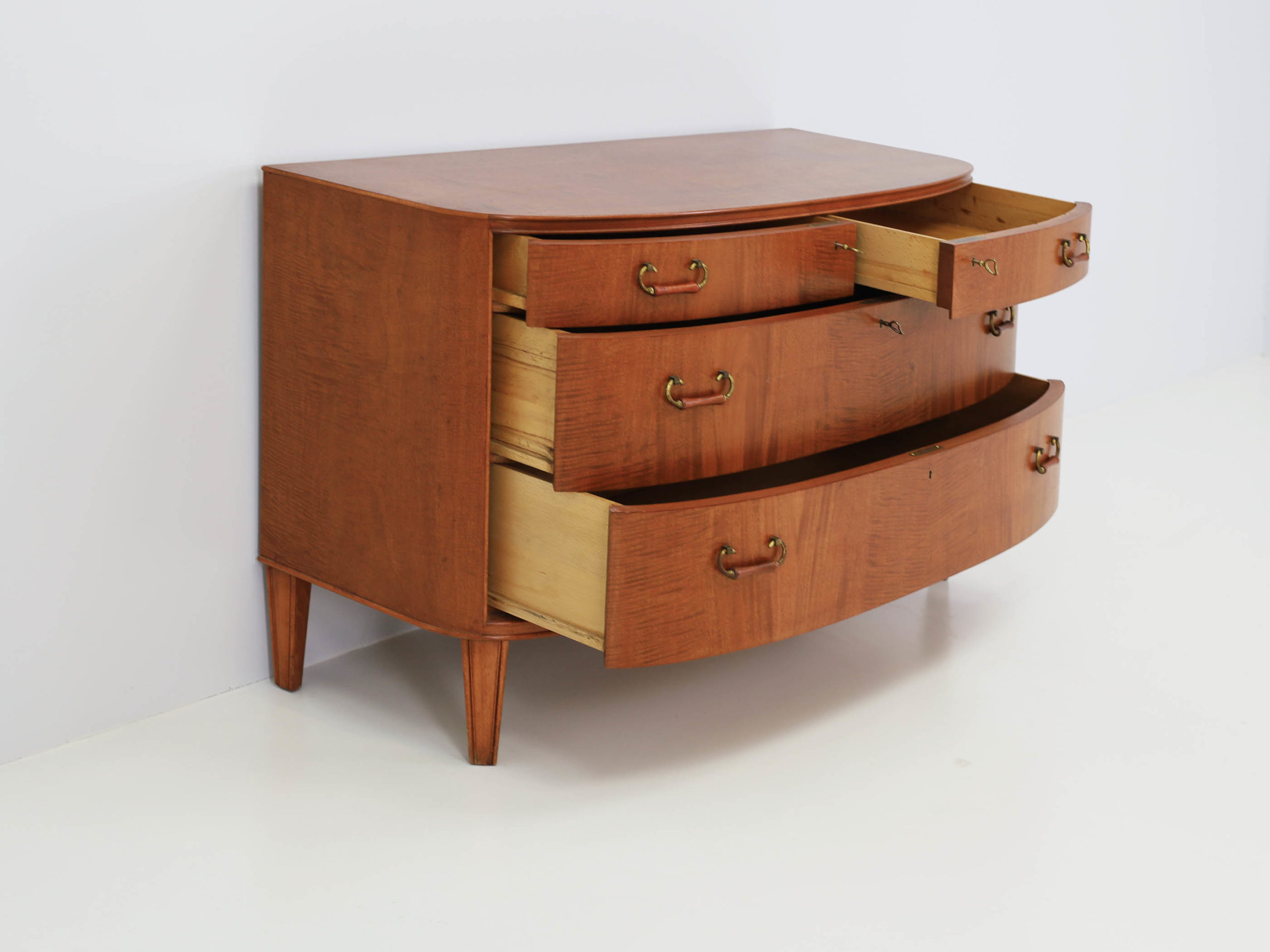
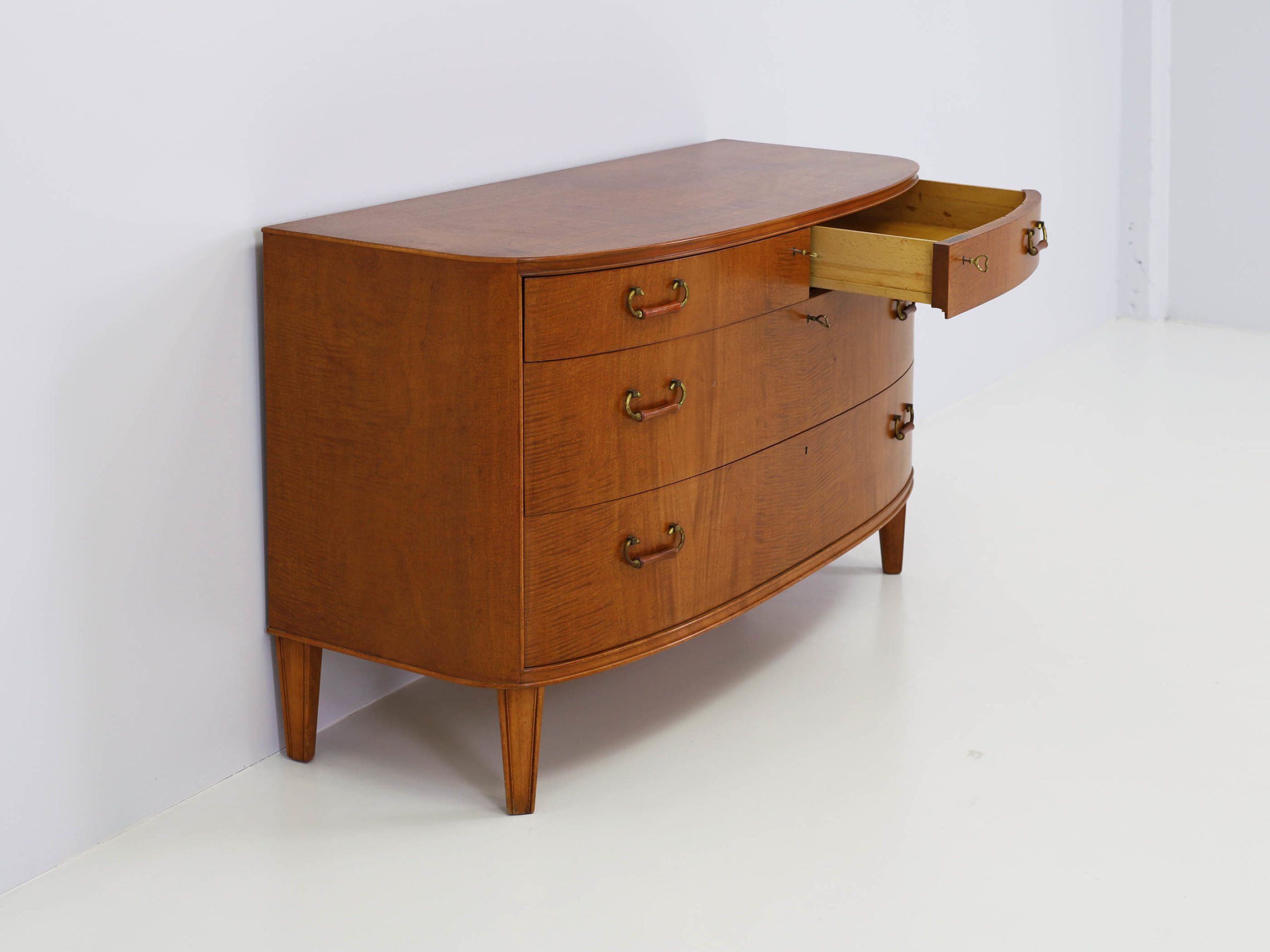
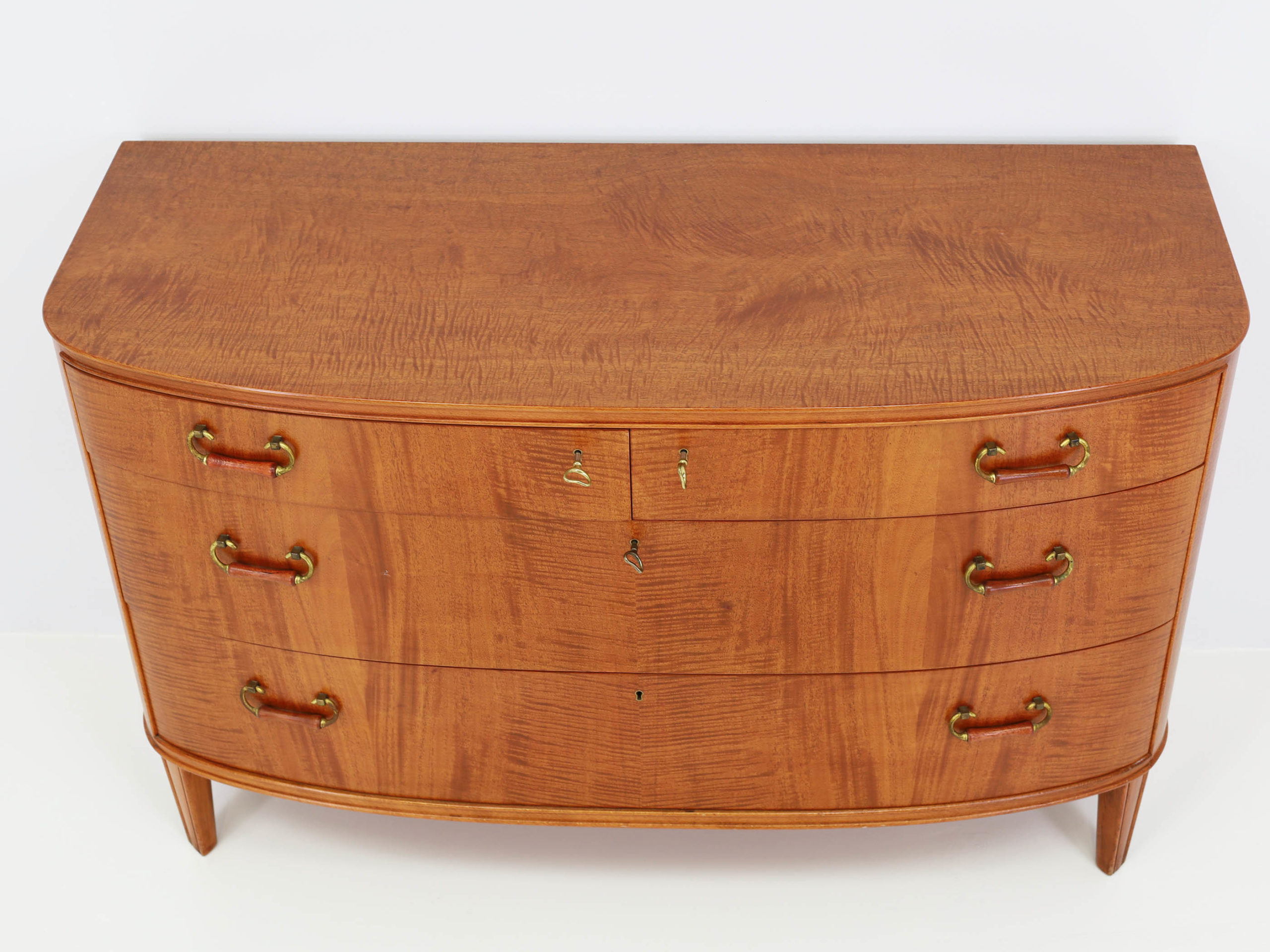
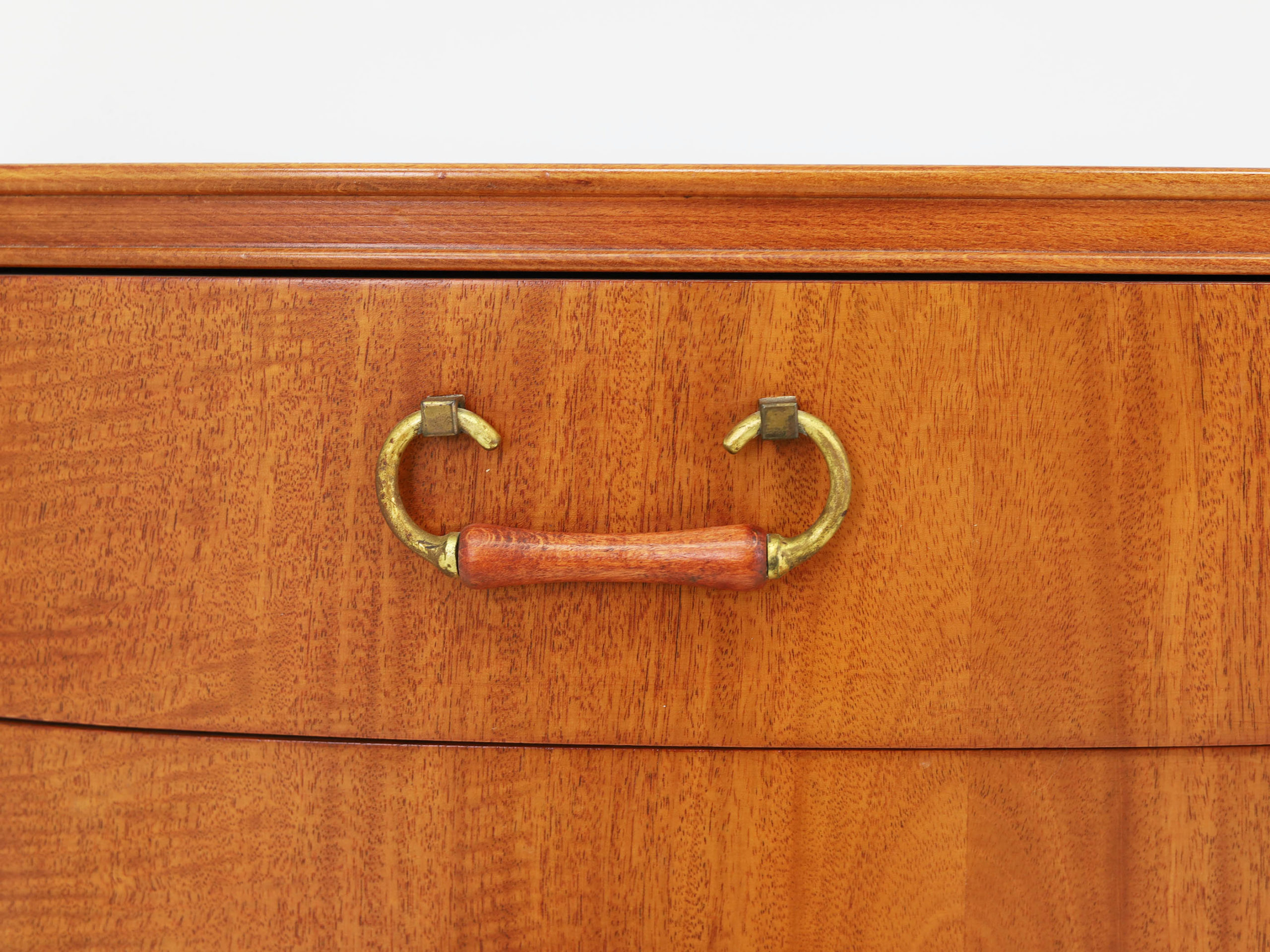
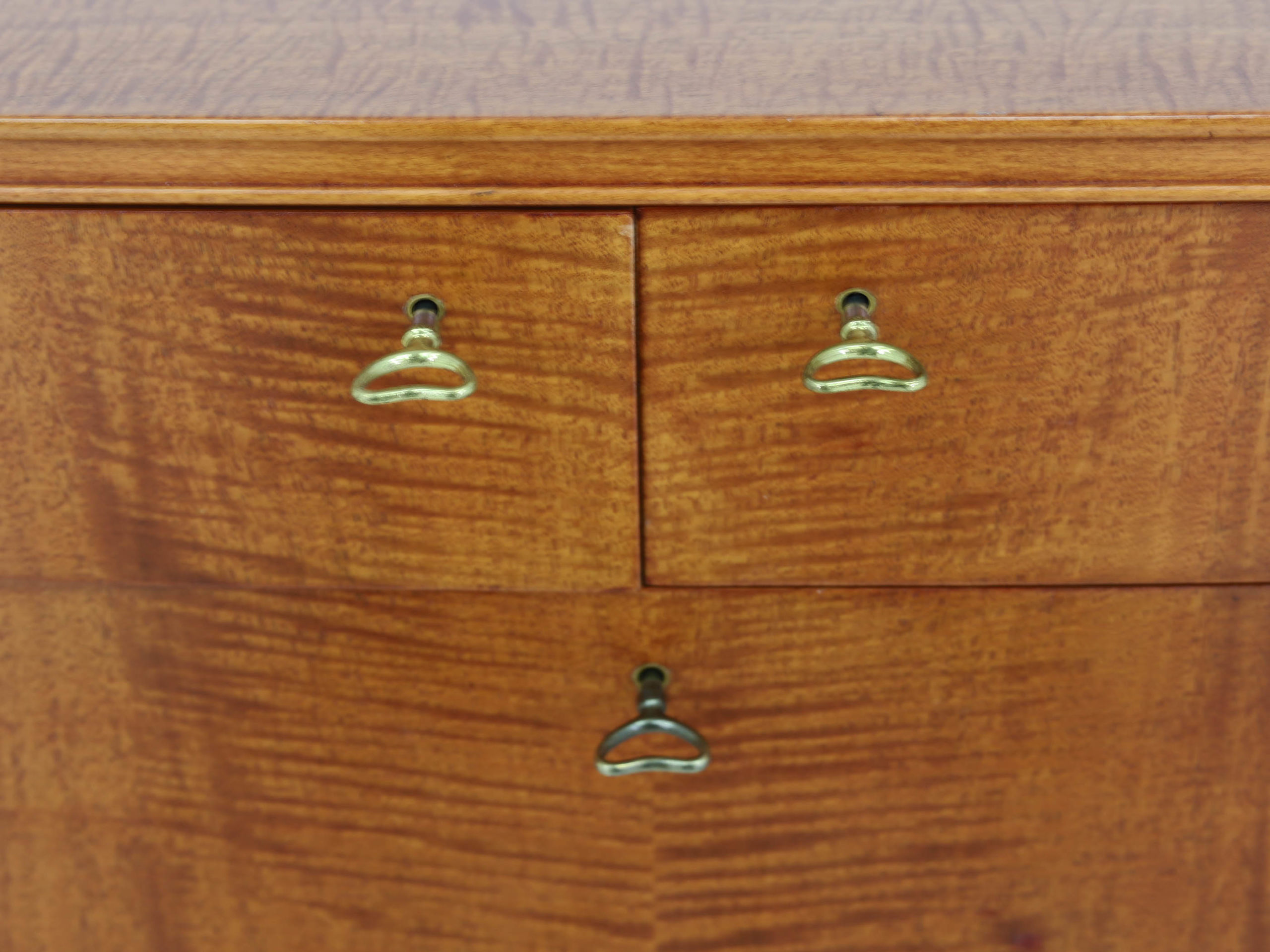
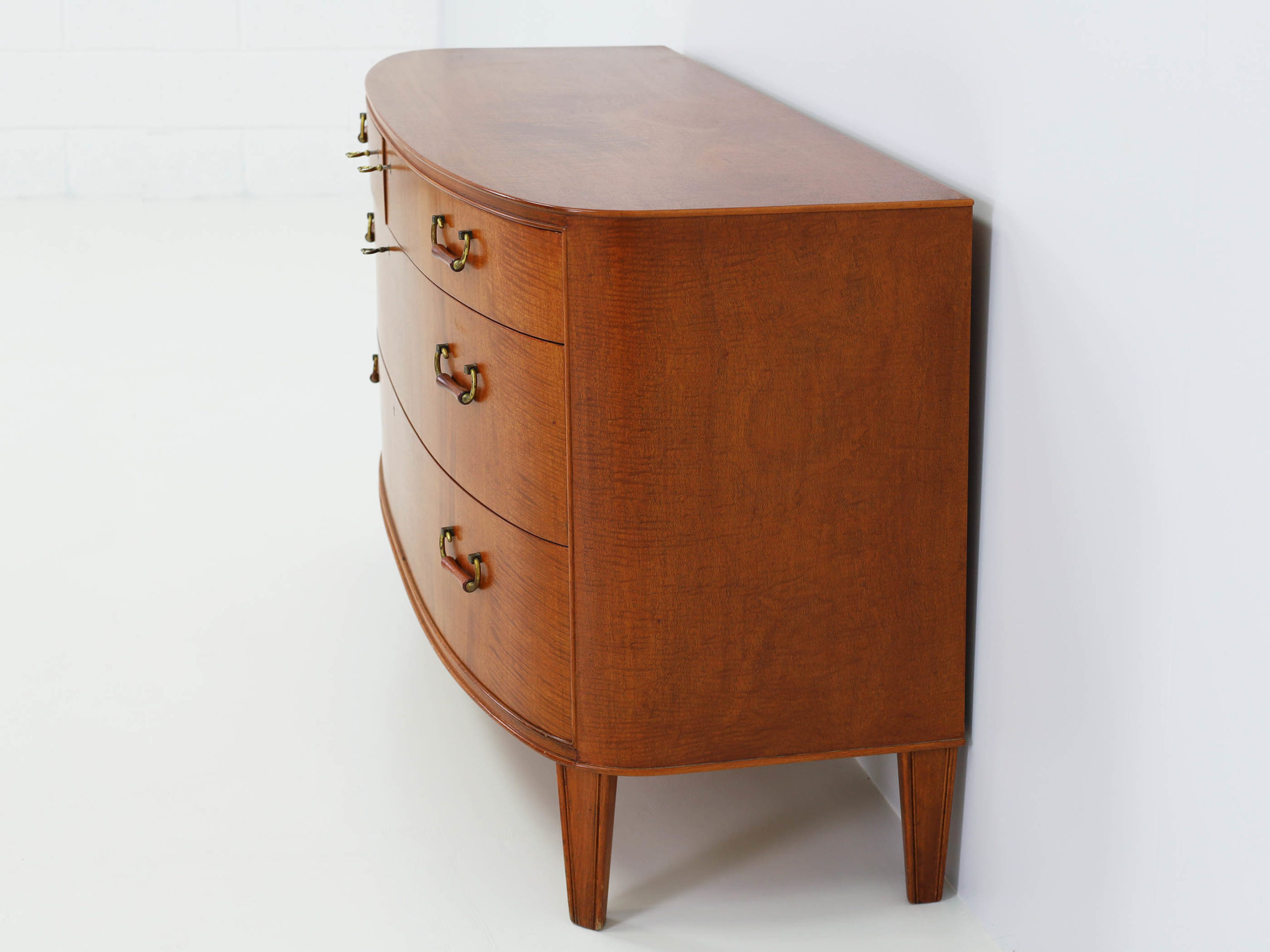
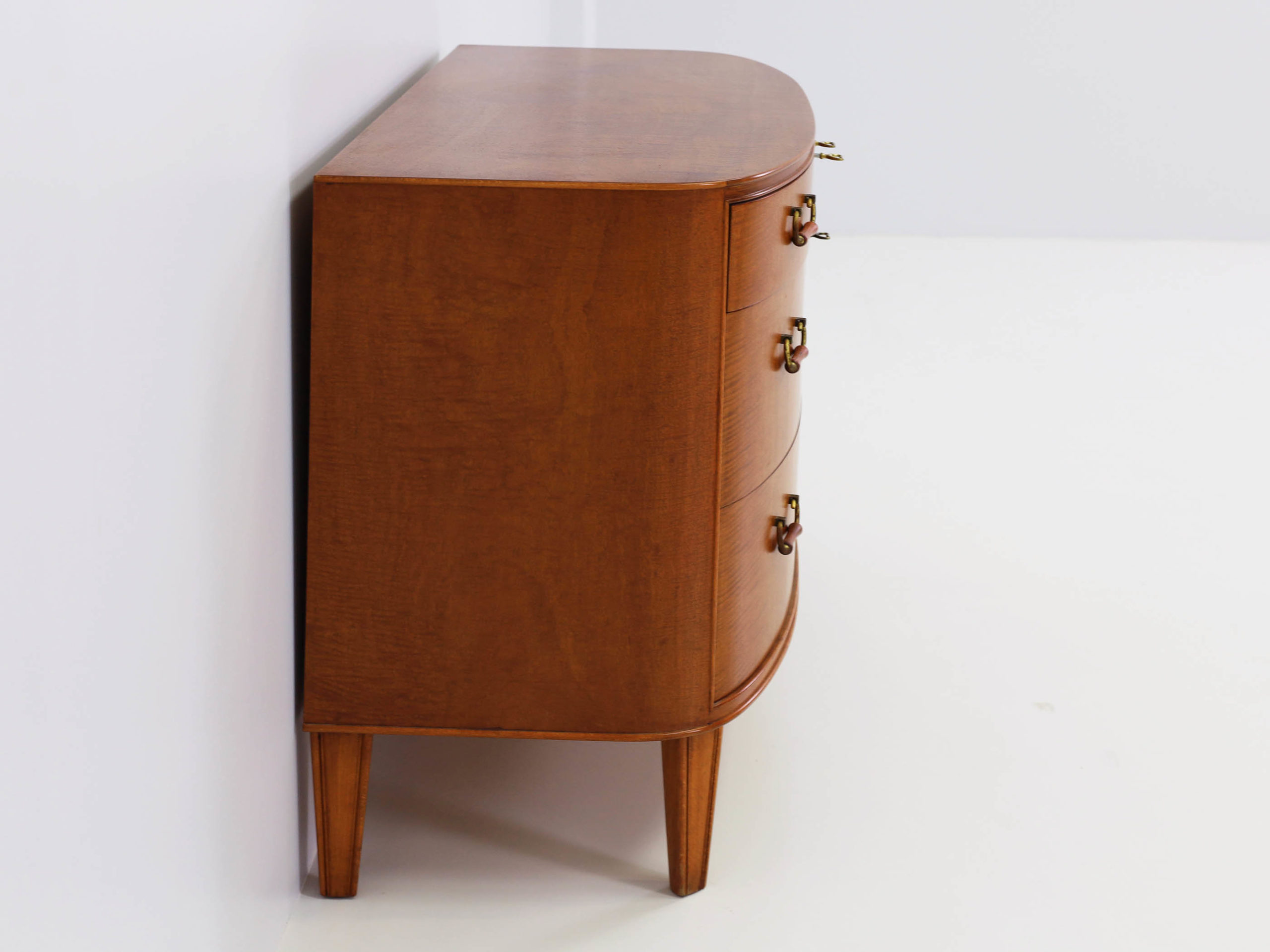
Among the more refined expressions of Swedish furniture craftsmanship is this beautiful bombé chest of drawers in alder burl, designed by Axel Larsson.
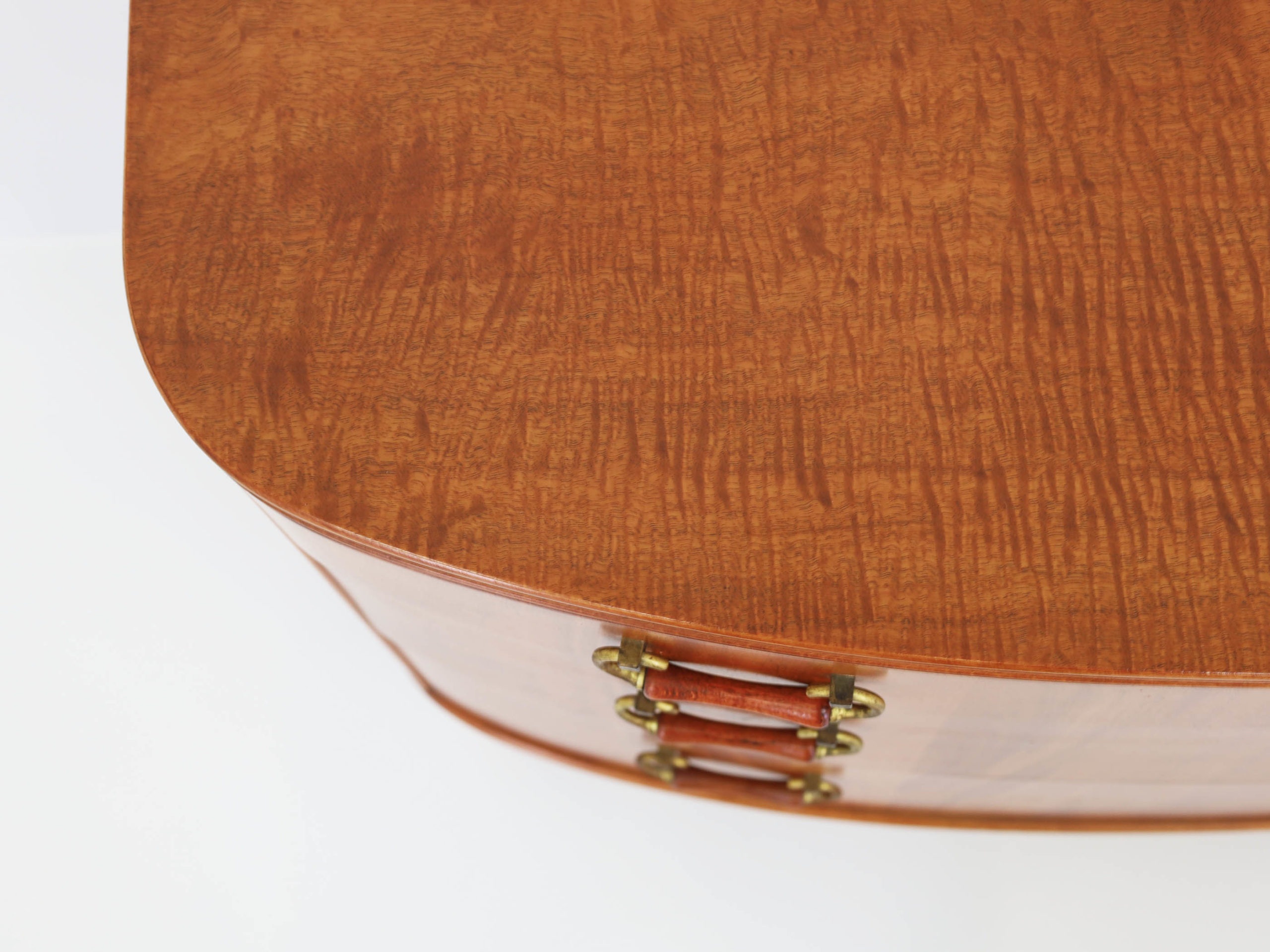
Its gently curved silhouette, with a characteristic bombé front, gives the piece a remarkable sculptural presence. The softly projecting volume creates an elegant interplay of light and shadow, while the carefully selected alder burl veneer reveals an extraordinary natural pattern of swirling grain, warm tonal variations and delicate organic markings.
The richness of the burl transforms the chest into something more than a functional storage piece: every surface becomes an individual composition, highlighting the natural beauty of the wood and the sensitivity with which it has been worked.
The curved front, balanced proportions and harmonious relationship between the body and its supporting structure demonstrate Larsson’s ability to combine decorative refinement with architectural discipline. Rather than relying on excessive ornament, the design allows the material itself to become the principal decorative element.
Particularly beautiful for the depth and warmth of its veneer, this chest of drawers represents an elegant interpretation of Swedish Modern, in which traditional cabinetmaking techniques meet a sophisticated and timeless aesthetic.
The Legacy of Axel Larsson
Today, Axel Larsson’s work represents an important chapter in the history of Scandinavian furniture design. His ability to combine traditional woodworking, industrial production and functionalist principles resulted in furniture that remains relevant for its quality, durability and timeless aesthetic.
His creations are particularly appreciated by collectors of vintage Scandinavian design and Swedish Mid-Century Modern furniture. Preserved examples of his chairs, armchairs, tables and cabinets reveal a design philosophy in which beauty emerges naturally from proportion, material and craftsmanship.
Represented in important Swedish museum collections, including the Nationalmuseum in Stockholm and the Röhsska Museum in Gothenburg, Axel Larsson remains an essential figure in the evolution of modern Swedish furniture.