Sergio Calatroni – Italian Design, Architecture and the Papiro Lamp for Pallucco


Sergio Calatroni (born 1951) is an Italian architect, designer and creative director whose multidisciplinary work spans architecture, industrial design, interior design, visual communication and the arts. Born in Pavia, he developed a distinctive approach to contemporary design, combining architectural thinking, artistic sensitivity and a particular interest in the expressive qualities of materials and forms.

After attending the Accademia di Belle Arti di Brera in Milan, where he specialised in scenography, Calatroni began his professional career in 1975. His education in theatrical design contributed to his ability to work with space, volumes, light and visual composition, elements that would become central to his architectural and product designs.

Throughout his career, he has worked across several creative disciplines, developing projects for architecture, interiors, exhibitions, commercial spaces, graphic design and corporate identity. His clients have included internationally recognised names in fashion and design, such as Trussardi, Luciano Soprani, Issey Miyake, Shiseido and Alfa Romeo.

Calatroni was also one of the founders of the Zeus group and Zeus Arte galleries in Milan and New York, contributing to the dialogue between contemporary design, art and architecture. His work has been exhibited in major museums internationally, and his Poltroncina seating design is included in the collection of the National Museum in Kyoto, Japan.

His international career also includes academic appointments at Tokyo University, where he taught museography between 1996 and 1998, and at the Accademia di Belle Arti di Brera in Milan. His achievements in creative direction and packaging design for Shiseido were recognised with several international awards, including the 2003 Good Design Award.

Sergio Calatroni and Pallucco


One of Calatroni's most recognisable contributions to Italian contemporary design is his collaboration with Pallucco, the Italian design company renowned for its experimental approach to lighting and interior furnishings.

Pallucco has developed a distinctive identity through collaborations with designers and architects who share an interest in innovation, material research and the relationship between art and functional objects.

Within this context, Calatroni designed the Papiro floor lamp in 1989, a project that has become one of the most recognisable and enduring pieces in the Pallucco collection.

The collaboration reflects his multidisciplinary design philosophy, in which lighting is not simply conceived as a technical object but as an expressive element capable of defining and transforming an interior space.

Papiro Floor Lamp – Natural Copper, 1989


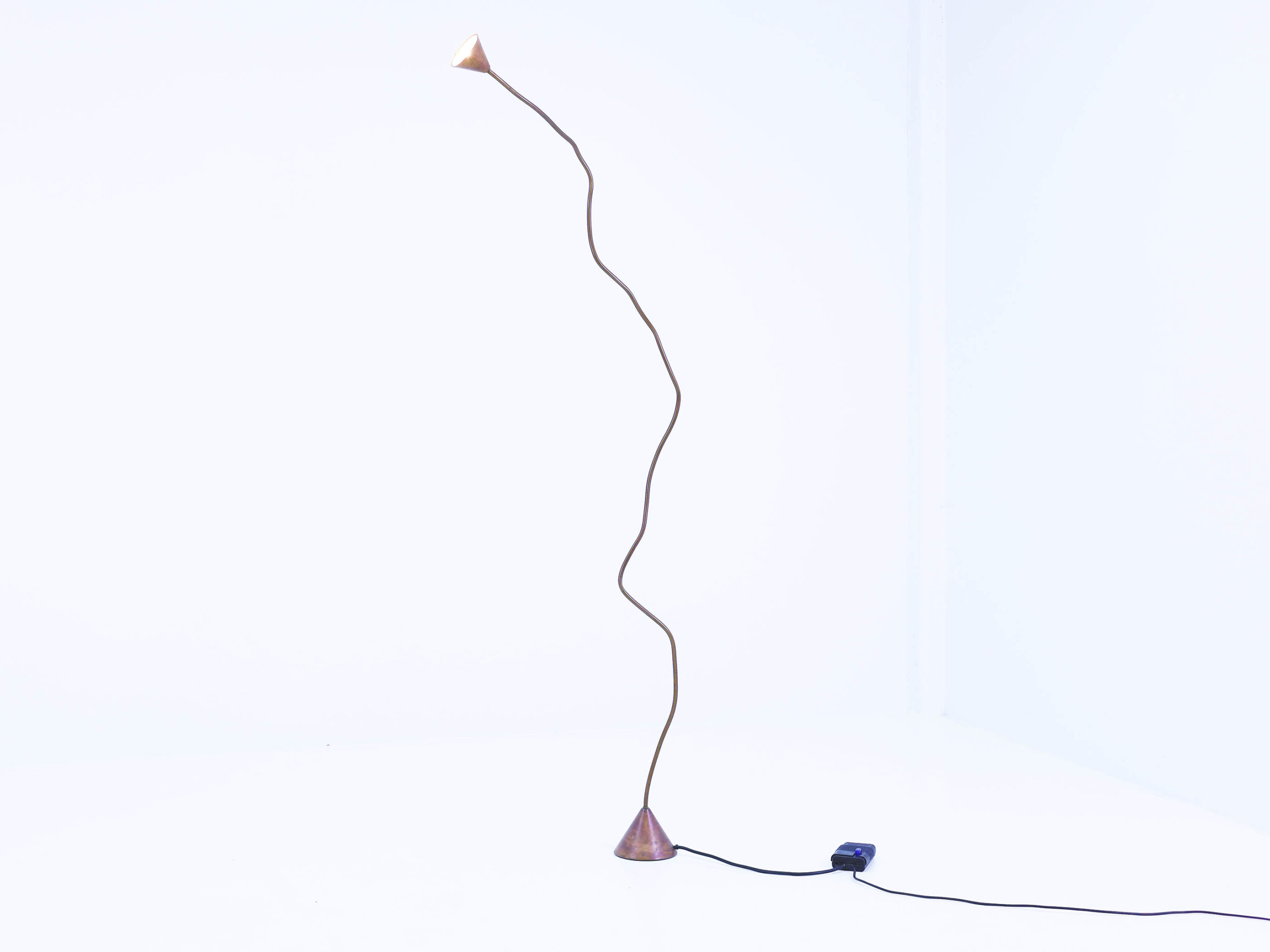
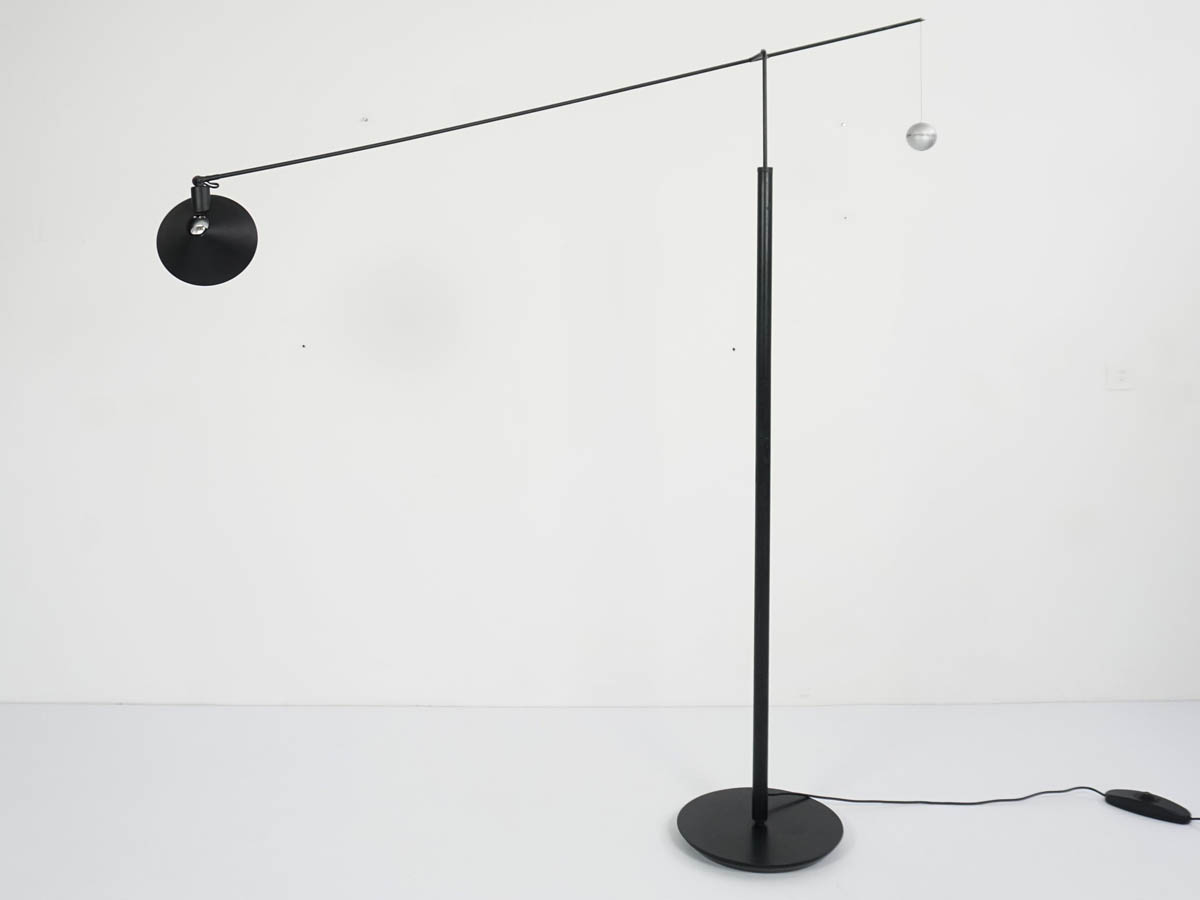
Designed in 1989 for Pallucco, the Papiro lamp by Sergio Calatroni is an exceptional example of Italian experimental lighting design from the late 20th century.

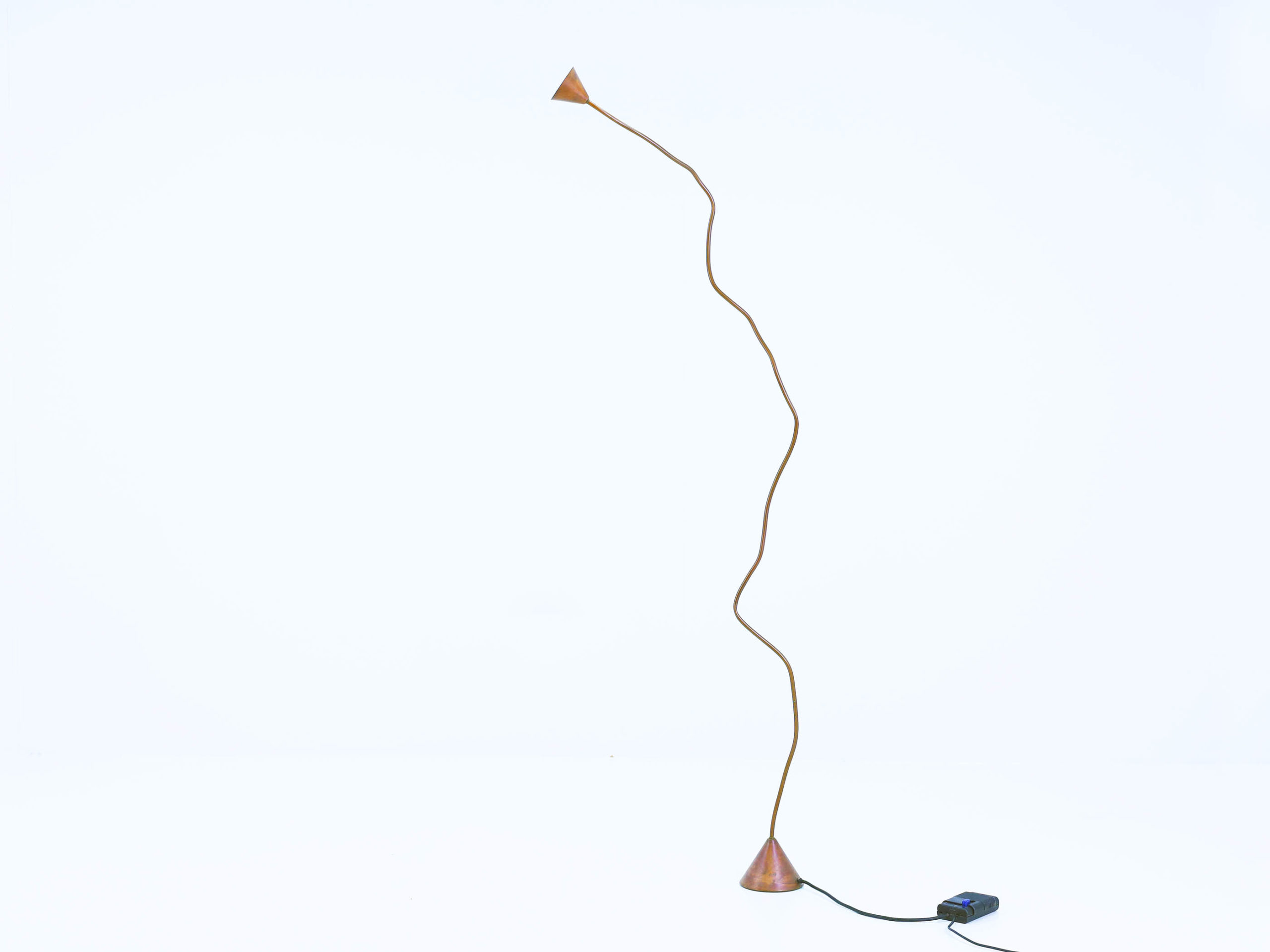
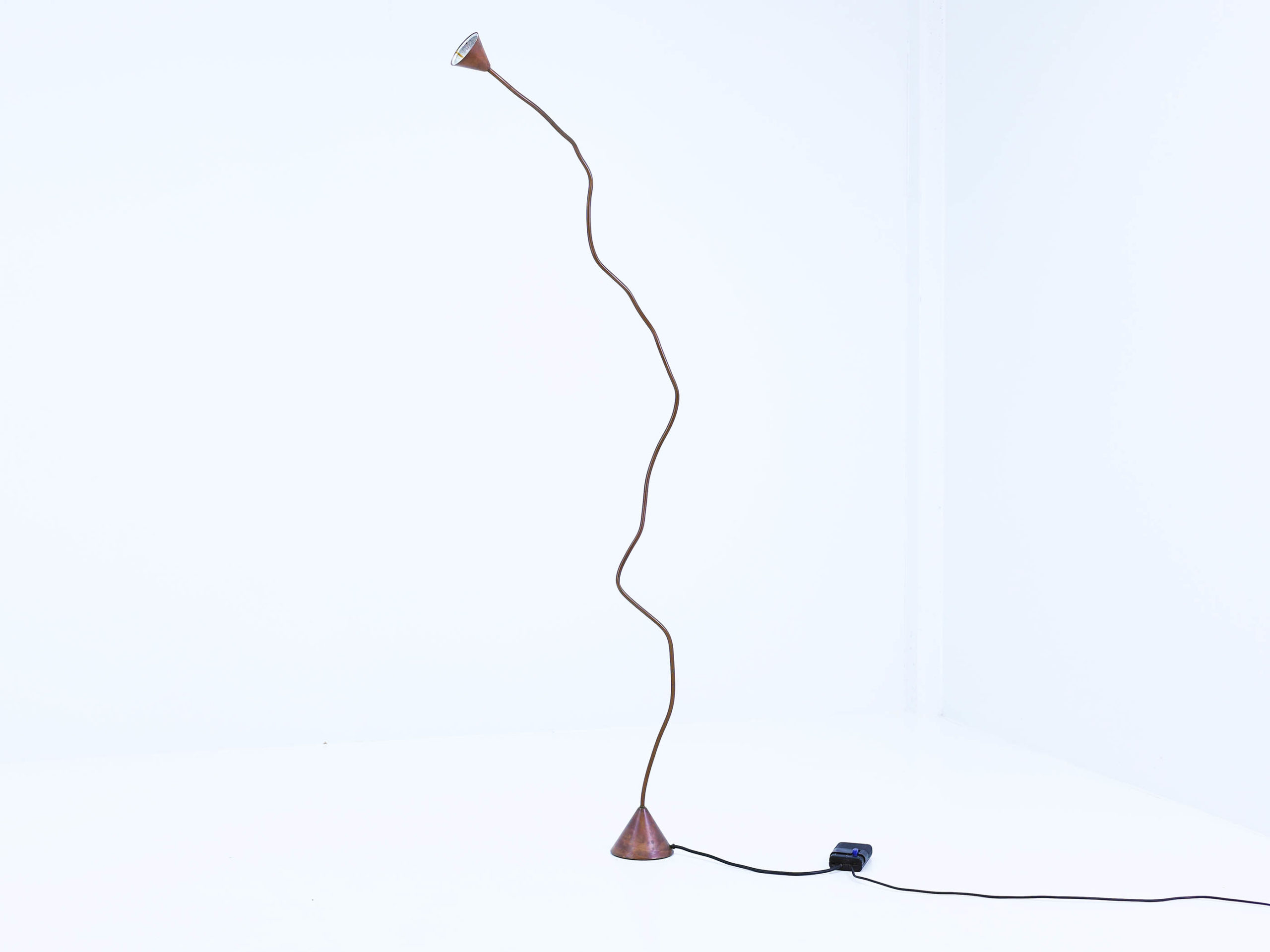
Inspired by the organic character and slender structure of papyrus reeds, the lamp is distinguished by its remarkably fine, flexible stem and sculptural silhouette. Its defining feature is the ability to bend and shape the structure by hand, allowing the owner to create different configurations and adjust the direction of the light.

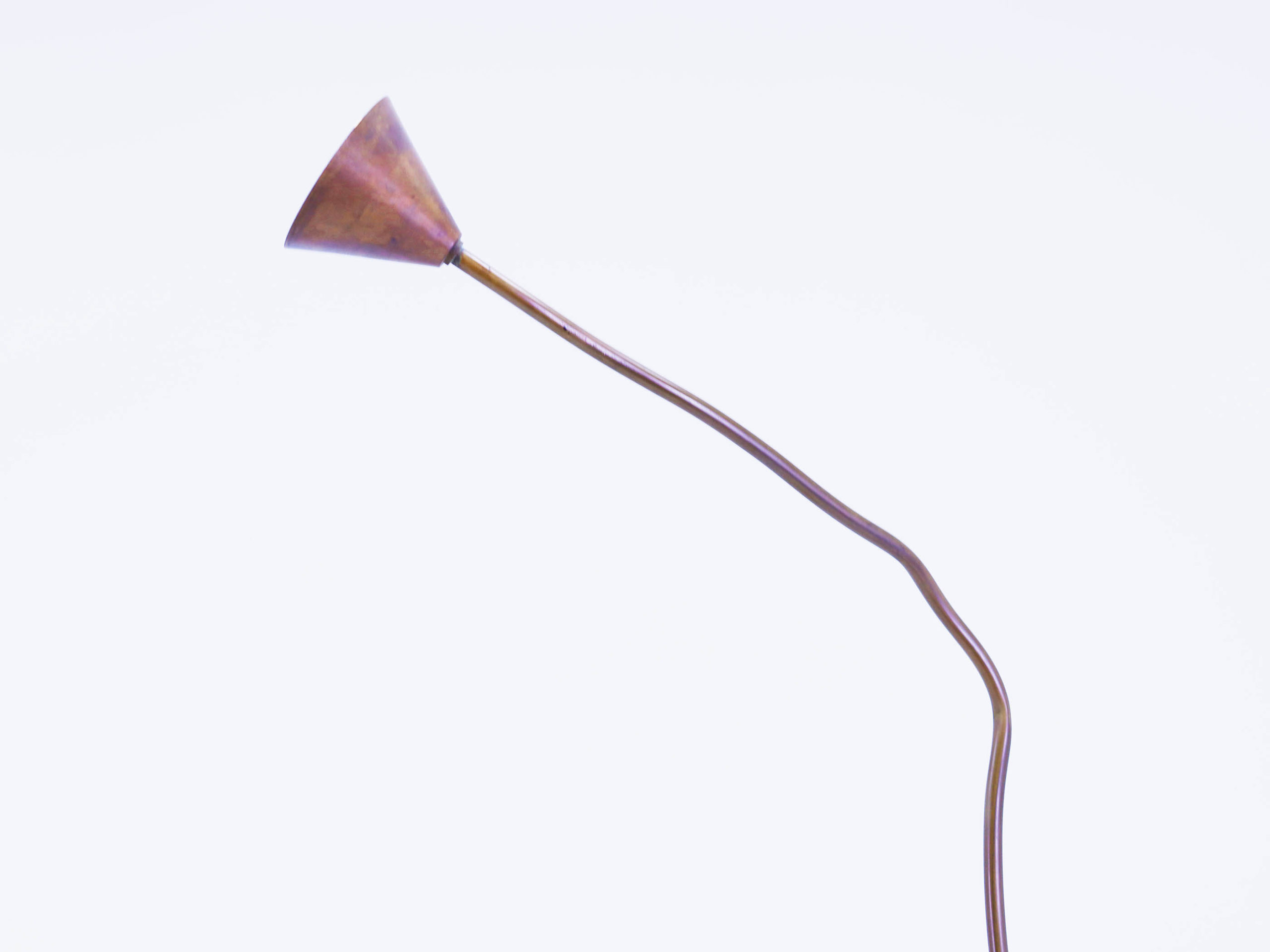
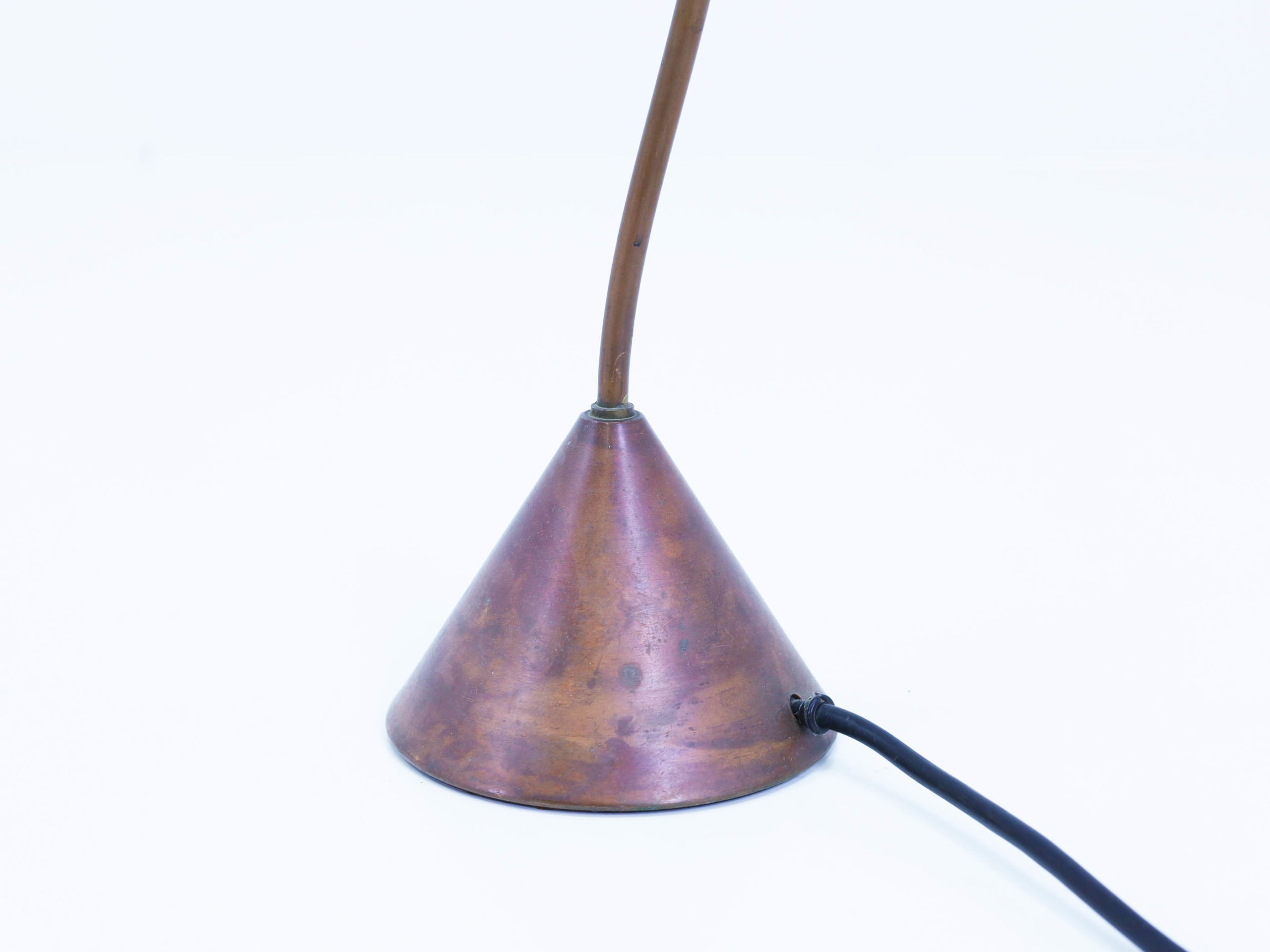
The natural copper version is particularly appealing for the warmth and richness of its material. The slender copper structure develops an elegant, almost calligraphic line, contrasting with the more defined geometric elements of the base and upper diffuser.

The combination of a minimal architectural presence and an organic, freely adjustable form gives Papiro a unique character, suspended between functional lighting and contemporary sculpture.

Rather than imposing a fixed silhouette, Calatroni conceived a lamp whose appearance can evolve according to its position and the preferences of its owner. This interaction between object and user is central to the design and gives each installation a distinctive visual identity.

The natural copper finish adds another dimension to the piece. Its warm metallic colour and the possibility of developing a natural patina over time enhance the sculptural quality of the lamp, making it particularly effective in interiors featuring vintage furniture, architectural details and collectible contemporary design.

Papiro was originally conceived with traditional lighting technology and was subsequently developed in LED versions, preserving its unmistakable flexible structure and sculptural character.

A Sculptural Expression of Italian Contemporary Design


The Papiro lamp represents a particularly interesting meeting point between architecture, industrial design and artistic experimentation. Its refined proportions, flexible construction and expressive use of copper distinguish it from conventional floor lamps.

More than a source of illumination, it functions as an independent sculptural presence within an interior. Its slender silhouette introduces movement and verticality, while its adjustable form allows it to interact with the surrounding architecture and furnishings.

Item nr. 26156

Sculptural Copper Floor Lamp, model Papiro

Designer

ProductionPallucco
Italy 1989

MaterialCopper | metal

Price in Swiss Francs / Euro€ 800.00

sculptural-copper-floor-lamp-model-papiro


Sergio Calatroni – Italian Design, Architecture and the Papiro Lamp for Pallucco


Sergio Calatroni (born 1951) is an Italian architect, designer and creative director whose multidisciplinary work spans architecture, industrial design, interior design, visual communication and the arts. Born in Pavia, he developed a distinctive approach to contemporary design, combining architectural thinking, artistic sensitivity and a particular interest in the expressive qualities of materials and forms.

After attending the Accademia di Belle Arti di Brera in Milan, where he specialised in scenography, Calatroni began his professional career in 1975. His education in theatrical design contributed to his ability to work with space, volumes, light and visual composition, elements that would become central to his architectural and product designs.

Throughout his career, he has worked across several creative disciplines, developing projects for architecture, interiors, exhibitions, commercial spaces, graphic design and corporate identity. His clients have included internationally recognised names in fashion and design, such as Trussardi, Luciano Soprani, Issey Miyake, Shiseido and Alfa Romeo.

Calatroni was also one of the founders of the Zeus group and Zeus Arte galleries in Milan and New York, contributing to the dialogue between contemporary design, art and architecture. His work has been exhibited in major museums internationally, and his Poltroncina seating design is included in the collection of the National Museum in Kyoto, Japan.

His international career also includes academic appointments at Tokyo University, where he taught museography between 1996 and 1998, and at the Accademia di Belle Arti di Brera in Milan. His achievements in creative direction and packaging design for Shiseido were recognised with several international awards, including the 2003 Good Design Award.

Sergio Calatroni and Pallucco


One of Calatroni's most recognisable contributions to Italian contemporary design is his collaboration with Pallucco, the Italian design company renowned for its experimental approach to lighting and interior furnishings.

Pallucco has developed a distinctive identity through collaborations with designers and architects who share an interest in innovation, material research and the relationship between art and functional objects.

Within this context, Calatroni designed the Papiro floor lamp in 1989, a project that has become one of the most recognisable and enduring pieces in the Pallucco collection.

The collaboration reflects his multidisciplinary design philosophy, in which lighting is not simply conceived as a technical object but as an expressive element capable of defining and transforming an interior space.

Papiro Floor Lamp – Natural Copper, 1989


Designed in 1989 for Pallucco, the Papiro lamp by Sergio Calatroni is an exceptional example of Italian experimental lighting design from the late 20th century.

Inspired by the organic character and slender structure of papyrus reeds, the lamp is distinguished by its remarkably fine, flexible stem and sculptural silhouette. Its defining feature is the ability to bend and shape the structure by hand, allowing the owner to create different configurations and adjust the direction of the light.

The natural copper version is particularly appealing for the warmth and richness of its material. The slender copper structure develops an elegant, almost calligraphic line, contrasting with the more defined geometric elements of the base and upper diffuser.

The combination of a minimal architectural presence and an organic, freely adjustable form gives Papiro a unique character, suspended between functional lighting and contemporary sculpture.

Rather than imposing a fixed silhouette, Calatroni conceived a lamp whose appearance can evolve according to its position and the preferences of its owner. This interaction between object and user is central to the design and gives each installation a distinctive visual identity.

The natural copper finish adds another dimension to the piece. Its warm metallic colour and the possibility of developing a natural patina over time enhance the sculptural quality of the lamp, making it particularly effective in interiors featuring vintage furniture, architectural details and collectible contemporary design.

Papiro was originally conceived with traditional lighting technology and was subsequently developed in LED versions, preserving its unmistakable flexible structure and sculptural character.

A Sculptural Expression of Italian Contemporary Design


The Papiro lamp represents a particularly interesting meeting point between architecture, industrial design and artistic experimentation. Its refined proportions, flexible construction and expressive use of copper distinguish it from conventional floor lamps.

More than a source of illumination, it functions as an independent sculptural presence within an interior. Its slender silhouette introduces movement and verticality, while its adjustable form allows it to interact with the surrounding architecture and furnishings.
Description

Sergio Calatroni – Italian Design, Architecture and the Papiro Lamp for Pallucco

Sergio Calatroni (born 1951) is an Italian architect, designer and creative director whose multidisciplinary work spans architecture, industrial design, interior design, visual communication and the arts. Born in Pavia, he developed a distinctive approach to contemporary design, combining architectural thinking, artistic sensitivity and a particular interest in the expressive qualities of materials and forms.

After attending the Accademia di Belle Arti di Brera in Milan, where he specialised in scenography, Calatroni began his professional career in 1975. His education in theatrical design contributed to his ability to work with space, volumes, light and visual composition, elements that would become central to his architectural and product designs.

Throughout his career, he has worked across several creative disciplines, developing projects for architecture, interiors, exhibitions, commercial spaces, graphic design and corporate identity. His clients have included internationally recognised names in fashion and design, such as Trussardi, Luciano Soprani, Issey Miyake, Shiseido and Alfa Romeo.

Calatroni was also one of the founders of the Zeus group and Zeus Arte galleries in Milan and New York, contributing to the dialogue between contemporary design, art and architecture. His work has been exhibited in major museums internationally, and his Poltroncina seating design is included in the collection of the National Museum in Kyoto, Japan.

His international career also includes academic appointments at Tokyo University, where he taught museography between 1996 and 1998, and at the Accademia di Belle Arti di Brera in Milan. His achievements in creative direction and packaging design for Shiseido were recognised with several international awards, including the 2003 Good Design Award.

Sergio Calatroni and Pallucco

One of Calatroni’s most recognisable contributions to Italian contemporary design is his collaboration with Pallucco, the Italian design company renowned for its experimental approach to lighting and interior furnishings.

Pallucco has developed a distinctive identity through collaborations with designers and architects who share an interest in innovation, material research and the relationship between art and functional objects.

Within this context, Calatroni designed the Papiro floor lamp in 1989, a project that has become one of the most recognisable and enduring pieces in the Pallucco collection.

The collaboration reflects his multidisciplinary design philosophy, in which lighting is not simply conceived as a technical object but as an expressive element capable of defining and transforming an interior space.

Papiro Floor Lamp – Natural Copper, 1989

Designed in 1989 for Pallucco, the Papiro lamp by Sergio Calatroni is an exceptional example of Italian experimental lighting design from the late 20th century.

Inspired by the organic character and slender structure of papyrus reeds, the lamp is distinguished by its remarkably fine, flexible stem and sculptural silhouette. Its defining feature is the ability to bend and shape the structure by hand, allowing the owner to create different configurations and adjust the direction of the light.

The natural copper version is particularly appealing for the warmth and richness of its material. The slender copper structure develops an elegant, almost calligraphic line, contrasting with the more defined geometric elements of the base and upper diffuser.

The combination of a minimal architectural presence and an organic, freely adjustable form gives Papiro a unique character, suspended between functional lighting and contemporary sculpture.

Rather than imposing a fixed silhouette, Calatroni conceived a lamp whose appearance can evolve according to its position and the preferences of its owner. This interaction between object and user is central to the design and gives each installation a distinctive visual identity.

The natural copper finish adds another dimension to the piece. Its warm metallic colour and the possibility of developing a natural patina over time enhance the sculptural quality of the lamp, making it particularly effective in interiors featuring vintage furniture, architectural details and collectible contemporary design.

Papiro was originally conceived with traditional lighting technology and was subsequently developed in LED versions, preserving its unmistakable flexible structure and sculptural character.

A Sculptural Expression of Italian Contemporary Design

The Papiro lamp represents a particularly interesting meeting point between architecture, industrial design and artistic experimentation. Its refined proportions, flexible construction and expressive use of copper distinguish it from conventional floor lamps.

More than a source of illumination, it functions as an independent sculptural presence within an interior. Its slender silhouette introduces movement and verticality, while its adjustable form allows it to interact with the surrounding architecture and furnishings.

Additional information

Material